Automated Sortation Systems: Boosting Benelux Hubs
Automated sortation systems are essential for high-throughput parcel hubs in the Benelux, leveraging technologies like shoe and cross-belt sorters to handle peak e-commerce volumes, reduce labor dependency, and accelerate delivery times across Europe.
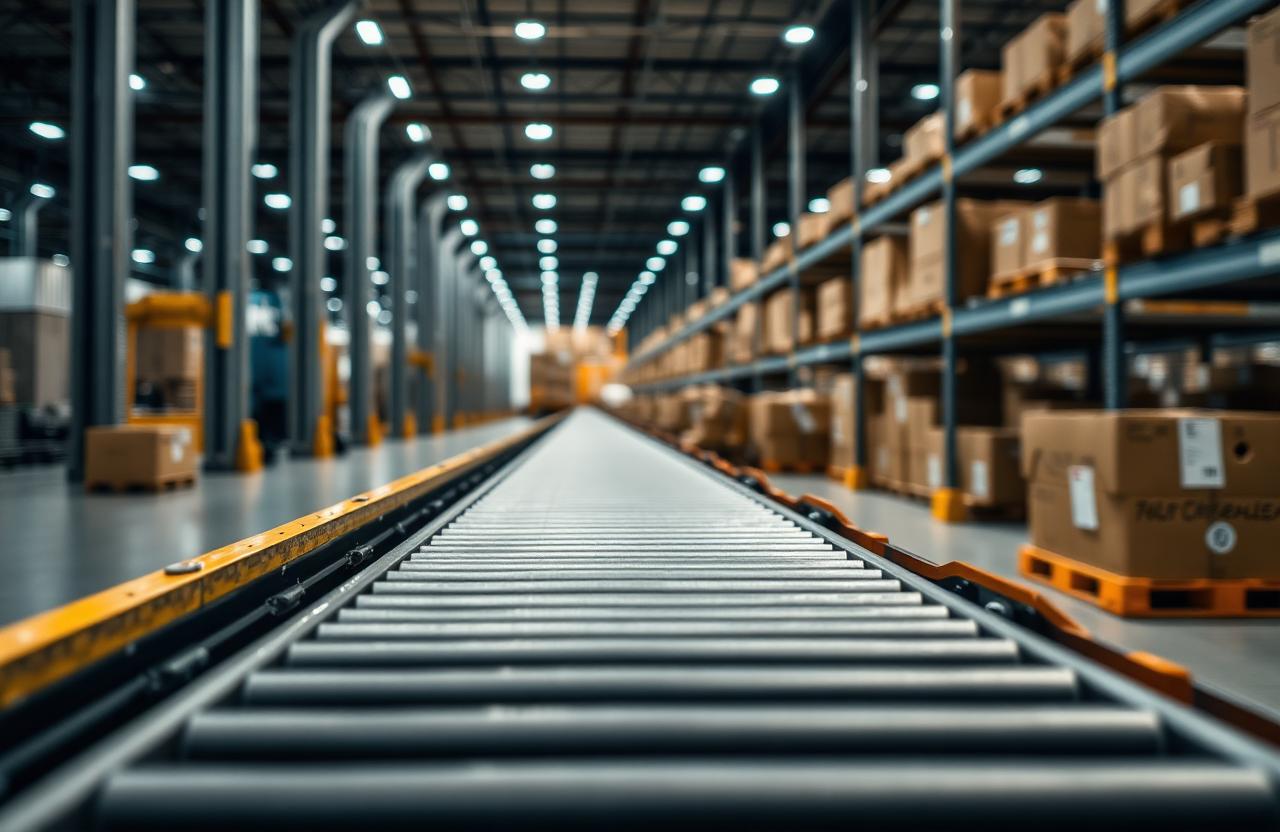
The Benelux region, with its strategic port cities of Antwerp and Rotterdam, acts as the pulsing heart of European logistics. As e-commerce volumes continue to surge, parcel and post hubs in Belgium, the Netherlands, and Luxembourg face immense pressure to increase throughput, improve accuracy, and overcome persistent labor shortages. Manual sorting is no longer a viable option. The solution lies in sophisticated, high-speed automated sortation systems, the engine of the modern distribution center.
Definition
An automated sortation system is an integrated material handling solution that identifies, transports, and diverts items—such as parcels, letters, or totes—to specific outbound destinations within a warehouse or distribution center. This process, driven by data from barcodes and a Warehouse Control System (WCS), operates with minimal human intervention, enabling facilities to handle thousands of items per hour.
Why Benelux Hubs Are a Prime Case for Sortation Automation
The unique combination of geography, economic pressures, and consumer expectations in the Benelux makes automation not just an advantage, but a necessity. The region's high population density and central European location make it a critical junction for cross-border trade.
Geographic Density & Cross-Border E-commerce
The Netherlands and Belgium are among the most densely populated countries in Europe. This density fuels a vibrant e-commerce market but also means warehouse space is at a premium. Automation allows for a much higher processing capacity per square meter. Furthermore, with Germany and France on their doorstep, Benelux hubs are perfectly positioned for "last mile" sorting for a massive European consumer base, demanding systems that can handle immense volume and destination complexity. A typical cross-border hub in this region may sort parcels for dozens of different European carriers and postal services simultaneously.
Rising Labor Costs and Scarcity
Labor costs in the Benelux are among the highest in Europe, and finding and retaining qualified logistics personnel is an ongoing challenge. Manual sorting is physically demanding and repetitive. Automation directly addresses this by re-tasking employees from manual sorting to more value-added roles like quality control, machine supervision, and exception handling. A sorter running at 15,000 parcels per hour (PPH) can perform the work of 70-80 manual sorters, providing a powerful argument for its implementation.
Meeting Carrier and Consumer Expectations
Today's consumer expects next-day, and increasingly, same-day delivery. This requires incredible speed within the distribution center. Late cut-off times from carriers mean hubs have a very narrow window—often just a few hours overnight—to receive, sort, and dispatch tens of thousands of parcels. Only an automated sorter, with speeds exceeding 2.5 m/s, can achieve this level of performance consistently, night after night.
Core Automated Sortation Technologies Compared
Not all sorters are created equal. The choice of technology is critical and depends entirely on the specific application: parcel characteristics (size, shape, weight, fragility), required throughput, and available budget. Below is a comparison of the most common systems found in Benelux parcel hubs.
The Sliding Shoe Sorter: The Reliable Workhorse
A shoe sorter consists of a conveyor bed with "shoes" that slide across it, gently pushing parcels towards a divert lane or chute. They are renowned for their reliability and ability to handle a wide variety of parcel types, including polybags and cartons.
- Capacity: Typically handles up to 15,000 PPH.
- Handling: Gentle enough for most products, although fragile items need care.
- Footprint: Can be configured in linear or loop (carousel) designs to fit various building layouts.
The Cross-Belt Sorter: Precision and High Throughput
Cross-belt sorters feature a series of small, individual belt-driven cells moving on a track. Each cell carries a single item and can discharge it at precisely the right moment, enabling higher accuracy and closer divert destinations. This makes them ideal for the most demanding, high-volume applications.
The Paddle or Pusher Sorter: Cost-Effective Simplicity
For lower throughput requirements or simple divert needs (e.g., separating rejects or specific product lines), pusher or paddle sorters offer a cost-effective solution. A pneumatic or electric arm simply pushes the item off the main conveyor line. While less gentle and slower, their simplicity and lower cost (often starting below €150,000) make them suitable for specific tasks within a larger system.
| Feature | Sliding Shoe Sorter | Cross-Belt Sorter | Pusher/Paddle Sorter |
|---|---|---|---|
| Throughput (PPH) | 8,000 - 15,000 | 10,000 - 40,000+ | 2,000 - 5,000 |
| Speed (m/s) | 1.5 - 2.5 m/s | 2.0 - 3.0 m/s | 0.5 - 1.5 m/s |
| Max Item Weight (kg) | ~35 kg | ~50 kg | ~25 kg |
| Investment Level | Medium - High | High | Low - Medium |
| Best For | Medium-high volume hubs, standard parcels, polybags | High-volume e-commerce, delicate/varied items, high accuracy | Lower volume sorting, case handling, outbound staging |
Key Performance Indicators (KPIs) for Sortation Systems
Investing in automation requires clear metrics to measure success. For sortation systems, the most critical KPIs focus on speed, accuracy, and reliability.
Throughput Rate (Parcels Per Hour)
This is the headline figure, representing the maximum number of parcels the system can sort in one hour. It's crucial to distinguish between *peak* throughput and *average* throughput. A system must be designed to handle the peak demand during busy seasons like Black Friday or Sinterklaas.
Sortation Accuracy & Mis-sort Rate
Accuracy is paramount. The industry standard is exceptionally high, often aiming for an accuracy of 99.9% or better. A mis-sort, where a parcel is sent to the wrong destination, creates costly rework, delays, and customer dissatisfaction. The mis-sort rate must be as close to zero as possible.
System Uptime and Reliability
A sorter is the heart of a hub; if it stops, the entire operation grinds to a halt. Uptime, typically targeted at 99.5% or higher, measures the a-mount of time the system is operational during scheduled hours. This depends on robust design, quality components, and a proactive maintenance schedule.
Designing and Implementing a System in a Benelux Facility
A successful project goes far beyond simply buying a machine. It requires careful planning, deep process knowledge, and expert integration.
Space, Flow, and Scalability
In the densely built-up Benelux, many companies must automate existing "brownfield" facilities. This presents challenges in fitting a large system into a building with existing columns and limitations. Careful 3D modeling and process simulation are essential. A key consideration is scalability – the system must not only handle today's volume but also be adaptable for future growth, either by increasing its speed or by adding more divert destinations.
Integration with WMS and Carrier Networks
The physical sorter is only half the solution. It must be controlled by a Warehouse Control System (WCS) that communicates seamlessly with the overarching Warehouse Management System (WMS). This digital integration ensures that when a parcel arrives at the induction point, the system knows exactly what it is and where it needs to go. A successful implementation hinges on a deep understanding of this data flow. Expert integrators, such as the teams at Easy Systems, specialize in bridging the gap between cutting-edge hardware and existing warehouse software, a critical factor for success in the complex Benelux logistics landscape.
Cost-Benefit Analysis: The Investment Case
An automated sorter is a significant capital expenditure (CAPEX), ranging from a few hundred thousand euros for a simple system to over €10 million for a large, high-speed installation. The justification lies in the Return on Investment (ROI).
- Labor Savings: The primary driver. By calculating the number of manual sorters replaced and their fully-loaded cost (wages, insurance, benefits), a clear picture of direct savings emerges.
- Increased Throughput: The ability to process more parcels in the same timeframe generates more revenue.
- Improved Accuracy: Reduced costs associated with mis-sorts, customer complaints, and re-shipping add to the business case.
- Enhanced Safety: Reducing manual handling of heavy items leads to a safer workplace and lower insurance premiums.
For a typical medium-sized hub in the Benelux, the ROI for an automated sortation system is often calculated to be between 2 and 4 years.
Easy Systems: Your Trusted Partner for Benelux Sortation Projects
Choosing the right hardware is important, but choosing the right integration partner is critical. As a leading engineering firm with deep roots in the Benelux, Easy Systems (a member of the BOA Group) offers a distinct advantage. We don't just sell conveyors; we design holistic solutions tailored to the unique spatial, operational, and financial realities of our clients.
Our process begins with a thorough analysis of your product mix, processes, and growth projections. We are brand-agnostic, meaning we select and integrate the best possible technology for your specific need—whether it's a shoe sorter, a cross-belt, or a custom solution. Our local engineering teams in the Netherlands and Belgium understand the regional challenges and are on-hand to manage the project from concept to commissioning and beyond, ensuring your automated sortation system delivers on its promise of speed, accuracy, and efficiency for years to come.
This article is part of the Conveyor-Design knowledge hub, edited by Easy Systems engineers who design conveyor and warehouse automation systems across the Benelux every week.
Frequently asked questions
What is the typical cost of an automated sortation system in Europe?+
The cost varies significantly. A simple, low-volume pusher sorter might start around €150,000, while a large, high-speed cross-belt sorter for a major parcel hub can cost several million euros (€2M - €10M+).
How much space is needed for a sorter?+
This depends entirely on the type and length. A small paddle sorter might only require a 50 square meter footprint, whereas a large loop sorter for an international hub can occupy a mezzanine level of several thousand square meters.
How long does it take to install an automated sortation system?+
Installation timelines range from 4-6 weeks for simple systems to 6-9 months for complex, large-scale projects, including design, manufacturing, installation, and commissioning phases.
Can these systems handle new types of sustainable packaging?+
Yes, modern systems are designed for flexibility. The latest optical scanners and gentle-handling belts can process most paper-based mailers and biodegradable polybags. However, it's crucial to test new packaging types to ensure 100% read rates and smooth transport.