Optimize Conveyor Layouts with Digital Twins in the Benelux
Learn to leverage Digital Twin technology for conveyor system optimization in your Benelux facility. This guide covers practical steps, cost-benefit analysis, and ROI for enhancing logistical efficiency and throughput.
In the hyper-competitive, densely populated logistics landscape of the Benelux, warehouse managers are under constant pressure to increase throughput, maximize space, and control operational costs. Traditional methods of designing and modifying conveyor layouts—often relying on static drawings and educated guesswork—are no longer sufficient. They introduce significant risk, potential downtime, and unforeseen bottlenecks. This is where Digital Twin technology emerges as a transformative solution, offering a data-driven, dynamic approach to designing, validating, and optimizing conveyor systems in a risk-free virtual environment.
Definition
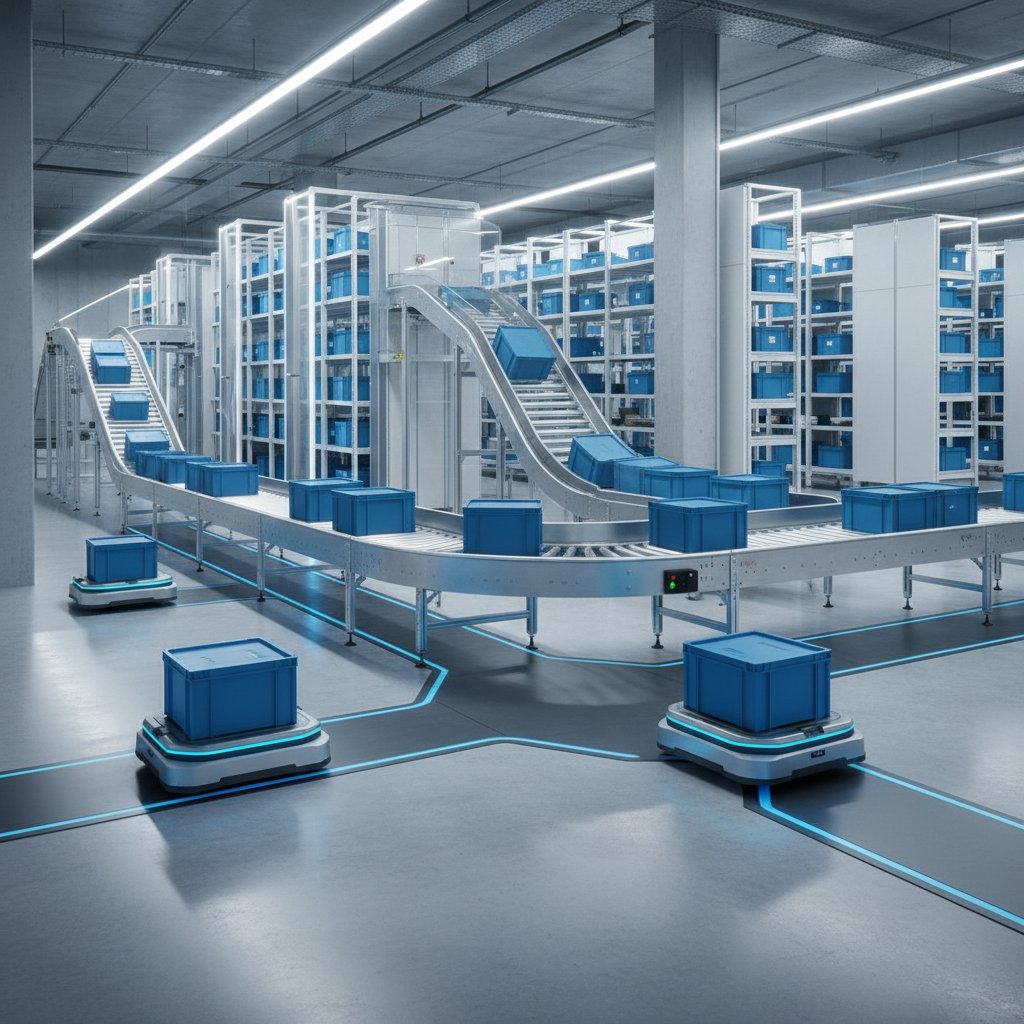
A Digital Twin, in the context of warehouse logistics, is a comprehensive virtual replica of a physical conveyor system and its surrounding environment. It goes beyond a simple 3D model by integrating real-time or historical operational data (like order volumes, product mixes, and processing times) to create a dynamic simulation. This allows operators to accurately test "what-if" scenarios, identify potential bottlenecks, and validate layout changes before a single piece of hardware is ordered or moved.
Why Digital Twins are Crucial for Modern Benelux Warehouses
The operational realities in the Netherlands, Belgium, and Luxembourg present a unique set of challenges that make Digital Twin adoption particularly compelling. Labour costs are among the highest in Europe, with hourly wages for a logistics operator often ranging from €35 to €45 when all social charges are included. Furthermore, industrial real estate is scarce and expensive, especially near major ports like Antwerp and Rotterdam or key air cargo hubs like Schiphol and Liège.
In this environment, layout mistakes are incredibly costly. A poorly designed conveyor merge can cause hours of downtime, and an inefficient sorter placement can create bottlenecks that ripple through the entire fulfillment process. A Digital Twin mitigates these risks by allowing for precise validation of every component, from the speed of a belt conveyor (e.g., 1.5 m/s) to the capacity of an accumulation zone. It provides certainty that a proposed multi-million-euro investment will deliver the expected throughput and ROI.
A Step-by-Step Guide to Implementation
Deploying a Digital Twin for layout optimization is a structured process that moves from data collection to virtual simulation and finally to physical implementation. It bridges the gap between engineering plans and operational reality.
Phase 1: Data Collection & Model Creation
The principle of "garbage in, garbage out" is paramount. An accurate twin requires high-quality data. This includes:
- Static Data: CAD drawings of the facility, detailed specifications of all MHE (conveyors, sorters, scanners), including dimensions (e.g., belt width of 800 mm), max load (50 kg/m), and speeds (0.5 to 2.5 m/s).
- Dynamic Data: Historical order data from the WMS/WCS, including profiles (product dimensions, weight), order frequency, and seasonality. Throughput data from SCADA systems is also integrated.
This data is used to build a to-scale 3D model and configure the physics engine to simulate how parcels will realistically move, accumulate, and merge on the conveyors.
Phase 2: Simulation & Scenario Analysis
This is where the value is generated. Warehouse managers can test a wide range of scenarios without disrupting live operations. Examples include:
- Layout A vs. Layout B: Directly compare two or more proposed layouts under identical conditions to see which one delivers better performance.
- Peak Load Stress Testing: Simulate a Black Friday or holiday peak by feeding the model with 2-3x the average order volume. This reveals the system's true breaking points.
- Product Mix Changes: Test the impact of introducing new product types (e.g., smaller items requiring tighter roller pitch or heavier items requiring more robust motors).
Phase 3: Validation & Deployment
Before committing to capital expenditure, the simulation results are compared against the initial objectives. Does the new layout achieve the target throughput of 5,000 parcels per hour? Does it reduce the average carton cycle time by 15%? The goal is to achieve a simulation accuracy of over 95% compared to baseline data. Once validated, the model becomes the definitive blueprint for the physical installation, minimizing installation errors and accelerating ramp-up.
Cost-Benefit Analysis: Investment vs. ROI
While the benefits are clear, implementing a Digital Twin requires an upfront investment. For a typical medium-sized distribution center in the Benelux, this can range from €25,000 to €75,000, depending on the complexity of the operation and the level of data integration required. However, this cost should be weighed against the potential savings and performance gains.
| Aspect | Traditional Layout Planning | Digital Twin-Based Planning |
|---|---|---|
| Planning Time & Cost | Lower initial software cost, but extensive manual calculation and drawing revisions. Higher cost if external consultants are heavily used. | Higher initial investment (€25k-€75k), but drastically reduced time for scenario analysis (hours vs. weeks). |
| Risk of Error & Downtime | High. Layout flaws are only discovered post-installation, leading to costly modifications and operational downtime (potentially costing €10k-€50k+ per hour). | Extremely low. Bottlenecks and design flaws are identified and solved in the virtual environment. Guarantees performance pre-investment. |
| Throughput Accuracy | Based on theoretical calculations and benchmarks; often optimistic. Accuracy can be as low as 70-80%. | Data-driven and highly accurate (>95%). Simulates real-world variability and provides a reliable performance forecast. |
| Flexibility & Optimization | Limited. Comparing multiple layouts is time-consuming and difficult. Optimization is superficial. | Nearly infinite scenarios can be tested to find the truly optimal layout, not just a functional one. |
| ROI Visibility | Uncertain until after the system is live. Investment is a leap of faith. | Clear, quantifiable ROI (e.g., "This layout will increase throughput by 22%") is demonstrated before any capital is spent. |
The ROI is typically realized within 12-24 months, driven by throughput increases of 15-25%, reduction in operational costs by 10-20% through better labour allocation, and the complete avoidance of six-figure layout mistakes.
Common Pitfalls and How to Avoid Them
To ensure a successful Digital Twin project, it's crucial to be aware of potential stumbling blocks:
- Poor Data Quality: Ensure that the WMS, WCS, and equipment data is clean and accurate. A twin built on flawed data will produce flawed results.
- Overly Complex Models: Don't simulate what you don't need to. Focus the model's complexity on the key areas under investigation, such as merges, sortation areas, and packing stations.
- Lack of Clear Objectives: Define what you want to achieve before you start. Are you trying to increase peak capacity, reduce staffing, or improve order accuracy? Clear KPIs are essential.
- Treating it as a One-Off Project: A Digital Twin is not just for the design phase. It's a lifecycle tool that can be used for continuous improvement, operator training, and planning future upgrades.
Choosing Your Trusted Partner for Conveyor Solutions
Successfully implementing a digitally-validated conveyor layout requires a partner that possesses a deep understanding of both the physical world of material handling and the digital realm of simulation. It's about more than just software; it's about intralogistics expertise. A credible partner can help define the project scope, ensure data integrity, and accurately interpret simulation results to provide actionable recommendations. They understand the nuances of conveyor technology—from the importance of roller pitch for small packages to the power requirements of incline belts—and can translate digital insights into robust, real-world systems. For businesses in Europe looking to leverage modular and intelligent conveyor solutions as the foundation for their digital twin projects, exploring a knowledgeable supplier is a critical first step. You can learn more about scalable conveyor hardware by visiting Easy Systems, a key player in the European market.
This article is part of the Conveyor-Design knowledge hub, edited by Easy Systems engineers who design conveyor and warehouse automation systems across the Benelux every week.
Frequently asked questions
What is a digital twin in the context of conveyor systems?+
It's a virtual, dynamic model of a physical conveyor system. It uses real-time or historical data to simulate the system's behavior, allowing for testing and optimization of layouts and processes without physical intervention.
How much does a digital twin project cost for a Benelux warehouse?+
The cost varies, but for a medium-sized warehouse, expect an initial investment between €25,000 and €75,000. This includes software, data integration, and expert consultation fees.
What is the typical ROI on a digital twin for conveyor optimization?+
ROI is typically seen within 12-24 months, driven by increased throughput (15-25%), reduced operational costs (10-20%), and avoidance of costly layout mistakes.
Can a digital twin be used for existing conveyor systems?+
Absolutely. Digital twins are ideal for retrofitting and optimizing existing facilities. By modeling the current state, you can accurately test and validate proposed changes to improve efficiency.