Implementing QRM with Modular Conveyors in Benelux: A Guide
This guide details how Benelux manufacturers can implement Quick Response Manufacturing (QRM) by leveraging modular conveyor systems. Learn to reduce lead times from weeks to days, increase agility, and gain a competitive edge in the high-mix, low-volume market.
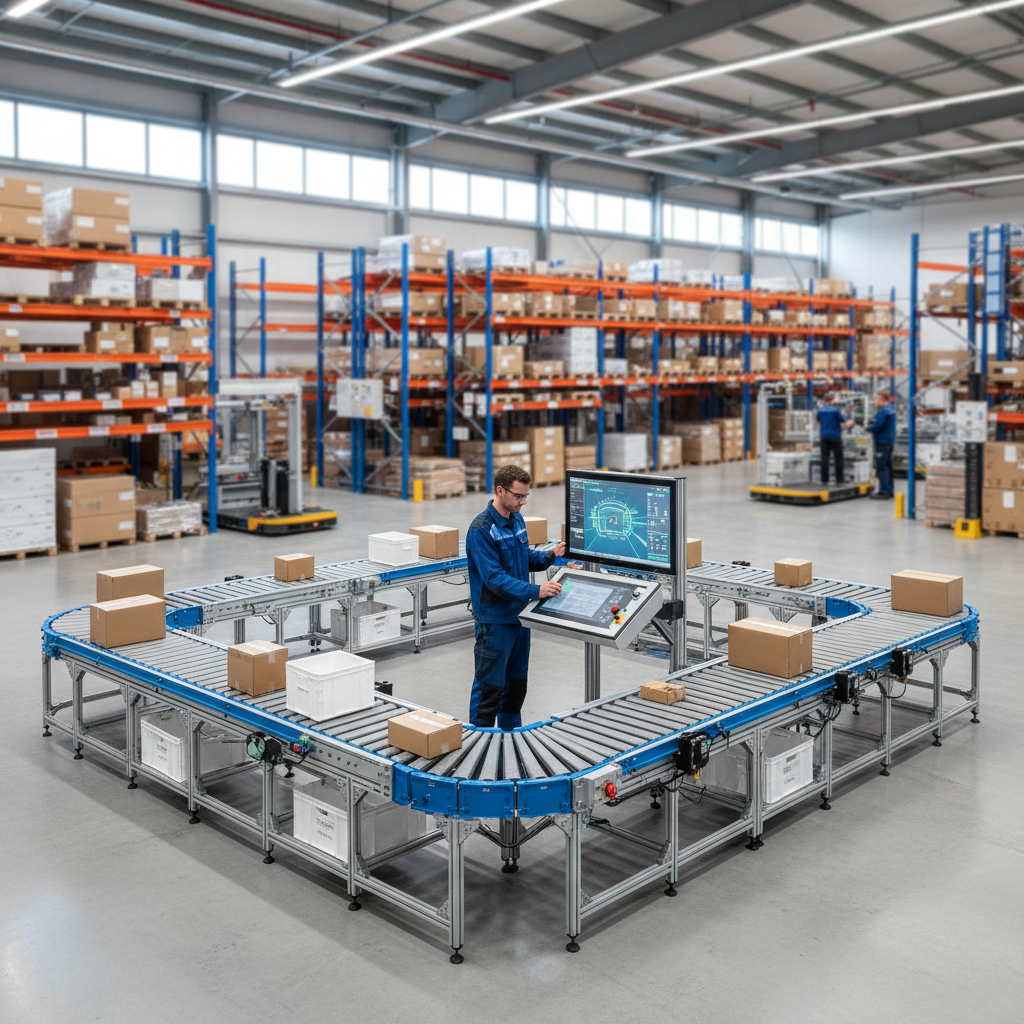
In the hyper-competitive Benelux market, speed is not just an advantage; it's a necessity. Customers demand customized products with near-immediate availability, putting immense pressure on manufacturers and logistics providers. The traditional, forecast-driven production model is breaking. The solution lies in a paradigm shift: Quick Response Manufacturing (QRM), a strategy singularly focused on lead time reduction, physically enabled by the agility of modular conveyor systems.
Definition
Quick Response Manufacturing (QRM) is an enterprise-wide strategy focused on relentlessly cutting lead times in all aspects of the manufacturing and supply chain process. Its core metric is Manufacturing Critical-path Time (MCT), which measures the calendar time from when a customer creates an order until the first piece of that order is delivered.
The QRM Imperative in the Benelux Context
The Benelux region—Belgium, the Netherlands, and Luxembourg—is a unique economic powerhouse characterized by high labor costs, a dense logistics network, and a strong focus on high-value, custom-engineered products and e-commerce. In this environment, competing on cost alone is futile. The winning strategy is to compete on time. QRM directly addresses this by tackling the hidden costs of long lead times: bloated inventories, forecasting errors, expediting costs, and lost sales. For a Dutch machine builder or a Belgian e-fulfillment center, reducing a lead time from 6 weeks to 6 days means a revolutionary improvement in cash flow, customer satisfaction, and market share.
Modular Conveyors: The Physical Backbone of QRM
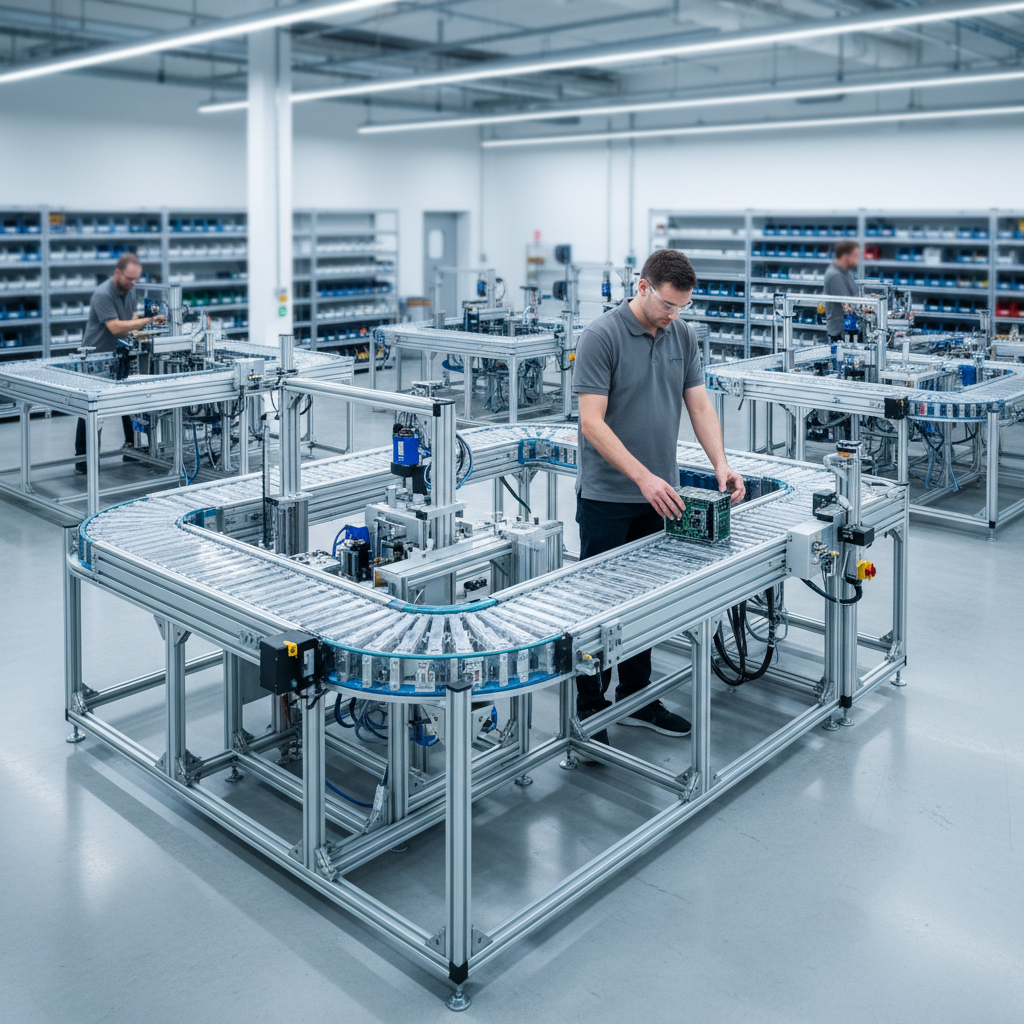
QRM's organizational cornerstone is the "QRM cell"—a co-located, multi-skilled team responsible for a specific Family of Products (FTMS). This cellular structure cannot function efficiently with rigid, linear production lines. It requires a physical infrastructure that can be adapted as quickly as market demands change. This is where modular conveyors become indispensable.
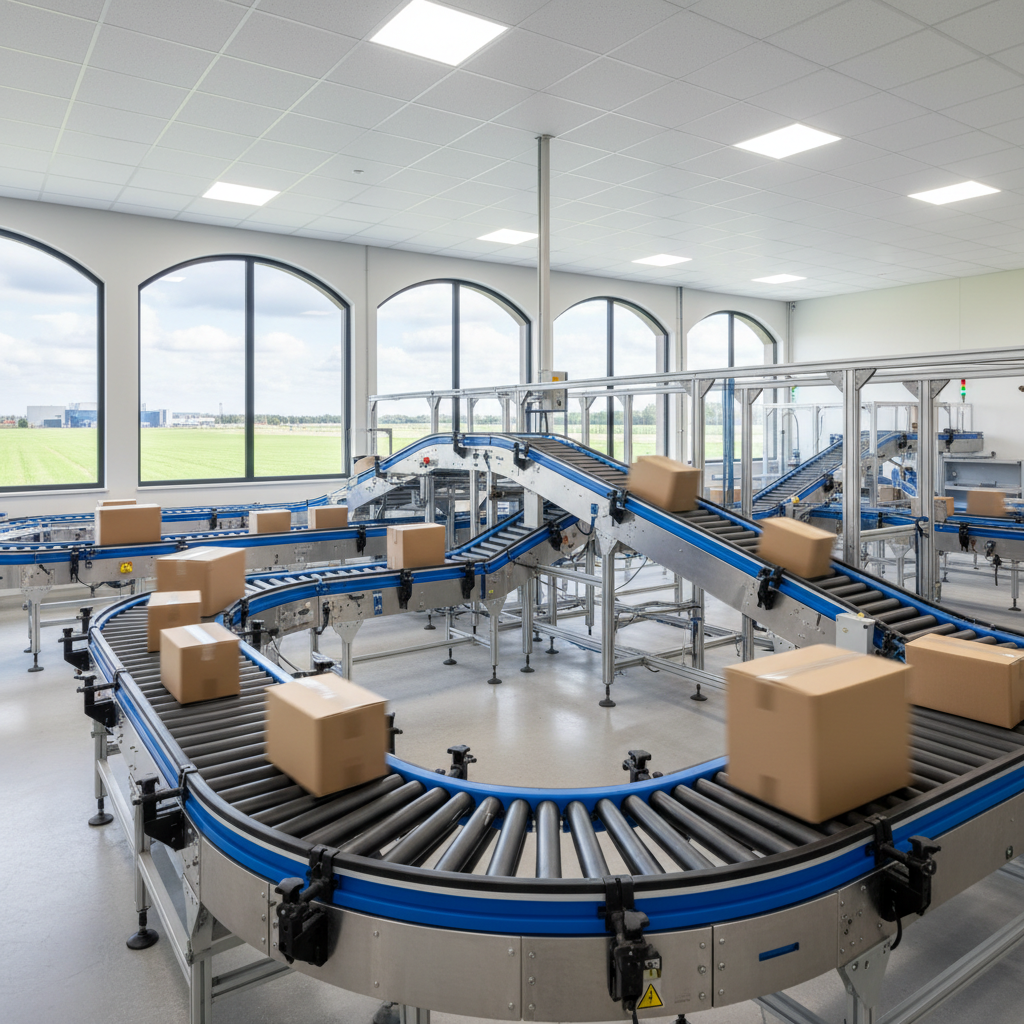
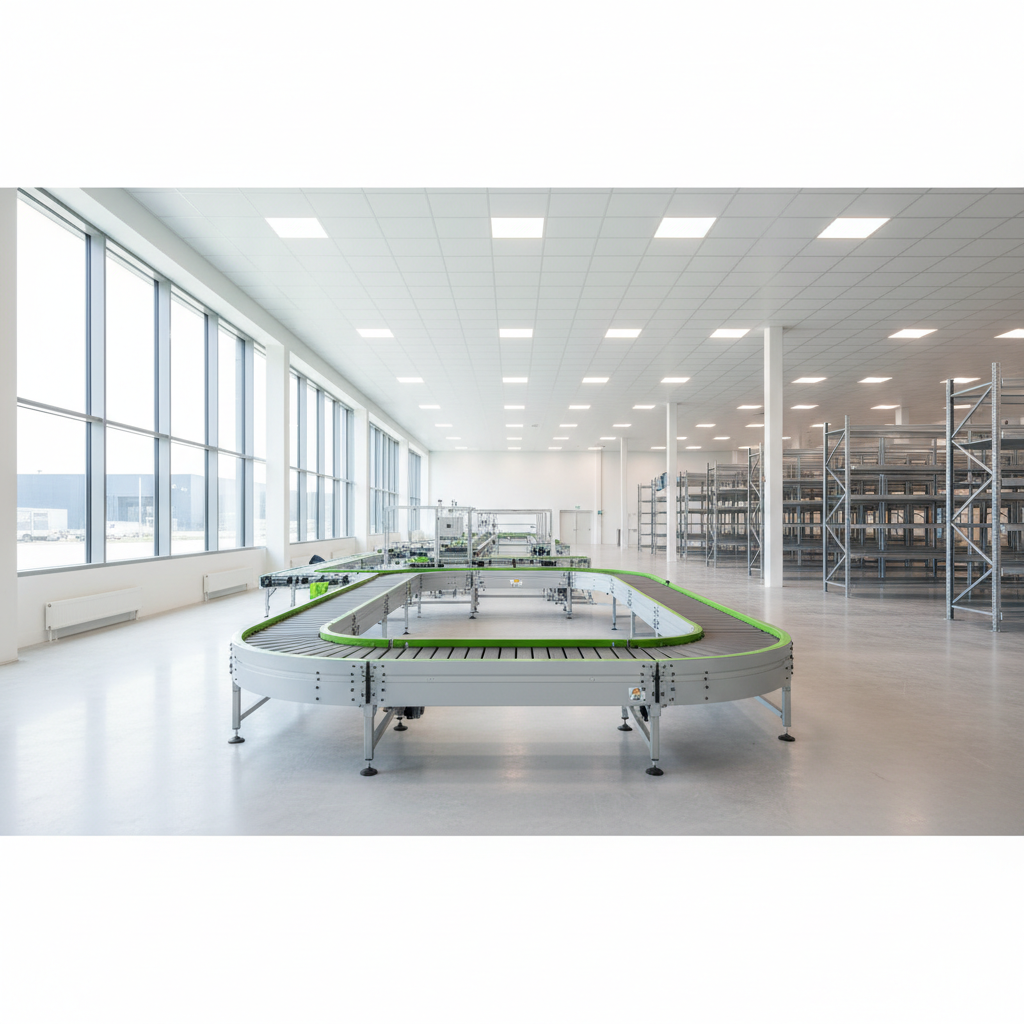
Unlike traditional, welded-frame conveyors that are a permanent fixture, modular systems are built from standardized components. Think of them as industrial LEGOs. A U-shaped assembly cell can be reconfigured into two parallel lines in a matter of hours, not weeks. This allows businesses to:
- Quickly set up dedicated lines for new product introductions.
- Scale capacity up or down by adding or removing conveyor modules.
- Rebalance workloads between cells during demand peaks.
- Drastically reduce the capital expenditure and downtime associated with layout changes.
Practical Steps for QRM Implementation with Modular Conveyors
Implementing QRM is a journey that integrates strategy, people, and equipment. A modular conveyor system is the catalyst that makes the physical changes possible.
Step 1: Mindset Shift & MCT Mapping
The first step is cultural. Management and employees must shift their focus from "cost and efficiency" to "time." The primary goal is to reduce the Manufacturing Critical-path Time (MCT). You begin by mapping the current MCT for a key product family, identifying every wait and delay from order to delivery. This often reveals that an item with 2 hours of actual touch-time has an MCT of 400 hours (2.5 weeks)!
Step 2: Reorganizing into QRM Cells
Based on your MCT map, you identify a Focused Target Market Segment (FTMS) and group the necessary resources (people and equipment) into a dedicated, self-managing QRM cell. This team is empowered to handle the entire process flow for their product family, eliminating the endless handovers and queues between departments like welding, assembly, and packing.
Step 3: Designing the Modular Conveyor Layout
Now, you design the physical workflow for the cell using modular conveyors. A typical cell might use a combination of modular plastic belt conveyors for accumulation and transport, and gravity roller conveyors for manual workstations. The layout is often U-shaped or circular to minimize travel distance and facilitate communication. For example, a standard 90-degree curve module (costing approx. €1,200) and a 2,000 mm straight section (€800) can be quickly assembled to route products between an assembly station and a testing unit.
Comparing Conveyor Systems for QRM Cells
The choice of conveyor technology is critical for QRM success. The flexibility of modular systems provides a clear advantage over traditional approaches.
| Metric | Traditional Conveyor System | Modular Conveyor System |
|---|---|---|
| Reconfiguration Time | 2-4 weeks (involving cutting, welding, new engineering) | 4-8 hours (using standard tools to bolt/unbolt modules) |
| Initial Investment | Lower for very simple, fixed layouts (€15,000 for a 20m line) | Slightly higher initial module cost (€18,000 for a 20m line) |
| Total Cost of Ownership (TCO) | High due to downtime, scrap, and external labor for changes | Significantly lower due to reusability and minimal downtime |
| Scalability | Poor; often requires complete replacement | Excellent; add, remove, or repurpose modules as needed |
| Suitability for High-Mix/Low-Volume | Very Low; optimized for one process path | Very High; designed for agility and variable process paths |
Quantifiable Benefits: A Dutch E-Fulfillment Case
Consider a hypothetical e-fulfillment center in the Netherlands specializing in customized gift boxes. Before QRM, their process was departmentalized: order processing, item picking, box assembly, gift wrapping, and shipping were separate queues. Their average lead time (MCT) was 72 hours, with only 45 minutes of actual touch time. By creating three QRM cells, each dedicated to a gift box category and connected by a modular belt conveyor system, they achieved dramatic results:
- MCT Reduction: The average lead time dropped from 72 hours to just 8 hours.
- Inventory Reduction: Work-in-progress (WIP) inventory was cut by 80% as orders no longer sat in queues.
- Productivity: On-time delivery rates improved from 92% to 99.8%.
- Flexibility: During the Sinterklaas peak season, they reconfigured one cell in 6 hours to handle a temporary surge in chocolate letter orders, a task that would have been impossible before.
Easy Systems: Your Partner for Agile QRM Implementation
Successfully implementing QRM requires a partner who understands both the strategic principles and the physical technology. Generic, off-the-shelf conveyors won't provide the agility you need. At Easy Systems, we specialize in designing and delivering high-quality modular conveyor systems that form the foundation of successful QRM cells. Our plug-and-play modules, ranging from simple roller tracks to sophisticated motorized belt systems, are engineered for rapid assembly and reconfiguration, empowering Benelux companies to reduce their lead times and win in a time-based market. Discover how our tailored solutions can become the physical backbone of your QRM strategy by visiting our website. For more info, check out Easy Systems Netherlands.
This article is part of the Conveyor-Design knowledge hub, edited by Easy Systems engineers who design conveyor and warehouse automation systems across the Benelux every week.
Frequently asked questions
What's the main difference between QRM and Lean Manufacturing?+
Lean primarily focuses on eliminating waste (muda) in high-volume, low-variability environments. QRM's primary focus is relentlessly reducing lead time, making it ideal for high-mix, low-volume or custom-engineered products common in the Benelux market.
Is the initial investment in modular conveyors for QRM high?+
While the initial capital outlay might be comparable to traditional systems, the Total Cost of Ownership (TCO) is significantly lower. Savings come from reduced reconfiguration downtime (hours instead of weeks), higher asset utilisation, and lower inventory holding costs.
How quickly can a Benelux SME see results from a QRM implementation?+
Pilot projects within a single QRM cell can show significant lead time reductions (e.g., 50% or more) within 3 to 6 months. A full, company-wide roll-out is a longer journey, often taking 18-24 months to fully embed the principles and technology.