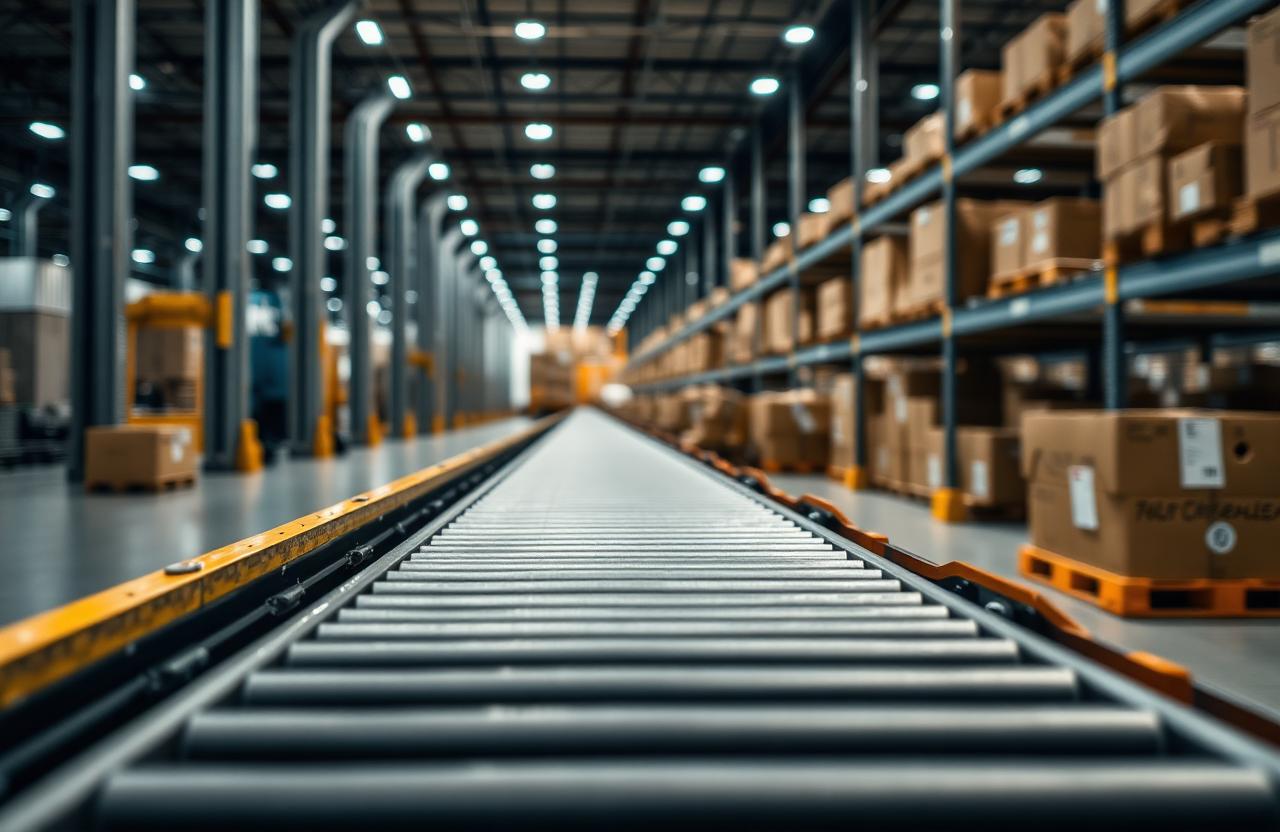
EU Green Deal: Impact on Benelux Conveyor Systems
The European Green Deal is reshaping logistics in the Benelux by enforcing stricter energy and material efficiency standards for conveyor systems. This guide covers key regulations, innovative technologies, and a practical roadmap for compliance and competitive advantage.
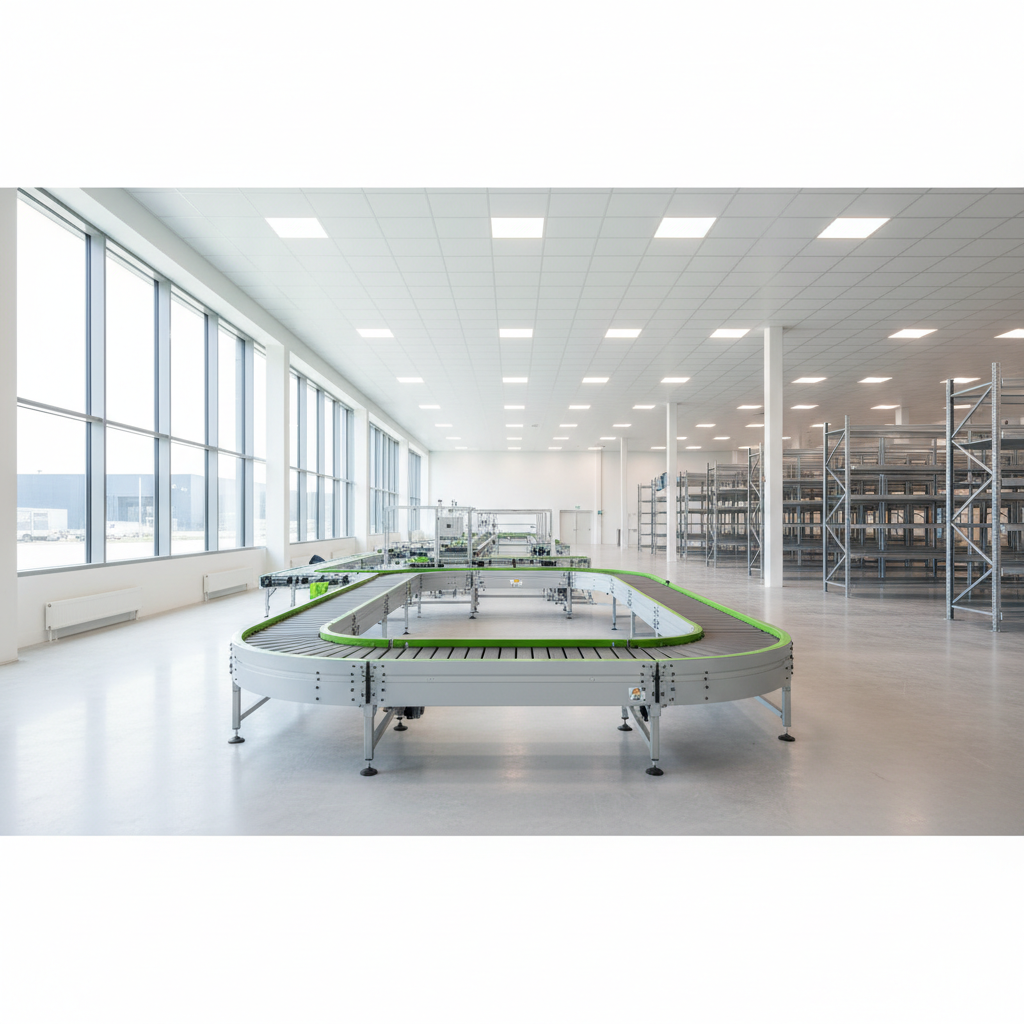
The European Union's Green Deal is not just a high-level policy document; it's a transformative force directly impacting the operational floor of every warehouse and distribution center in the Benelux. For logistics managers, the focus is increasingly on the backbone of their operations: the conveyor system. Navigating the new requirements for compliance while seizing the opportunities for innovation is now a critical path to sustainable and profitable logistics in the heart of Europe.
Definition
The EU Green Deal's impact on conveyor systems refers to the set of regulatory requirements and market-driven incentives aimed at making material handling equipment more sustainable. This primarily involves improving energy efficiency, promoting a circular economy through modular and reusable designs, and reducing the overall environmental footprint of logistics operations in line with the EU's 2050 climate-neutrality goal.
The EU Green Deal and Logistics: A Quick Primer
The EU Green Deal is a comprehensive package of policy initiatives with the overarching aim of making the European Union climate-neutral by 2050. For the industrial and logistics sectors, this translates into concrete targets for reducing emissions, improving energy efficiency, and transitioning to a circular economy. It's not a single law but a framework that influences numerous other regulations, creating a cascading effect on how businesses procure, operate, and maintain their equipment. For warehouse operators in the dense logistical landscape of Belgium, the Netherlands, and Luxembourg, understanding these changes is not optional—it's essential for future-proofing their operations.
Key EU Regulations Affecting Conveyor Systems
While the Green Deal is the strategy, specific regulations provide the teeth. The most significant for conveyor systems are those related to energy consumption and product design.
The Ecodesign Directive and the Motor Regulation (EU) 2019/1781
This is the most critical piece of legislation. The Ecodesign Directive sets a framework for improving the environmental performance of products. It's the source of the **Motor Regulation (EU) 2019/1781**, which establishes mandatory Minimum Energy Performance Standards (MEPS) for electric motors.
- Efficiency Classes (IE): The regulation phases out inefficient motors. It has mandated a shift from older IE1 and IE2 class motors to higher efficiency classes.
- As of July 2023: Most new three-phase AC motors with a power output between 0.75 kW and 1000 kW sold in the EU must meet the IE3 (Premium Efficiency) standard. Crucially, motors between 75 kW and 200 kW must meet the even stricter IE4 (Super Premium Efficiency) class.
Since these motors are the primary power source for most belt and roller conveyor systems, this regulation directly forces a technological upgrade. An older system running on continuously operating IE1 motors consumes vastly more energy than a modern IE4-driven system with smart controls.
The Circular Economy Action Plan
A second pillar of the Green Deal, this plan promotes sustainability throughout a product's entire lifecycle. For conveyor systems, this means a shift away from welded, disposable designs towards:
Modularity: Systems built with standardized, bolted components that can be easily reconfigured, repaired, or expanded.
Repairability: Easy access to and replacement of wear-and-tear parts like belts, rollers, and motor drives.
Recyclability: Use of materials (like aluminum and steel) that can be effectively recycled at the end of the system's life.
Technological Innovations Driven by the Green Deal
Regulation is a powerful catalyst for innovation. The market is responding with a new generation of conveyor technologies designed for efficiency and circularity. The differences between legacy systems and Green Deal-compliant ones are stark.
Comparison: Traditional vs. Green Deal-Compliant Conveyors
| Feature | Traditional Conveyor System (Pre-Green Deal) | Green Deal-Compliant Conveyor System |
|---|---|---|
| Motor Technology | Standard AC motors (IE1/IE2 efficiency class). | High-efficiency motors (IE3, IE4, IE5), 24V DC motorized rollers. |
| Energy Consumption | Continuous operation, high baseline consumption (e.g., 0.75 kWh per motor). | Run-on-demand/ZPA logic, lower consumption (e.g., 0.1 - 0.3 kWh per motor). Savings of 50-80%. |
| Control System | Centralized PLC, often running all sections continuously. | Decentralized, IoT-enabled controls; zero-pressure accumulation (ZPA) logic. |
| Design & Modularity | Welded, fixed-length frames. Difficult to reconfigure or repair. | Modular, aluminum or steel-bolted construction. Easily reconfigurable, repairable, and reusable components. |
| Maintenance | Reactive, based on failure. Higher downtime and labor costs. | Predictive maintenance via sensors (vibration, temperature). Proactive component replacement, lower downtime. |
| Typical Initial Cost (per meter, roller conveyor) | €300 - €500 | €450 - €700 (Higher CAPEX, lower TCO). |
Core Technologies in Detail
Motorized Roller Conveyors (MDR)
24V DC Motorized Drive Roller (MDR) systems are a cornerstone of modern, energy-efficient design. Instead of a single large AC motor driving long sections of belt or rollers, MDR systems use individual motorized rollers to create small, independently controlled zones. A box moves from one zone to the next, with each zone only activating when a product is present. This "run-on-demand" approach, also known as Zero-Pressure Accumulation (ZPA), can reduce energy consumption by up to 80% compared to a continuously running AC motor system.
Smart Controls and IoT
The brain behind the efficiency is the control system. Modern conveyor controls utilize decentralized logic, often with simple ethernet-based controllers on each zone. This allows for:
- Dynamic Zoning: Activating only the necessary 1,000 mm or 1,500 mm section of the conveyor.
- Sleep Modes: Automatically powering down sections after a set period of inactivity (e.g., 30 seconds), with instant wake-up when a product is detected.
- Data Collection: IoT-enabled sensors can monitor motor temperature, vibration, and running hours, feeding data to a Warehouse Management System (WMS) to enable predictive maintenance and prevent costly downtime.
A Practical Roadmap for Benelux Operations
For a logistics manager in Venlo, Antwerp, or Luxembourg City, the path to compliance and efficiency can be broken down into manageable steps.
- Audit Your Existing Systems: The first step is to create an inventory of your current conveyors. Document the motor types (check the nameplate for IE class), age, and operational logic. Is the system running 24/7, even when no products are on it? This data forms your baseline.
- Identify High-Impact Areas: Analyze your energy bills. Focus on the longest, most frequently used conveyor lines. These are your prime candidates for an upgrade, as they will deliver the fastest Return on Investment (ROI). A 100-meter line running 16 hours a day with an old IE1 motor is a massive energy drain.
- Calculate ROI on Upgrades: A modern IE4 motor or a 24V MDR system has a higher initial CAPEX. However, the operational expenditure (OPEX) is drastically lower. A simple calculation: `(Old kWh - New kWh) * Cost per kWh * Running Hours = Annual Savings`. In the Benelux, where industrial electricity prices can exceed €0.20/kWh, savings of €5,000 - €10,000 per year on a single major conveyor line are realistic. The ROI period is often just 2-4 years.
- Phased Implementation & Modular Design: You don't need to replace everything at once. A key advantage of modern systems is their modularity. You can upgrade one section at a time. Partnering with a supplier who understands this is crucial. For instance, a specialist in modular conveyor solutions can help design a system that integrates with your existing layout and allows for phased upgrades, minimizing operational disruption. This approach aligns perfectly with the Green Deal's circular economy principles.
- Leverage Data for Continuous Improvement: Once your new system is installed, use the data from its smart controls to monitor performance. Track energy usage per zone, identify bottlenecks, and use predictive maintenance alerts to schedule service, turning your conveyor from a "dumb" mover into a "smart" asset.
Beyond Compliance: The Competitive Advantage of Green Logistics
Meeting EU regulations is a necessity, but the real benefit lies in the competitive advantage. Large clients, especially in the e-commerce and retail sectors, are increasingly scrutinizing the carbon footprint of their supply chain partners (Scope 3 emissions). A warehouse that can demonstrate a low-energy, sustainable operation has a powerful unique selling proposition. It reduces costs, improves brand image, and attracts premium clients who value sustainability. In the competitive logistics market of the Benelux, this is a decisive factor.
Easy Systems: Your Partner for Green Deal-Compliant Conveyor Solutions
Navigating the transition to sustainable warehouse automation requires expertise and the right technology. At Easy Systems, we specialize in modular, energy-efficient conveyor systems designed for the demands of the modern European market. Our 24V MDR and high-efficiency AC motor solutions are engineered to exceed the requirements of the EU Green Deal, providing our Benelux clients with a clear path to lower energy costs, reduced maintenance, and a smaller carbon footprint.
We understand that every warehouse is unique. Our engineering team works with you to audit your current setup, design a phased implementation plan, and deliver a modular system that grows with your business. By focusing on smart, run-on-demand technology and circular design principles, we help you turn a regulatory challenge into a tangible competitive advantage. Partner with Easy Systems to build a faster, smarter, and greener logistics operation.
This article is part of the Conveyor-Design knowledge hub, edited by Easy Systems engineers who design conveyor and warehouse automation systems across the Benelux every week.
Frequently asked questions
What is the most important regulation for conveyor motors under the Green Deal?+
The Ecodesign Regulation (EU) 2019/1781 is critical, setting minimum efficiency standards (MEPS) for electric motors. As of July 2023, new motors between 75 kW and 200 kW must meet the IE4 efficiency class, directly impacting conveyor drive systems.
Is switching to sustainable conveyors expensive?+
While the initial investment (CAPEX) can be higher, the total cost of ownership (TCO) is often lower. Energy savings, reduced maintenance, and potential government subsidies in Benelux countries can lead to a return on investment within 2-4 years.
How does modular design contribute to Green Deal goals?+
Modular conveyor design promotes a circular economy. It allows for easier repairs, reconfiguration, and reuse of components instead of replacing entire systems. This reduces waste, extends the equipment's lifespan, and lowers long-term resource consumption.