Quick Response Manufacturing: Boost Efficiency with Lean Conveyors in Benelux
Quick Response Manufacturing (QRM) paired with lean conveyor systems is revolutionizing Benelux logistics. This powerful combination drastically cuts lead times, reduces waste, and increases flexibility, enabling manufacturers to respond faster to volatile market demands.
In the hyper-competitive European market, particularly within the logistics-intensive Benelux region, speed is not just a feature—it's a core business strategy. Quick Response Manufacturing (QRM) offers a powerful framework for achieving this speed. However, the theory of QRM can only be fully realized when supported by equally agile physical infrastructure. This is where lean, modular conveyor systems become a critical enabler, transforming factory floors from rigid production lines into dynamic, responsive cells.
Definition
Quick Response Manufacturing (QRM) is a company-wide strategy focused on relentlessly cutting lead time in all aspects of an operation, from the office to the factory floor and through the supply chain. Unlike traditional manufacturing which often prioritizes cost reduction through economies of scale, QRM prioritizes speed and responsiveness to gain a competitive advantage, particularly in high-mix, low-volume (HMLV) environments.
The Core Principles of QRM in a European Context
QRM is built on four foundational concepts that are especially relevant for manufacturers in Belgium, the Netherlands, and Luxembourg:
- The Power of Time: Traditional focus is on cost. QRM posits that an obsessive focus on reducing lead time inherently drives down costs, improves quality, and increases market share. Long lead times create hidden costs like forecasting, planning, inventory management, and expediting.
- Organizational Structure: QRM challenges departmental silos. It advocates for creating flexible, cross-functional QRM cells. These cells are collocated, multi-skilled teams responsible for a specific Family of Products (FTMS) from start to finish, minimizing handovers and waiting time.
- System Dynamics: Understanding that high machine or labor utilization is often counter-productive. A factory running at 100% capacity has no room for variability, leading to massive queues and long lead times. QRM suggests planning for around 80% capacity to absorb fluctuations and maintain flow.
- Company-Wide Application: QRM is not just a shop floor strategy. The principles of lead time reduction must be applied to quoting, engineering, purchasing, and all other office processes that contribute to the total customer lead time.
Traditional vs. Lean Conveyor Systems for QRM
The physical flow of materials is the heartbeat of a manufacturing facility. The choice of conveyor technology can either enable or completely obstruct a QRM strategy.
The Bottlenecks of Traditional Systems
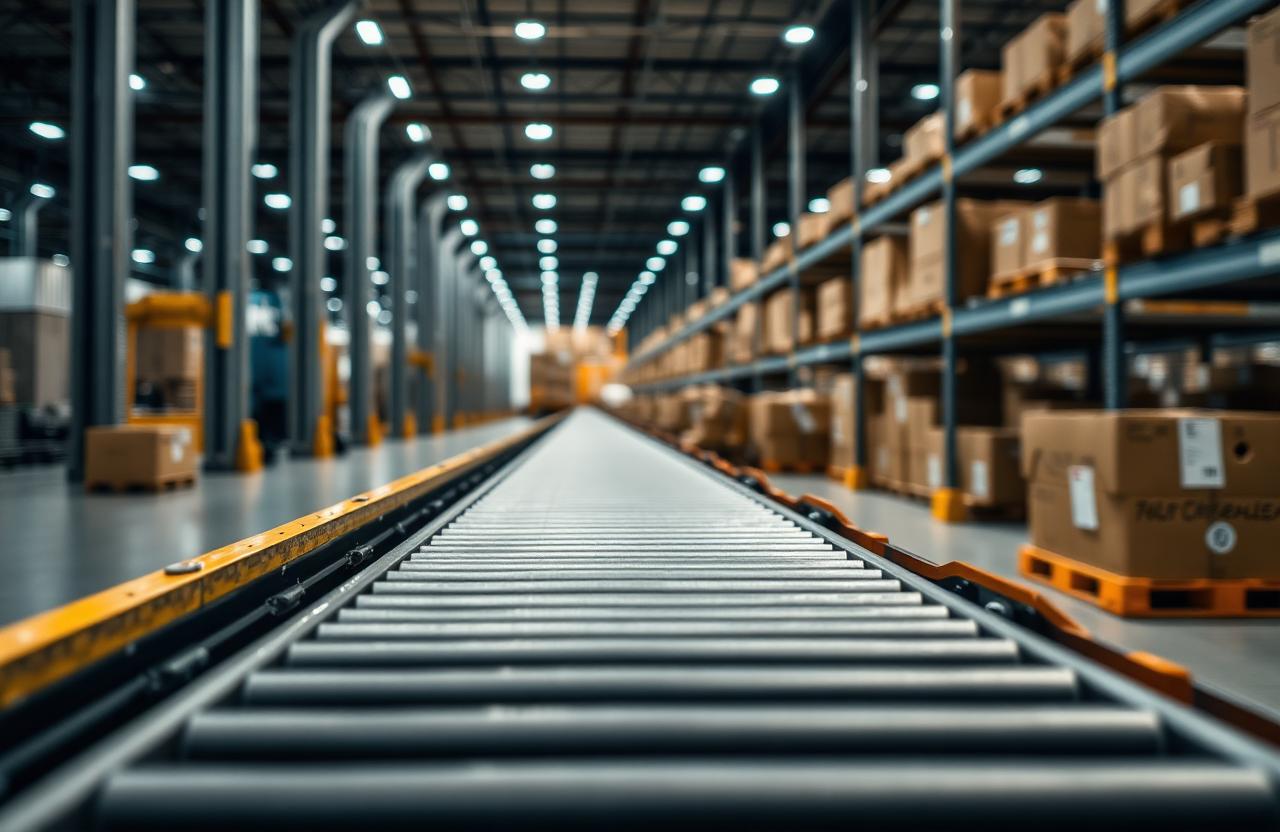
Traditional conveyor systems—long, fixed, monolithic belts or roller tracks—are the antithesis of QRM. They are designed for mass production of a single product type. They create long, inflexible lines that are impossible to reconfigure without significant downtime and cost. Products queue up, creating massive amounts of Work-in-Progress (WIP), the very thing QRM seeks to eliminate. If one part of the line goes down, the entire process grinds to a halt.
The Flexibility of Lean Conveyor Technology
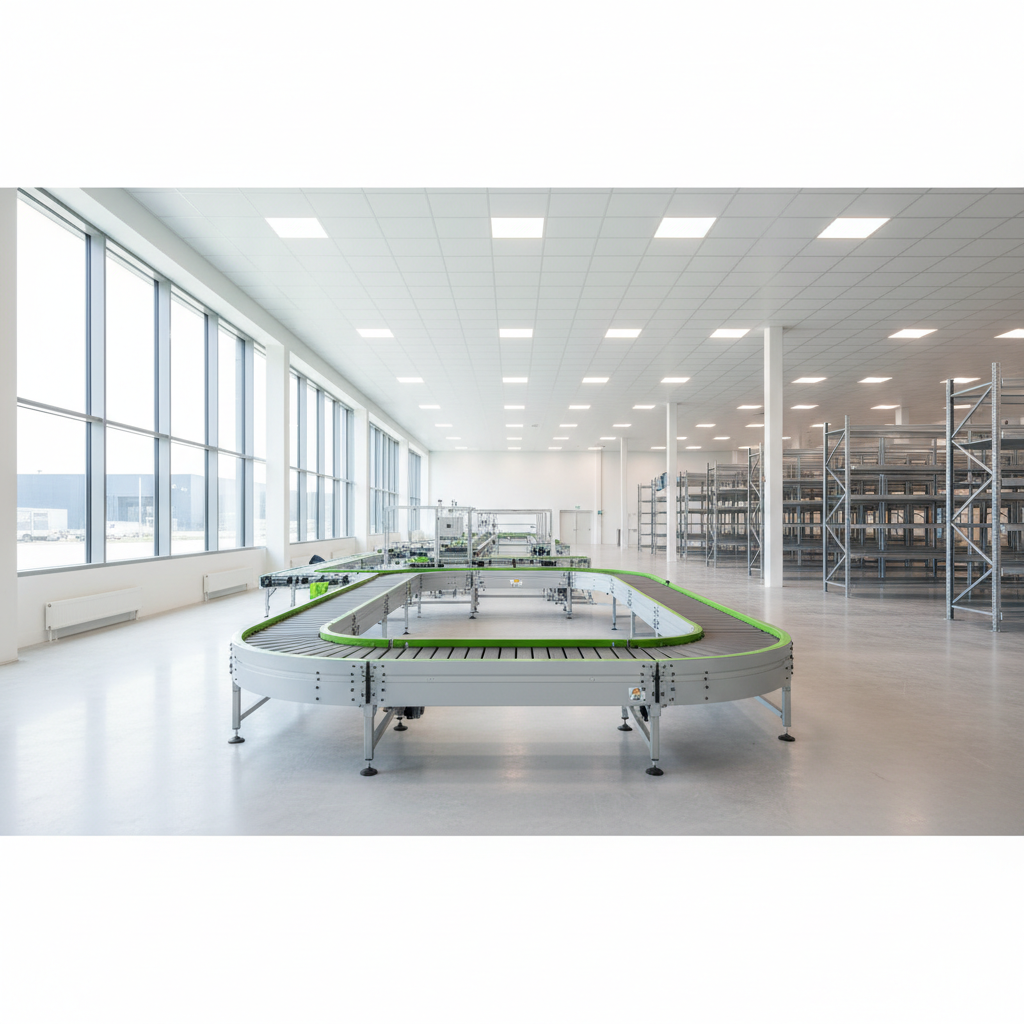
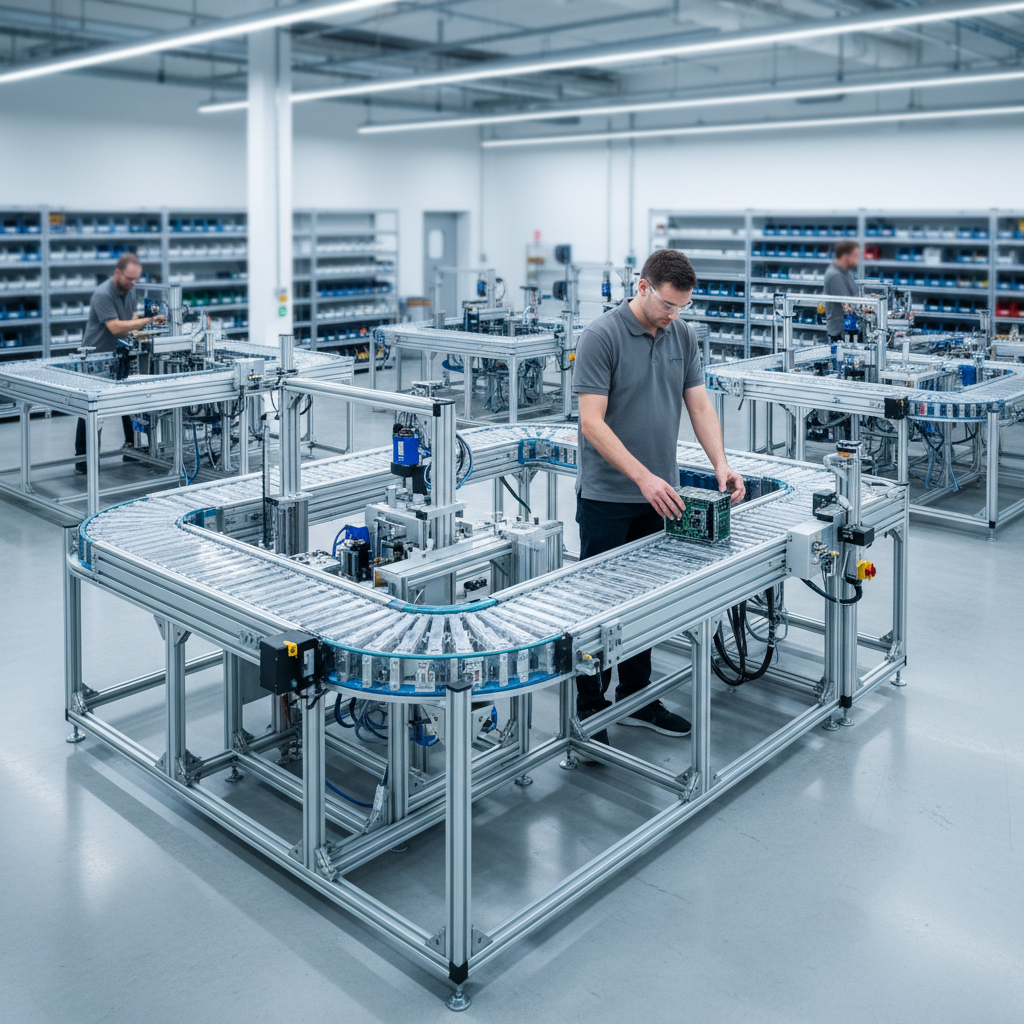
Lean, modular conveyor systems are designed for agility. Built from standardized, lightweight aluminum profiles and components, they can be configured into compact, U-shaped or C-shaped cells that mirror the QRM cell structure. This allows a small team to manage a complete process with minimal movement, promoting single-piece flow and eliminating WIP build-up. These systems are not fixed; they are dynamic assets.
| Feature | Traditional Conveyor System | Lean Modular Conveyor System |
|---|---|---|
| Lead Time Impact | Often increases due to fixed long lines & high WIP | Directly reduces lead time by 20-50% |
| Footprint | Large, fixed, often > 300 m² | Compact, cellular, < 100 m² for the same output |
| Reconfiguration Time | Days or even weeks | A few hours (e.g., 2-4 hours) |
| Typical Speed | Fixed, e.g., 0.5 m/s | Variable, adjustable (0.1 to 1.5 m/s) |
| WIP Inventory | High, products queue on the line | Minimal, often single-piece flow |
| Initial Cost (per 10m) | €18,000 - €30,000 | €12,000 - €22,000 (highly scalable) |
| Ideal Environment | Mass production, low product mix | High-mix, low-volume (HMLV) |
A Practical Guide: Implementing Lean Conveyors for QRM in Benelux
Step 1: Time Mapping and Identifying Bottlenecks
Before implementing any hardware, map your current process. A Manufacturing Critical-path Time (MCT) map is the core tool of QRM. It charts the "gray space" (waiting time) and "white space" (value-added time). In many Benelux facilities, you'll find that actual processing time is less than 5% of the total lead time. The rest is material handling, waiting, and rework. This is where lean conveyors directly attack that 95%.
Step 2: Cellular Design and Conveyor Integration
Group products into Focused Target Market Segments (FTMS). Design QRM cells around these families. A modular conveyor system can be configured to create an ergonomic U-shaped cell where one operator can manage multiple process steps. For example, a raw component can be introduced at one end of the 'U', undergo assembly and testing on the conveyor, and emerge as a finished product at the other end, all within a space of less than 50 m².
Step 3: Leveraging Modularity for Scalability
The market changes. A product that is high-volume today might be obsolete tomorrow. With modular conveyors, you are not locked into a layout. If a QRM cell needs to be repurposed for a new product family, the conveyor system can be disassembled, reconfigured, and redeployed in a matter of hours by your own maintenance staff. This level of agility is a massive competitive advantage.
Quantifiable Impact: Real-World Gains
Implementing QRM with lean automation is not just a theoretical exercise. The results are concrete and measurable:
- Lead Time Reduction: Benelux companies consistently report a 50-80% reduction in total lead time.
- WIP Reduction: By moving from batch production on long lines to single-piece flow in cells, WIP inventory and associated carrying costs can be cut by up to 90%.
- Space Reduction: Cellular layouts are far more space-efficient. A 30-60% reduction in required floor space is common, freeing up valuable real estate.
- Productivity Increase: With less time spent walking, searching for parts, and managing inventory, operator productivity can increase by 25% or more.
Why the Benelux is Primed for QRM & Lean Automation
The Benelux region, with its high labor costs (averaging €40-€50 per hour in manufacturing), export-oriented economy, and central European location, is the perfect environment for this strategy. Competing on cheap labor is impossible. Competing on speed, flexibility, and high-value customization is the only way forward. QRM provides the strategy, and lean modular automation provides the physical means to execute it effectively, turning a high-cost environment into a high-efficiency one.
Easy Systems: Your Partner in Lean Automation for QRM
Successfully implementing a QRM strategy requires a deep understanding of both the principles and the physical tools. At Easy Systems, we specialize in providing the modular, lean conveyor solutions that form the backbone of a successful QRM implementation. Our systems are designed in-house in the Benelux and are inherently flexible, scalable, and quick to deploy. We work with clients to analyze their MCT maps and design cellular conveyor layouts that eliminate non-value-added time, slash WIP, and provide the agility needed to thrive in a high-mix manufacturing environment. To transform your production floor into a competitive advantage, visit our website and learn how our tailored modular conveyor solutions can power your QRM journey.
This article is part of the Conveyor-Design knowledge hub, edited by Easy Systems engineers who design conveyor and warehouse automation systems across the Benelux every week.
Frequently asked questions
What is the main difference between Lean Manufacturing and QRM?+
Lean primarily focuses on eliminating waste (Muda), while QRM's primary metric is the relentless reduction of lead time. They are complementary, but QRM is often more effective in high-mix, low-volume scenarios where demand is unpredictable.
Can QRM work without conveyor automation?+
While possible, it's highly inefficient. Manual material transport creates significant 'white space' (waiting time) on the timeline. Lean conveyor systems automate and shorten these non-value-added periods, making a QRM strategy truly feasible and effective.
What is a realistic lead time reduction with QRM and lean conveyors?+
Companies in the Benelux have reported overall lead time reductions from 50% to as high as 95% by fully implementing QRM, with lean modular conveyors being a key enabler for streamlining the critical internal logistics component.