Conveyor System Ergonomics: Safety & Productivity in Benelux
Optimizing conveyor system ergonomics is crucial for Benelux warehouses. This guide details how to enhance worker safety, reduce musculoskeletal disorders, and increase productivity through smart design and automation.
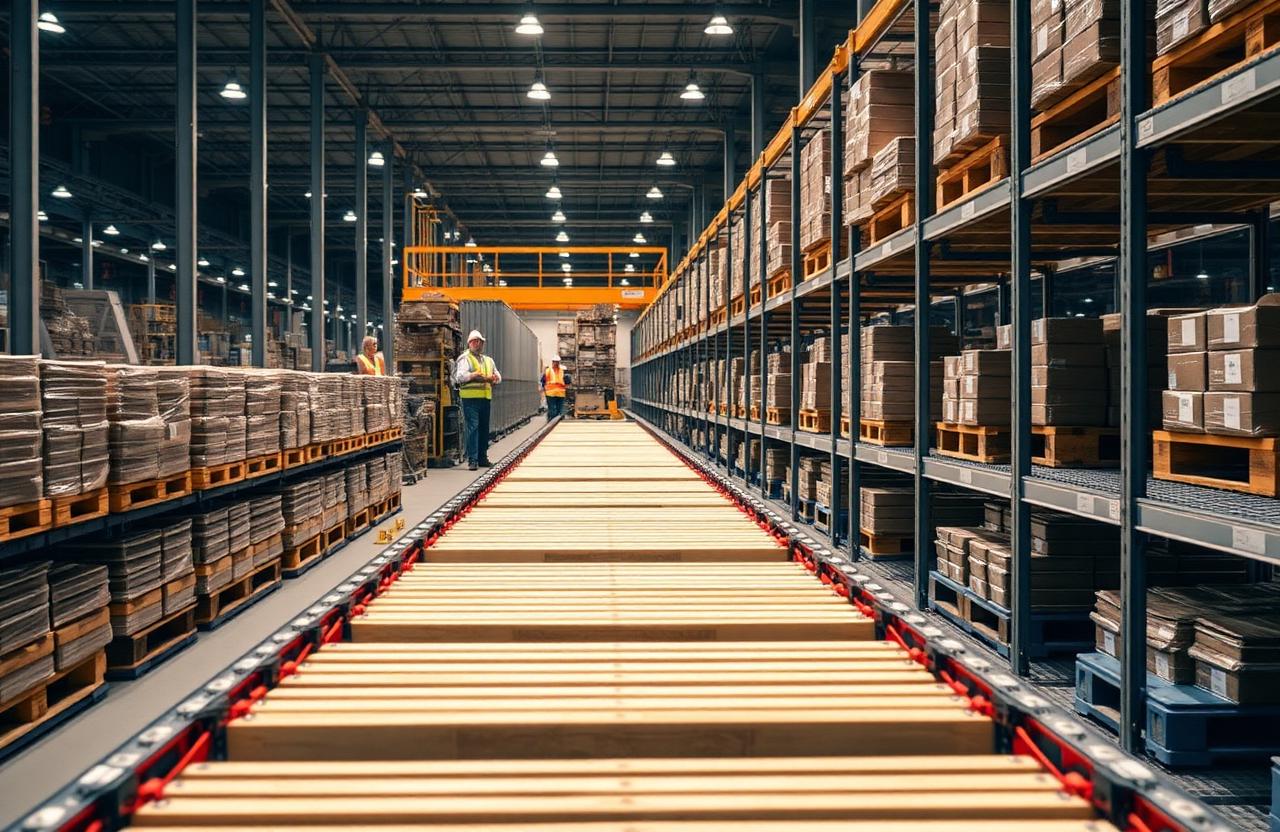
The Benelux region stands as a critical logistics hub in Europe, with warehouse activity intensifying year after year. This boom, driven by e-commerce and global trade, places immense physical demands on warehouse employees. Repetitive lifting, bending, and reaching are daily realities that can lead to injury and burnout. This is where conveyor system ergonomics becomes not just a feature, but a fundamental necessity for a safe, sustainable, and productive operation.
Definition
Conveyor system ergonomics is the science of designing conveyor systems and associated workstations to fit the worker, rather than forcing the worker to fit the system. The primary goal is to minimize physical strain, reduce the risk of injury, and enhance overall operational efficiency.
The High Cost of Poor Ergonomics in Benelux Warehouses
Ignoring ergonomics is a costly mistake. The consequences ripple through an organization, affecting its financial health, its people, and its legal standing. In the competitive Benelux market, these costs can erode margins and damage a company's reputation as an employer.
Financial Impact
According to the European Agency for Safety and Health at Work (EU-OSHA), work-related musculoskeletal disorders (MSDs) cost EU economies billions of euros annually in healthcare costs, sick leave, and lost productivity. For a typical Benelux warehouse, this translates to tangible expenses: higher insurance premiums, costs of hiring temporary staff, and administrative overheads related to managing absenteeism. A single chronic back injury can cost a company upwards of €30,000 in direct and indirect costs.
The Human Cost: Musculoskeletal Disorders (MSDs)
The primary human cost of poor ergonomics is the prevalence of MSDs. These painful and often debilitating conditions affect muscles, joints, tendons, and nerves. Common examples in a warehouse setting include:
- Lower back pain: From improper lifting and twisting while handling packages from a fixed-height conveyor.
- Tendonitis in shoulders and arms: Caused by repeatedly reaching across wide conveyors to retrieve items.
- Carpal tunnel syndrome: Resulting from repetitive wrist motions during packing or scanning tasks.
Regulatory Compliance
Employers in Belgium, the Netherlands, and Luxembourg are legally obligated to provide a safe working environment. This is governed by a framework of national laws (like the `Arbowet` in the Netherlands) and overarching EU directives, most notably the Framework Directive 89/391/EEC. This directive mandates employers to assess and mitigate workplace risks, with ergonomic hazards being a key focus. Failure to comply can result in fines, legal action, and operational shutdowns.
Core Principles of Ergonomic Conveyor Design
Effective ergonomic design focuses on a few fundamental principles that make a profound difference in worker well-being and productivity.
The "Power Zone": Working at the Right Height
The most critical principle is ensuring tasks are performed within the worker's "power zone." This is the area between a standing worker's knuckle height and their elbow height. Working in this zone minimizes stress on the back and shoulders. As workers vary in height, fixed-height conveyors are inherently non-ergonomic. The solution is adjustable-height conveyors, typically offering a range from 750 mm to 1100 mm, accommodating the 5th to 95th percentile of workers.
Minimizing Reaching and Bending
Excessive reaching over a conveyor or bending to pick from a low level creates significant strain. Ergonomic design aims to keep tasks within a comfortable reach envelope, generally no more than 450 mm. This can be achieved by using narrower conveyors, positioning workers closer to the line, or integrating devices like diverter arms that automatically push packages towards the operator.
Comparative Analysis: Ergonomic vs. Non-Ergonomic Workstation
The difference in design, performance, and cost between an ergonomic and a standard workstation is stark. The long-term value of investing in ergonomics becomes clear when analyzed side-by-side.
| Feature | Standard Non-Ergonomic Station | Ergonomic Workstation |
|---|---|---|
| Conveyor Height | Fixed, often ~700 mm | Adjustable, typically 750 mm - 1100 mm |
| Reach Distance | Can exceed 600 mm for wide belts | Minimized to < 450 mm |
| Lifting Action | Bending from floor level or reaching up high | Lifting kept within the "power zone" |
| Package Orientation | Manual twisting and turning of packages up to 20 kg | Integrated turntables or ball transfer units |
| Pace Control | Fixed speed (e.g., 0.5 m/s) | Variable speed control (e.g., 0.2 - 0.8 m/s) |
| Productivity Estimate | Baseline (e.g., 200 picks/hour) | +15-25% increase (e.g., 230-250 picks/hour) |
| Estimated MSD Risk | High | Reduced by an estimated >50% |
| Initial Investment | €8,000 per station | €10,000 - €12,000 per station |
Essential Ergonomic Equipment for Conveyor Lines
Several key pieces of equipment can transform a standard conveyor line into an ergonomic powerhouse.
Adjustable Height Conveyors & Workstations
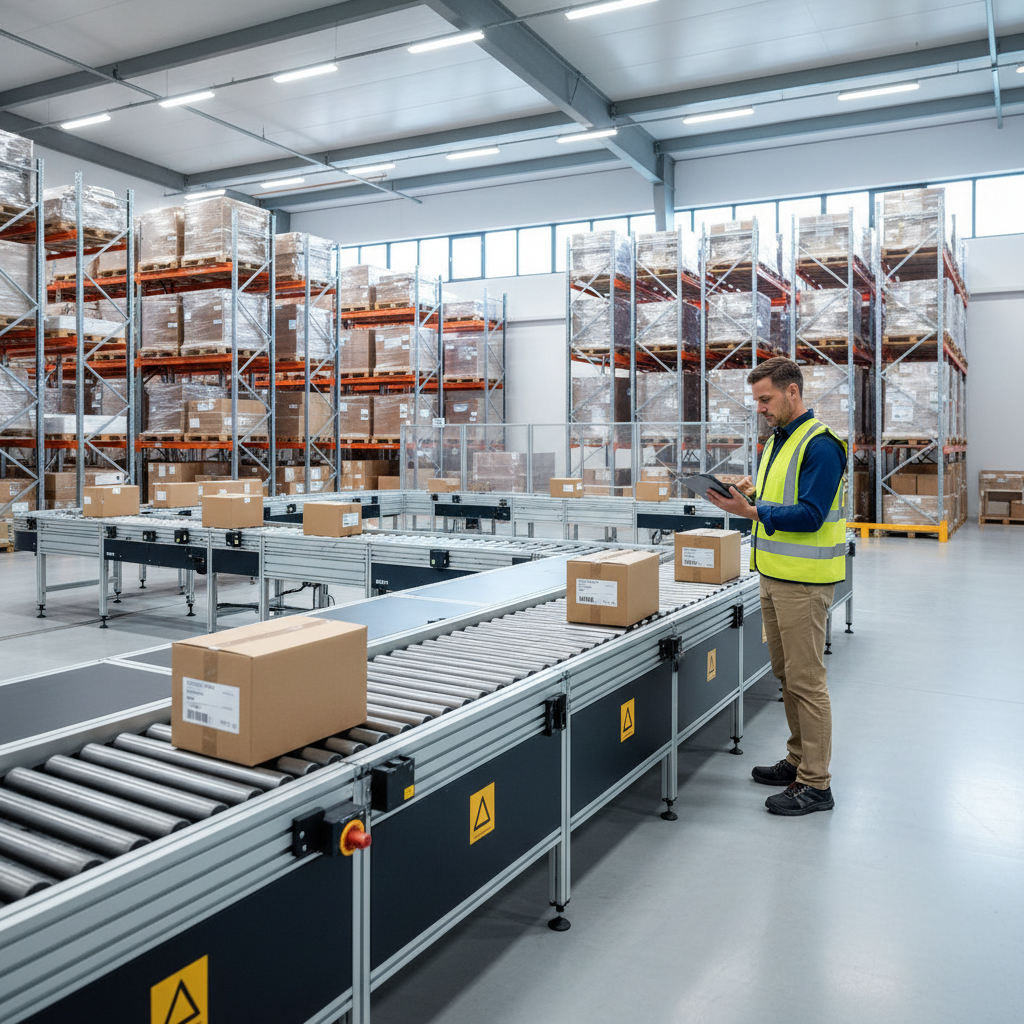
This is the cornerstone of an ergonomic setup. Electric or hydraulic lifts allow each worker, regardless of their stature, to position the work surface at their personal "power zone" height. This simple adjustment is the most effective way to reduce back and shoulder strain.
Turntables and Ball Transfer Tables
When a package needs to be rotated for labeling, scanning, or packing, workers often twist their bodies while holding the load. A turntable or a ball transfer unit integrated into the conveyor line allows the package to be spun with minimal effort, eliminating this dangerous twisting motion.
Scissor Lifts and Tilt Stands
For decanting goods from a pallet or large container onto a conveyor, a scissor lift with a tilting mechanism is invaluable. It lifts the entire pallet to the correct height and tilts it towards the operator. As the container empties, the tilt angle can be increased, preventing the need to bend deep into the container. For companies seeking to implement such integrated solutions, a thorough evaluation of the specific workflow is paramount. For example, collaborating with specialists at Easy Systems can help identify the most impactful upgrades for your Benelux operations, ensuring a seamless fit with your existing processes.
A Business Case for Ergonomics: The Benelux ROI
Investing in ergonomics is not an expense; it is an investment with a clear and compelling return. Warehouse managers in the competitive Benelux market can justify this investment through concrete improvements in key business metrics.
Calculating the Return on Investment (ROI)
A simplified ROI calculation demonstrates the financial viability:
- Calculate the Gains: Sum the annual savings from reduced absenteeism (fewer sick days), lower staff turnover (reduced recruitment and training costs), and the value of increased productivity (higher throughput).
- Determine the Investment Cost: The total cost of purchasing and installing the ergonomic equipment.
- Calculate ROI: ROI = (Total Annual Gains - Investment Cost) / Investment Cost. A positive ROI is often achieved within 18-24 months.
Easy Systems: Your Trusted Partner for Ergonomic Conveyor Solutions
In the fast-paced logistics landscape of the Benelux, you need a partner who understands the dual demands of productivity and worker welfare. Easy Systems, with its deep roots in European material handling, is uniquely positioned to deliver intelligent, ergonomic conveyor solutions.
We specialize in modular, configurable systems that are inherently flexible. Our approach is not about selling one-size-fits-all hardware; it's about collaborating with you to analyze your specific workflow, identify ergonomic bottlenecks, and engineer a solution that fits your space, your process, and your people. From adjustable-height belt conveyors to integrated turntables and smart control systems, our solutions are designed to comply with rigorous EU safety standards while delivering the throughput you need. Choose Easy Systems to build a safer, more productive warehouse for the future.
This article is part of the Conveyor-Design knowledge hub, edited by Easy Systems engineers who design conveyor and warehouse automation systems across the Benelux every week.
Frequently asked questions
What is the ideal height for an ergonomic conveyor?+
The ideal height is adjustable to the 'power zone' of the individual worker, which is typically between their knuckle and elbow height when standing. For a diverse workforce in European warehouses, an adjustable range of 750 mm to 1100 mm is highly effective.
How does conveyor ergonomics affect productivity?+
By reducing physical strain, fatigue, and awkward movements, workers can maintain a consistent and faster pace with fewer errors and less frequent breaks. This directly translates to workstation productivity gains of 15-25%.
Are ergonomic upgrades expensive?+
While the initial investment is higher than for standard, fixed equipment, the return on investment (ROI) is typically realized within 18-24 months. This is driven by significant cost savings from reduced absenteeism, lower staff turnover, and increased throughput.
What are the first steps to improve conveyor ergonomics in my warehouse?+
Begin with an ergonomic audit of your existing conveyor lines. Identify high-risk tasks involving frequent bending, reaching across wide belts, and repetitive manual lifting. Often, simple and targeted changes, like installing anti-fatigue mats or adjustable-height workstations, can provide a significant initial improvement.