Conveyor Ergonomics: Safety & Productivity in Benelux
Ergonomic conveyor system design is crucial for worker safety and operational efficiency in modern Benelux warehouses. This guide explores key principles, benefits, and practical steps for implementation.
In the high-speed logistics landscape of the Benelux, the efficiency of a warehouse often hinges on its conveyor systems. However, rapid throughput can come at a cost to worker well-being. Implementing ergonomic conveyor system design is no longer a luxury but a critical necessity for ensuring long-term productivity and compliance with strict European safety standards.
Definition
Conveyor system ergonomics is the science of designing conveyor and sortation systems to fit the human operator, rather than forcing the operator to adapt to the machine. It aims to optimize the interaction between the worker and their environment to enhance performance while minimizing the risk of musculoskeletal disorders (MSDs) and fatigue.
The High Cost of Poor Ergonomics in Benelux Logistics
Ignoring ergonomics is a costly mistake. In the European Union, MSDs account for approximately 60% of all work-related health problems. For a typical warehouse in Belgium or the Netherlands, this translates into significant financial burdens. Direct costs include sick leave, with an average cost of €250-€400 per employee per day, and increased insurance premiums. Indirect costs, such as lost productivity, hiring temporary staff, and decreased morale, can be two to three times higher. A warehouse with 100 employees could face annual costs exceeding €50,000 directly related to poor ergonomic conditions.
Identifying Ergonomic Hazards
Several common hazards exist in non-ergonomic conveyor setups:
- Repetitive Motion: Workers picking, placing, or scanning thousands of items per shift.
- Awkward Postures: Bending down to pick from low conveyors or reaching up for high ones. A reach exceeding 500 mm horizontally is considered a risk factor.
- Static Loads: Standing in one position for extended periods, leading to lower back and leg strain.
- Forceful Exertions: Manually lifting or moving heavy packages (e.g., over 15 kg) from the conveyor line.
Core Principles of Ergonomic Conveyor Design
Effective ergonomic design focuses on several key areas to mitigate risks and improve the human-machine interface. These principles are universally applicable but particularly resonant in the diverse workforce of the Benelux region.
1. The "Golden Zone" of Operation
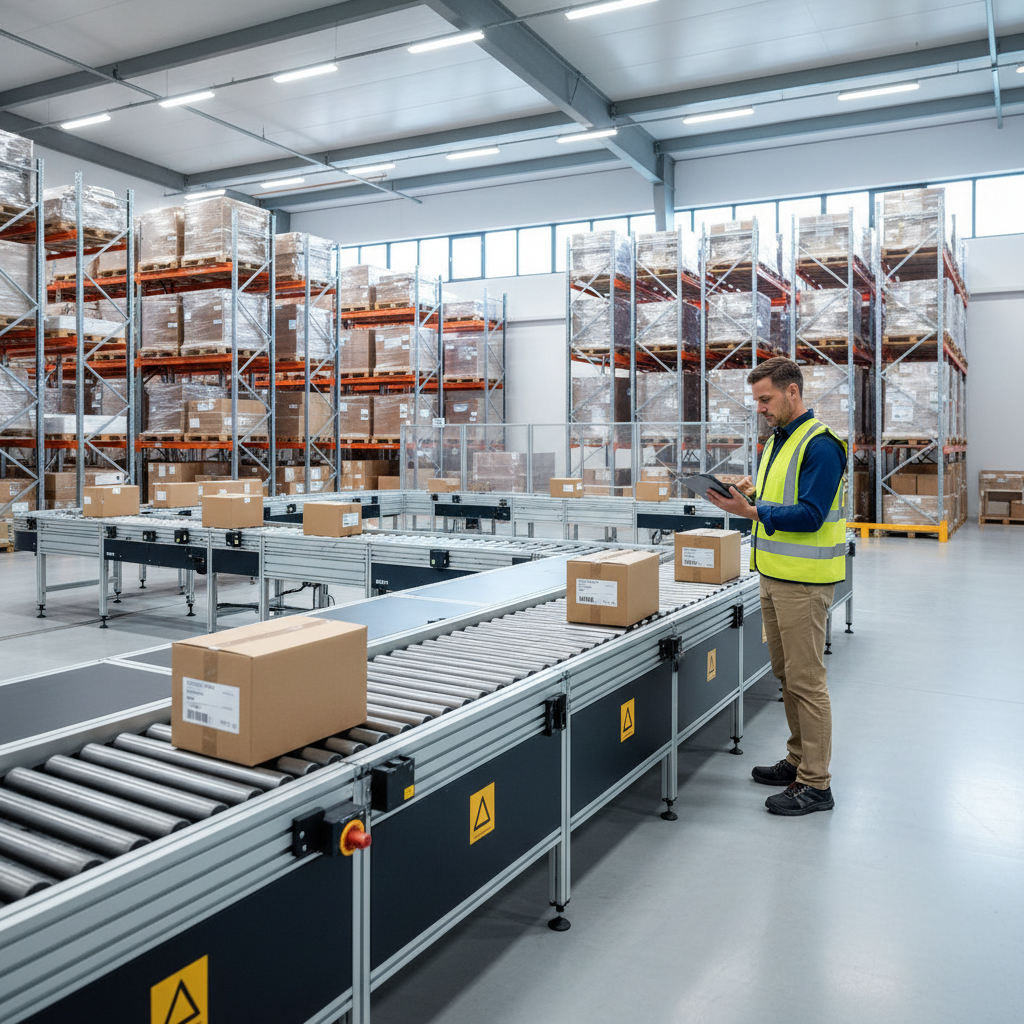
The core principle is to keep tasks within the worker's "golden zone" or "power zone." This is the area close to the body, between mid-thigh and chest height. Work performed here requires less effort and significantly reduces strain on the back and shoulders. - Optimal Height: For manual interaction, conveyors should ideally be adjustable, typically between 800 mm and 1,150 mm from the floor. - Optimal Reach: The maximum forward reach should not exceed 450-500 mm. For wider conveyors, solutions like near-side diverters or ergonomic arms are necessary.
2. Minimizing Manual Lifts and Carries
The goal is to let the conveyor do the work. Where manual handling is unavoidable, it must be optimized. - Use lift-assist devices for items over 15-20 kg. - Position accumulation zones or workstations at the same height as the main conveyor to allow for sliding instead of lifting.
3. Designing for Variation
A "one-size-fits-all" approach is ineffective. Ergonomic design accommodates variation in tasks and worker anthropometry. - Adjustable Height Conveyors: Crucial for multi-shift operations where workers of different heights use the same station. - Task Rotation: Design workflows that encourage employees to rotate between different tasks (e.g., picking, packing, scanning) every 2-3 hours to avoid static postures and repetitive strain on the same muscle groups.
Ergonomic vs. Non-Ergonomic Conveyor Systems: A Comparison
The differences in design and outcome between ergonomic and non-ergonomic systems are stark. The following table highlights these contrasts in a typical Benelux e-commerce fulfillment center.
| Feature | Non-Ergonomic System | Ergonomic System |
|---|---|---|
| Conveyor Height | Fixed at 750 mm | Adjustable (800 mm - 1,150 mm) |
| Worker Posture | Constant bending for shorter workers, reaching for taller workers | Neutral posture, work at elbow height |
| Package Handling | Manual lifting of packages up to 25 kg from floor level to conveyor | Integrated scissor lifts; packages slide onto conveyor |
| Average Throughput | 600 picks/hour per person, dropping after 4 hours | 750-850 picks/hour per person, sustained over an 8-hour shift |
| Reported MSD Rate | 8-12% of workforce annually | <3% of workforce annually |
| Estimated Cost (per station) | €8,000 | €12,500 (including adjustment mechanisms) |
| Return on Investment (ROI) | N/A | 18-24 months (from productivity gains & reduced absenteeism) |
Implementing Ergonomic Solutions in Your Warehouse
Transitioning to an ergonomic-first approach can be done systematically. Whether upgrading an existing facility in Antwerp or building a new distribution center near Amsterdam, the steps are similar.
Step 1: Ergonomic Assessment
Begin with a professional assessment of your current operations. This involves observing workers, measuring postures and forces, and collecting feedback through surveys. Identify the highest-risk tasks and prioritize them for intervention.
Step 2: Phased Implementation of Modular Solutions
You don't need to replace your entire system overnight. Start with high-impact areas.
- Workstation Redesign: Introduce adjustable-height packing stations and anti-fatigue mats. Cost: €50 - €150 per mat.
- Modify Conveyor Sections: Install modular, adjustable-height leg supports on existing straight conveyor sections.
- Automate Problematic Touches: Use small robotic arms for highly repetitive tasks or automatic box turners and pushers to orient packages without manual intervention.
Step 3: Training and Continuous Improvement
Technology is only half the solution. Train your employees on the principles of ergonomics: how to adjust their workstations, proper lifting techniques, and the importance of micro-breaks. Create a culture where reporting discomfort is encouraged, allowing for proactive adjustments.
Positioning as a Trusted Partner: The Easy Systems Approach
Achieving superior ergonomics requires a partner who understands the nuances of both modular conveyor technology and human-centric design. At Easy Systems, we specialize in developing flexible and scalable conveyor solutions that are inherently ergonomic. Our modular plug-and-play systems, designed and manufactured in the heart of Europe, can be easily configured and adjusted to create the optimal work environment. By integrating features like adjustable supports and minimal-force-transfer surfaces, we help Benelux warehouses improve not just their material flow, but also the health and productivity of their most valuable asset: their people. For a detailed consultation on upgrading your facility, discover our approach at Easy Systems Benelux.
This article is part of the Conveyor-Design knowledge hub, edited by Easy Systems engineers who design conveyor and warehouse automation systems across the Benelux every week.
Frequently asked questions
What is the ideal height for a conveyor belt in a warehouse?+
The ideal height for a conveyor belt is adjustable, typically between 800 mm and 1,150 mm. This allows the work surface to be set at the elbow height of the operator, which is the optimal position for minimizing strain on the back and shoulders during manual handling tasks.
How can ergonomics reduce costs in a Benelux warehouse?+
By implementing ergonomic conveyor systems, warehouses in the Benelux can significantly reduce costs associated with work-related injuries. This includes lower absenteeism (costing €250-€400/day per employee), reduced medical claims, and lower insurance premiums. Additionally, productivity gains of 15-25% lead to a direct and rapid return on investment.
Are ergonomic improvements expensive to implement?+
Not necessarily. While a fully adjustable system has a higher initial cost, improvements can be phased. Simple, cost-effective solutions like anti-fatigue mats (€50-€150), proper training, and modular adjustments to existing lines can provide significant ergonomic benefits and a strong ROI, often within 12-24 months.