Conveyor Integration: Bridging Old & New in Benelux Warehouses
Successfully integrating new automated conveyors with existing systems is crucial for Benelux warehouses. This guide explores practical strategies to bridge the gap, ensuring a smooth transition, enhanced efficiency, and a future-proof logistics operation without a complete overhaul.
The pressure on Benelux warehouses to increase speed, accuracy, and throughput has never been higher. While fully automated, greenfield facilities grab headlines, the reality for most operators is a complex environment of existing infrastructure. The key to staying competitive lies not in a complete teardown, but in smart conveyor integration. By strategically bridging legacy systems with new automation, businesses in the Netherlands, Belgium, and Luxembourg can unlock immense efficiency gains, future-proof their operations, and achieve a significant return on investment without the crippling cost of a complete overhaul.
Definition
Conveyor integration is the process of physically and digitally connecting new automated conveyor components or systems with an existing material handling infrastructure. The goal is to create a single, cohesive, and efficient system where legacy and modern technologies communicate and operate seamlessly to optimize material flow.
Why Integration Beats a Full Overhaul in the Benelux
For decades, warehouses across the Benelux region have been the backbone of European trade. Many of these facilities, particularly in established logistics hubs like Antwerp, Rotterdam, and Venlo, operate on robust but aging conveyor systems. While reliable, these legacy systems often lack the speed, intelligence, and flexibility required for modern e-commerce and omnichannel fulfillment. A complete replacement is not only prohibitively expensive—often running into millions of Euros—but also involves significant operational downtime, construction risks, and retraining of the entire workforce. Strategic integration offers a more pragmatic and cost-effective path forward.
The Economic Case
A full-scale replacement of a 10,000 square meter warehouse’s conveyor system can cost upwards of €5-€10 million. In contrast, a targeted integration project, such as adding a high-speed sortation module or automated packing lines, might cost between €500,000 and €2 million. The ROI is realized much faster, not just from the lower initial outlay but also from the immediate impact on a specific bottleneck, which can increase overall system throughput by 20-40% within months.
Minimizing Disruption
Integration can be executed in phases, often during nights or weekends, to avoid disrupting daily operations. This phased approach is critical in the 24/7 economy of the Benelux, where any halt in operations can have cascading effects on supply chains across Europe. A well-planned integration project can be completed with minimal impact on order fulfillment.
Phase 1: The Integration Audit & Master Plan
The first step is a comprehensive audit of the existing infrastructure. This is not merely a technical check; it's a strategic analysis of your entire material flow.
Technical Assessment
- Mechanical Condition: Assess the state of rollers, belts, motors, and frames. Are they structurally sound for higher speeds or loads? A simple upgrade of motors and gearboxes can often increase the speed of a 10-year-old belt conveyor from 0.5 m/s to 0.8 m/s.
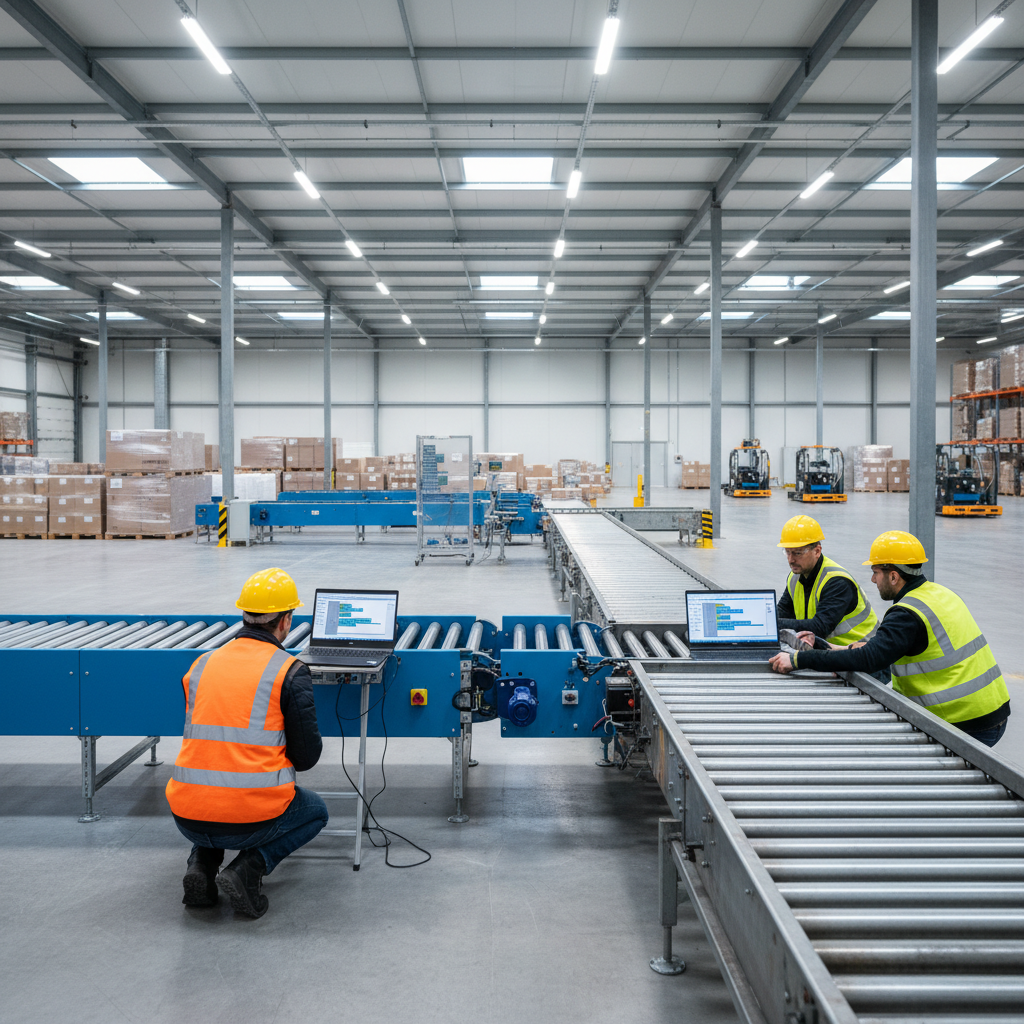
- Control System Analysis: Identify the existing PLC (Programmable Logic Controller) systems. Are they Siemens S5, S7, or another brand? Understanding the communication protocols (e.g., Profibus, Profinet, AS-i) is crucial for planning the digital handshake with new systems.
- Capacity Bottlenecks: Use data to pinpoint where the flow slows down. Is it at junctions, inclines, or sortation points? This data will dictate where new technology will have the most impact.
Developing the Master Plan
With the audit complete, a master plan is drafted. This document outlines the project goals, identifies the specific zones for upgrades, details the new technology to be introduced, and provides a clear timeline and budget. For example, the plan might specify integrating a new cross-belt sorter capable of 10,000 parcels per hour into a legacy system that currently handles 4,000 pph, with the goal of eliminating a manual sorting bottleneck.
Bridging the Digital Gap: The Role of Middleware
The biggest challenge in conveyor integration is making old and new systems talk to each other. A 15-year-old conveyor running on a proprietary controller doesn’t natively communicate with a modern, IoT-enabled sorting system. This is where middleware, often managed by a Warehouse Control System (WCS), becomes the central nervous system of the integrated facility.
How Middleware Works
The WCS acts as a translator. It takes high-level commands from the Warehouse Management System (WMS) (e.g., "send order #12345 to shipping lane 8") and breaks them down into specific instructions that both the old and new conveyor components can understand. It might tell a legacy belt conveyor to "start and run at 0.7 m/s" while instructing a new sorter to "divert parcel with barcode XYZ onto chute 8." This layer of software intelligence is what enables a cohesive operation.
Physical Integration: Connecting the Hardware
Once the digital plan is set, the physical connection must be engineered. This is more than just bolting new sections onto old ones.
Matching Speeds and Heights
A common mistake is failing to properly synchronize conveyor speeds. If a new, high-speed belt (running at 1.5 m/s) feeds onto an older roller conveyor (max speed of 0.8 m/s), it will create a pile-up, causing jams and product damage. Accumulation zones and variable speed drives (VFDs) must be used to buffer and match the flow seamlessly. All connection points must be precisely aligned, often requiring custom-fabricated transition plates or supports to match different conveyor heights and widths (e.g., connecting a 600 mm wide belt to a 650 mm wide roller conveyor).
Comparing Integration-Friendly Conveyor Modules
When selecting new equipment, modularity is key. Modular systems are designed for easy integration and future scalability. Not all "new" automation is created equal. Below is a comparison of typical modules used in integration projects.
| Conveyor Module | Typical Throughput | Integration Complexity | Best For | Estimated Cost (per meter/unit) |
|---|---|---|---|---|
| Modular Belt Conveyor | 500-2,000 items/hr | Low | Replacing worn sections, simple transport | €800 - €1,500 |
| Motorized Roller Conveyor (MDR) | 1,000-3,000 items/hr | Medium | Creating zero-pressure accumulation zones | €1,200 - €2,200 |
| Vertical Lift Module (VLM) | 100-300 cycles/hr | High | Utilizing vertical space, connecting levels | €25,000 - €60,000+ (per unit) |
| Shoe Sorter / Cross-Belt Sorter | 4,000-15,000 items/hr | High | High-speed sortation for e-commerce | €150,000 - €500,000+ (for a small system) |
A Phased Rollout Strategy
To ensure a successful integration with minimal risk, a phased approach is recommended.
- Phase 1: Non-Critical Area Pilot. Implement the first new module in an area that is not central to the entire operation, such as an inbound receiving line. This allows the team to test the physical and digital connections in a controlled environment.
- Phase 2: Bottleneck Attack. Once the pilot is successful, target the primary bottleneck identified in the audit. This is where the project will deliver the biggest and most immediate ROI. For example, replacing a manual scanning station with an automated 5-sided camera tunnel.
- Phase 3: Full Integration & Optimization. Roll out the remaining modules and focus on optimizing the entire system. This involves fine-tuning PLC logic, adjusting conveyor speeds based on real-time volume, and training staff on the new operational flow.
Safety and Compliance in an Integrated System
Integrating new machinery with old brings unique safety challenges. New equipment must conform to the latest European Machinery Directive (2006/42/EC) standards, including modern emergency stop circuits, light curtains, and safety PLCs. These new safety systems must be hardwired into the existing emergency stop circuits of the legacy system. A full risk assessment must be conducted on the integrated system to ensure all parts, old and new, function as a single, safe machine.
Positioning for the Future with Easy Systems
Successful conveyor integration is a specialized skill that requires deep expertise in both legacy and modern automation technologies. It’s about more than just equipment; it’s about a holistic understanding of warehouse processes, software, and operational goals. For companies in the Benelux looking to enhance their logistical capabilities, partnering with an experienced integrator is critical. At Easy Systems, we specialize in the design and implementation of modular conveyor solutions that are built for integration. Our deep engineering know-how, rooted in the European logistics landscape, allows us to craft pragmatic and powerful solutions that bridge your existing infrastructure with future-proof automation, ensuring you not only meet today’s demands but are ready for tomorrow’s growth.
This article is part of the Conveyor-Design knowledge hub, edited by Easy Systems engineers who design conveyor and warehouse automation systems across the Benelux every week.
Frequently asked questions
What is the biggest challenge when integrating old and new conveyor systems?+
The primary challenge is digital: making the different control systems (PLCs) and software (WCS/WMS) communicate effectively. This often requires specialized middleware to act as a translator between the legacy and modern hardware.
How much downtime should I expect for a conveyor integration project?+
With a phased implementation plan, downtime can be minimized. Many installation stages can be completed during non-operational hours (nights or weekends). A typical bottleneck-focused project might require only 24-48 hours of planned downtime for the final switch-over.
Can my old conveyor system be made faster?+
Often, yes. Depending on the mechanical condition, upgrading the motors, gearboxes, and installing Variable Frequency Drives (VFDs) can increase the speed of an older conveyor line. However, a full system audit is required to ensure the frame and rollers can handle the increased speed and load.
What is the typical ROI for a conveyor integration project in the Benelux?+
The Return on Investment (ROI) for a well-executed integration project is typically 18-36 months. This is achieved through increased throughput, reduced manual labor costs, improved accuracy, and avoiding the high capital expenditure of a full system replacement.