Cold Chain Logistics in the Benelux: Specialized Conveyor Solutions
Maintaining the cold chain is critical in the Benelux for food and pharma. Specialized conveyors, like stainless steel and modular belt systems, are essential for ensuring product integrity, safety, and efficiency in temperature-controlled warehouses.
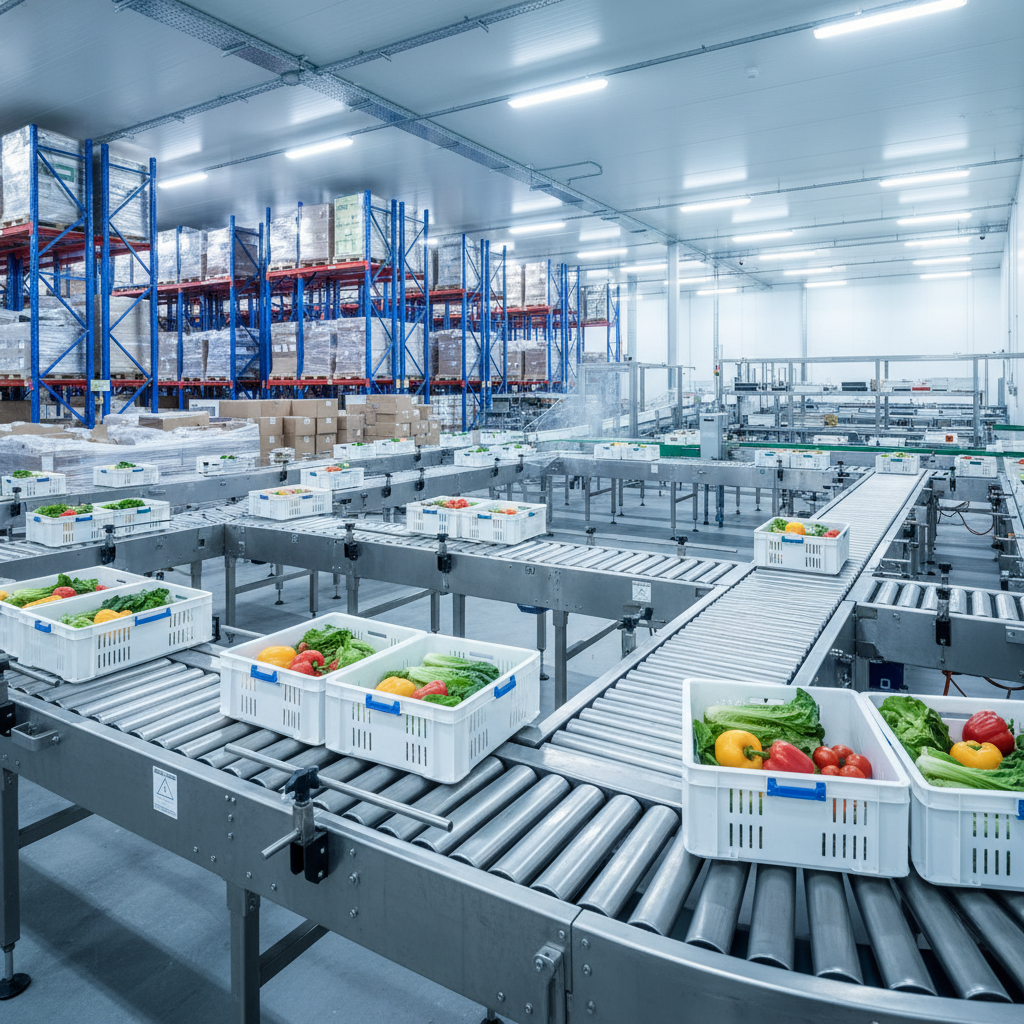
The Benelux region, with its major ports like Antwerp and Rotterdam, is a critical hub for European food and pharmaceutical distribution. Maintaining the integrity of temperature-sensitive goods across this network is a major operational challenge. The "cold chain" cannot be broken. This article explores the specific conveyor solutions that make this possible, addressing the unique demands of operating in refrigerated and frozen environments, from material durability to energy efficiency and hygiene.
Definition
Cold chain logistics refers to the management of supply chains for products that require a consistent, specific temperature range from production to consumption. It involves an uninterrupted series of refrigerated production, storage, and distribution activities, all equipped with specialized technology to maintain product quality and safety.
The Unique Challenges of Cold Environments in the Benelux
Operating a warehouse at temperatures between +5°C (refrigerated) down to -30°C (deep-frozen) poses significant material handling challenges not found in ambient environments. The high concentration of food logistics and pharma distribution centers in Belgium, the Netherlands, and Luxembourg makes these challenges particularly relevant.
Material Brittleness and Lubrication
Standard materials can become brittle and fail in sub-zero temperatures. Steel components can lose tensile strength, plastics can crack, and lubricants can freeze or become highly viscous, leading to motor strain and bearing failure. For example, a standard PVC belt becomes rigid below 0°C, increasing the risk of snapping under load. Specialized low-temperature lubricants can cost up to €50-€70 per liter, a significant increase from standard variants.
Condensation and Ice Build-Up
When goods move between different temperature zones (e.g., from a -25°C freezer to a +4°C loading dock), condensation is inevitable. This moisture can freeze onto conveyor surfaces, rollers, and sensors. Ice build-up can cause belt slippage, block sensor readings, and create dangerous slip hazards for personnel. Effective system design must account for these transition zones, often incorporating airlocks or high-speed doors.
Energy Consumption
Refrigerated warehouses are immense energy consumers. The heat generated by conveyor motors adds to the thermal load, forcing cooling systems to work harder. A large-scale distribution center can spend over €500,000 annually on energy for refrigeration alone. Therefore, energy-efficient conveyor technology is not just a sustainability goal but a critical cost-control measure.
Core Conveyor Technologies for Cold Chain
Not all conveyors are suitable for cold storage. The choice of system depends on the product, temperature range, and required throughput. For a deeper dive into pallet handling, our Pallet Conveyor Systems guide offers comprehensive insights.
Stainless Steel Roller & Chain Conveyors
For handling heavy unit loads like pallets and containers, stainless steel conveyors are the industry standard in food and pharma logistics. Grade 304 stainless steel is typically used for its corrosion resistance and ease of cleaning, which is essential for meeting HACCP and other hygiene regulations. A stainless steel roller conveyor system is robust enough to operate in deep-frozen environments, handling pallet loads up to 1,500 kg at speeds of 0.3 m/s. These systems are a significant investment, but their longevity and low maintenance in harsh conditions provide a strong long-term ROI.
Modular Plastic Belt Conveyors
For lighter goods, cases, or direct food contact, modular plastic belt conveyors are often preferred. Made from materials like Polyethylene (PE) or Polyoxymethylene (POM), these belts can be specified for low-temperature operation. Their key advantages are:
- Durability: Unlike a single continuous belt, a modular belt is made of interlinked plastic bricks. If a section is damaged, it can be replaced quickly without needing to replace the entire belt.
- Hygiene: The smooth, non-porous surfaces are easy to clean and do not absorb moisture.
- Configuration Flexibility: They can be configured for straight runs, curves, and inclines, all within a single, continuous system, reducing the need for complex transfers.
Spiral and Accumulation Conveyors
Vertical transport and buffering are common requirements. Spiral conveyors are excellent for moving goods between floors in a compact footprint, crucial in expensive refrigerated real estate. They provide a continuous flow, which is gentler on products than a traditional elevator. Accumulation conveyors, especially those with zero-pressure accumulation, are used to create buffers in the line without product contact, preventing damage to sensitive or fragile goods like crates of eggs or pharmaceutical vials.
Material and Design Comparison for Cold Environments
Choosing the right conveyor involves a trade-off between cost, performance, and compliance. The table below compares common options.
| Feature | Stainless Steel (Grade 304) | Galvanized Steel | Modular Plastic Belt (Low-Temp PE) |
|---|---|---|---|
| Temperature Range | -40°C to +80°C | -20°C to +60°C | -35°C to +60°C |
| Hygiene & Cleaning | Excellent, non-porous, high pressure washdown | Good, but vulnerable if coating is scratched | Very Good, easy to clean, modular |
| Initial Cost (per meter, approx.) | €4,000 - €12,000 | €1,500 - €5,000 | €2,500 - €8,000 |
| Typical Application | Pallet handling, primary packaging zones | Case handling in dry chilled zones | Case/tote handling, direct food contact |
| Maintenance Notes | Low maintenance, high durability | Risk of rust if zinc layer is damaged | Easy to repair damaged sections |
Optimizing for Efficiency and Safety
Modern cold chain conveyors incorporate features to mitigate the challenges of the environment. For European operations, adherence to CE marking and other machinery directives is mandatory.
Drive Technology and Control
Motor-driven roller (MDR) technology is highly suited for cold stores. Instead of a few large motors driving long sections of conveyor, MDR uses many small, decentralized 24V DC motors. This allows for zone-based operation, where rollers only activate when a product is present, drastically reducing energy consumption—by up to 50% compared to traditional systems. Furthermore, these brushless DC motors generate minimal heat, a crucial benefit for temperature-controlled logistics. The control logic, often managed by a PLC or WCS, is programmed to manage product flow and prevent jams.
Designing for Hygiene and Washdown
In food logistics, conveyors must withstand frequent, aggressive cleaning routines. A well-designed system for washdown environments will feature:
- Stand-off bearings and motors, moved away from the frame to prevent water traps.
- Sloped frame surfaces to allow water to drain completely.
- Minimal flat surfaces where bacteria could colonize.
- IP66 or higher ratings for all electrical components.
Easy Systems: Your Trusted Partner for Benelux Cold Chain Automation
Successfully implementing conveyor systems in a cold chain environment requires deep expertise in both material handling and thermodynamics. At Easy Systems, we have a proven track record of designing and delivering robust, efficient, and hygienic conveyor solutions for the food and pharmaceutical industries across the Benelux and Europe. We understand the specific challenges, from material selection for -25°C freezers to designing systems for high-pressure washdown and regulatory compliance. Our modular approach ensures that you get a system tailored to your exact needs, optimizing for throughput, energy efficiency, and long-term reliability. We integrate best-in-class components to build systems that form the backbone of your logistics operation. For more information on how we can help optimize your facility, please visit us at https://easy-systems.eu/nl/.
This article is part of the Conveyor-Design knowledge hub, edited by Easy Systems engineers who design conveyor and warehouse automation systems across the Benelux every week.
Frequently asked questions
What is the best type of conveyor for a frozen food warehouse?+
For palletized frozen goods, stainless steel chain or roller conveyors are ideal due to their durability and ability to handle heavy loads at -30°C. For individual cases or totes, low-temperature rated modular plastic belt conveyors are excellent as they are hygienic and easy to repair.
How do you prevent ice on conveyors in a cold store?+
Ice prevention involves system design and operational controls. Using high-speed doors between temperature zones minimizes air exchange. Heaters can be integrated into critical areas like sensor windows or transfers, and conveyor design should eliminate areas where moisture can pool and freeze.
Are plastic conveyors safe for high-hygiene food applications?+
Yes, modular plastic belts made from FDA-compliant materials (like PE, PP, or POM) are specifically designed for direct food contact. Their surfaces are non-porous, do not corrode, and are designed for easy and thorough cleaning to meet stringent food safety standards.
How much energy do cold store conveyors use?+
Energy use varies greatly, but systems using 24V Motor Driven Roller (MDR) technology are significantly more efficient. By running only when product is present (zone-based operation), MDR conveyors can reduce electricity consumption by up to 50% compared to conveyors with large, continuously running AC motors.