Cold Chain Conveyors: Solutions for Temperature-Sensitive Goods
Specialized cold chain conveyors are essential for maintaining product integrity in the Benelux food and pharmaceutical sectors. This guide explores system types, design considerations, and ROI for operating in temperature-controlled environments from -30°C to +5°C.
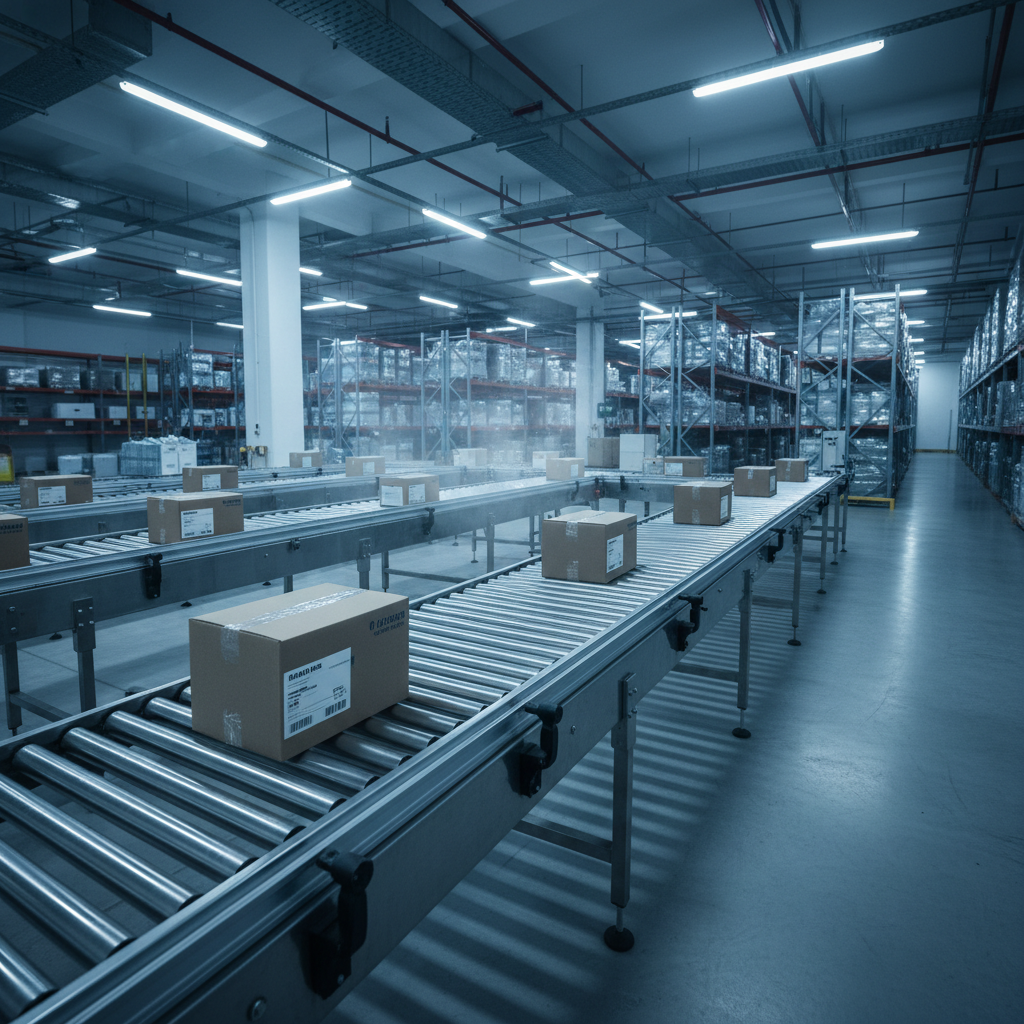
Maintaining the integrity of the cold chain is non-negotiable in the food and pharmaceutical industries. For logistics hubs in the Benelux—a European nexus for global trade—this presents a unique challenge. How do you move temperature-sensitive goods efficiently within a warehouse while guaranteeing an unbroken cold chain? The answer lies in specialized cold chain conveyor systems, engineered to perform flawlessly where standard equipment would fail.
Definition
A cold chain conveyor is a material handling system specifically designed and constructed to operate within a refrigerated or frozen environment. Its components, from the belt and frame to the motors and sensors, are selected to withstand low temperatures (typically -30°C to +5°C), resist condensation, and comply with strict hygiene standards required for handling food and pharmaceuticals.
The Strategic Importance of the Benelux Cold Chain
The Netherlands and Belgium aren’t just dots on a map; they are the logistical heart of Europe. With the Port of Rotterdam being the largest in Europe and the Port of Antwerp-Bruges a close second, an immense volume of temperature-sensitive goods enters the continent here. This includes everything from fresh produce and frozen foods to critical vaccines and biopharmaceuticals.
This strategic position drives a high demand for advanced cold storage and handling facilities. A typical large-scale food distribution center in the region might handle over 50,000 pallets, with a dock-to-stock time of less than 4 hours. Achieving this throughput requires robust automation, with conveyors forming the backbone of these sub-zero operations.
Types of Conveyors for Cold Environments
Not all conveyors are suitable for cold chain applications. The selection depends on the product, the required temperature, and the specific handling process (e.g., accumulation, transport, sorting). Two main types dominate the landscape:
1. Stainless Steel Roller & Chain Conveyors
For heavy-duty applications, such as moving pallets of goods, stainless steel conveyors are the go-to solution. They are typically used for transporting goods from receiving docks into a refrigerated or frozen Automated Storage and Retrieval System (AS/RS). Stainless steel (grades AISI 304 or 316) offers excellent corrosion resistance, is easy to clean, and maintains its structural integrity at very low temperatures. These systems can handle loads upwards of 1,500 kg per pallet and are often part of larger, integrated solutions detailed in our Pallet Conveyor Systems guide.
2. Modular Plastic Belt Conveyors
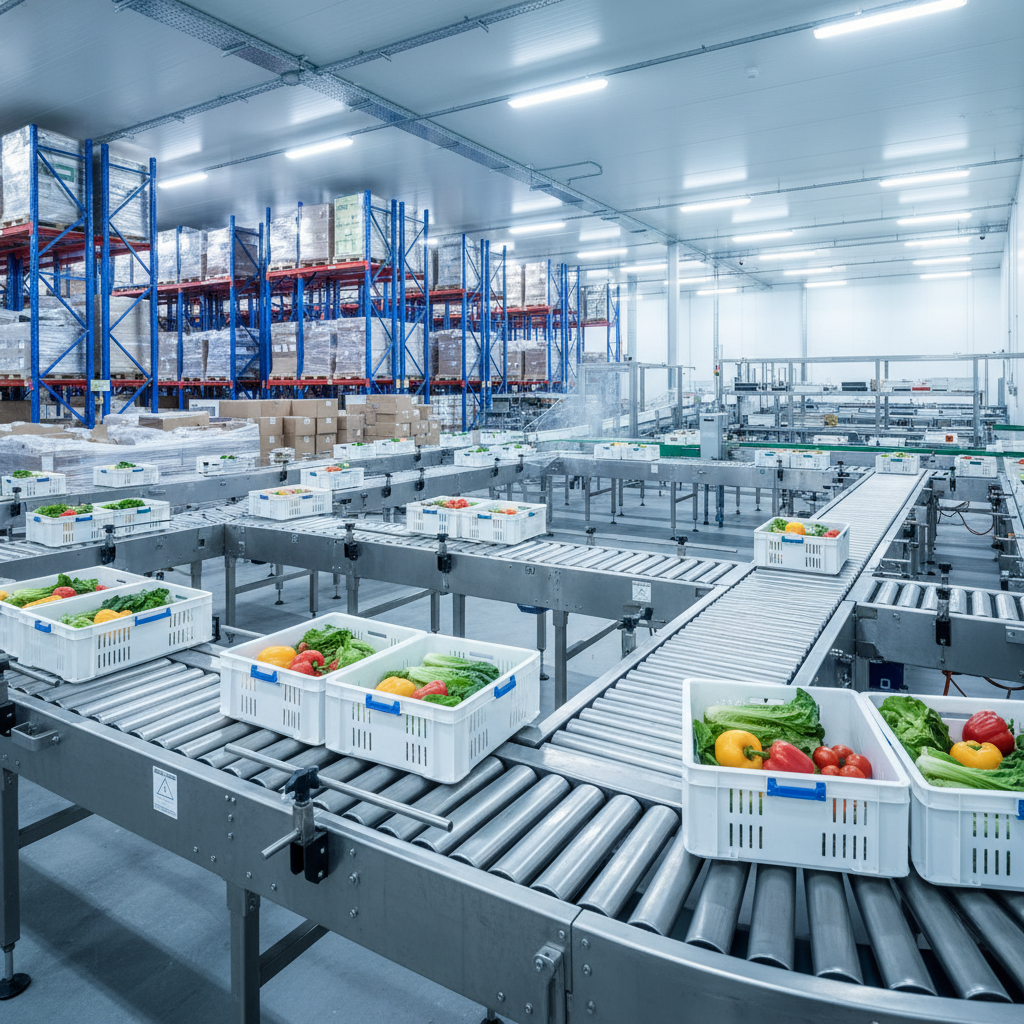
For lighter goods like individual boxes, crates, or unpacked food items, modular plastic belt conveyors are often preferred. These belts are made from materials like Polypropylene (PP) or Polyethylene (PE), which remain flexible and impact-resistant at low temperatures. Their key advantages are:
- Hygienic Design: The open-hinge construction is easy to clean, preventing bacterial growth and meeting stringent food-grade standards like HACCP.
- Versatility: They can handle inclines, declines, and curves, offering more flexibility in layout design.
- Low Maintenance: No tracking or tensioning is required, reducing downtime.
These systems are ideal for processing, packaging, and order-picking zones within a cooled environment.
Key Engineering Considerations for Cold Chain Conveyors
Designing a conveyor for a -25°C freezer is an engineering challenge that goes far beyond simply using stainless steel. Every component must be carefully selected.
Materials and Lubricants
Standard carbon steel becomes brittle at low temperatures. Therefore, frames, supports, and rollers are made from stainless steel or specially coated steel. Plastics must be low-temperature grade to avoid cracking. Even lubricants for bearings and chains must be special "freezer-grade" formulations that won’t freeze or become too viscous, which could cause a motor to overload.
Motors, Drives, and Sensors
Motors generate heat. In a freezer, this can cause localized thawing and condensation, which then refreezes as ice. To combat this, motors are often specified with a higher IP rating (e.g., IP66/67) and sometimes equipped with internal heaters to keep condensation at bay when the motor is not running. All electronic components, especially optical sensors, must be rated for low-temperature operation to ensure reliable detection of products on the line.
Sanitation and Cleanability
In food and pharmaceutical applications, hygiene is paramount. Cold chain conveyors must be designed for easy and thorough cleaning. This involves:
- Eliminating hollow tubes and crevices where water and microbes can accumulate.
- Using stand-offs to mount components away from the frame.
- Ensuring surfaces are smooth and self-draining.
- Making belts and other components easy to remove for sanitation.
Comparative Analysis: Conveyor Belts for Cold Chain
Choosing the right conveyor system is a trade-off between performance, hygiene, and cost. The table below compares the two most common options for Benelux cold chain facilities.
| Feature | Stainless Steel Roller/Chain Conveyor | Modular Plastic Belt Conveyor |
|---|---|---|
| Typical Temperature Range | -30°C to +40°C | -25°C to +60°C (material dependent) |
| Typical Load Capacity | 50 kg to 1,500 kg+ (pallet loads) | 1 kg to 250 kg (boxes, crates, individual items) |
| Hygiene & Cleanability | Good, but has more moving parts (rollers, bearings). Best for sealed pallets/boxes. | Excellent. Open-hinge, easy-to-clean design. Often FDA/EU compliant for direct food contact. |
| Typical Speed | 0.3 m/s - 0.5 m/s | 0.2 m/s - 0.7 m/s |
| Initial Cost (€/meter) | High (€€€) - Stainless steel is a premium material. | Medium (€€) - More affordable than full stainless steel construction. |
| Best for... | Pallet handling, freezer infeed/outfeed, connecting docks to AS/RS. | Case handling, food processing lines, sorting and picking operations. |
Integration and ROI
Connecting with WMS and WES
A modern cold chain conveyor is not a standalone piece of equipment. It is an integrated part of a larger, data-driven ecosystem. The Warehouse Control System (WCS) directly manages the conveyor motors and sensors, executing commands from the Warehouse Management System (WMS) or Warehouse Execution System (WES). This integration is crucial for:
- Product Traceability: Tracking every item by its barcode from entry to exit, providing a complete temperature and handling history.
- Process Optimization: Using data to route products efficiently, manage accumulation zones, and feed automated packing or palletizing stations.
- Error Reduction: Ensuring the right product goes to the right location, which is critical in high-value pharma logistics.
Calculating the Return on Investment (ROI)
The initial investment in a specialized cold chain conveyor system can be significant, often 2 to 3 times higher than a standard conveyor for ambient temperatures. A stainless steel pallet conveyor system for a 50-meter run could range from €100,000 to €250,000+, depending on complexity. However, the ROI is compelling. Key factors include:
- Reduced Labor Costs: Automation reduces the need for staff to work in harsh, cold environments for extended periods.
- Increased Throughput: A conveyor system can move goods at a consistent speed of 0.5 m/s, 24/7, far exceeding manual capacity.
- Minimized Product Spoilage: By ensuring constant temperature and gentle handling, the risk of costly product loss is dramatically reduced.
- Enhanced Safety: Fewer forklifts and manual handling reduces accidents in environments where icy floors can be a hazard.
Positioning for the Future with Easy Systems
In the fast-paced logistics landscape of the Benelux, having a reliable and efficient material handling system is not just an advantage; it's a necessity. The specific challenges of cold chain logistics demand more than just hardware; they require expertise in engineering, integration, and regulatory compliance. At Easy Systems, we understand the nuances of designing and implementing robust conveyor solutions for temperature-controlled environments. As a leading Benelux manufacturer of modular conveyor systems, we provide both stainless steel and plastic belt solutions tailored to your exact needs. If you are looking to upgrade your cold chain capabilities and future-proof your operations, explore our solutions at Easy Systems, your trusted partner in industrial automation.

This article is part of the Conveyor-Design knowledge hub, edited by Easy Systems engineers who design conveyor and warehouse automation systems across the Benelux every week.
Frequently asked questions
What is the main challenge when designing conveyors for freezers?+
The primary challenge is material performance at low temperatures. Standard steel can become brittle, lubricants can freeze, and plastics can crack. All components, including motors and sensors, must be specifically rated for freezer environments (e.g., -30°C) to prevent failure.
Why is stainless steel used in cold chain conveyors?+
Stainless steel (typically AISI 304 or 316) is used for its excellent durability and structural integrity at low temperatures, as well as its high resistance to corrosion from condensation and cleaning agents. This makes it ideal for the hygienic requirements of the food and pharma industries.
Can plastic belt conveyors be used in freezers?+
Yes, but only if they are made from special low-temperature grade plastics like Polyethylene (PE) or certain types of Polypropylene (PP). Standard plastics can become brittle and fail. Modular plastic belts are often chosen for their hygienic properties and layout flexibility.
How much more expensive is a cold chain conveyor?+
A cold chain conveyor can be 2 to 3 times more expensive than a standard conveyor for ambient temperatures. This is due to the higher cost of materials like stainless steel, specialized motors, freezer-grade lubricants, and the more robust engineering required.