AGCs & Conveyors: Optimizing Benelux Production Lines
Integrating Automated Guided Carts (AGCs) with traditional conveyor systems offers Benelux manufacturers a powerful solution to increase production flexibility, reduce bottlenecks, and lower operational costs. This article explores the synergy between these two material handling technologies.
In the competitive landscape of Benelux manufacturing, where space is premium and labor costs are high, optimizing production lines is not just an advantage—it's essential for survival. While conveyor systems remain the backbone of high-volume material transport, the demand for greater flexibility and customization is rising. This is where Automated Guided Carts (AGCs) enter the picture, creating a powerful synergy that transforms rigid production lines into dynamic, responsive assets.
Definition
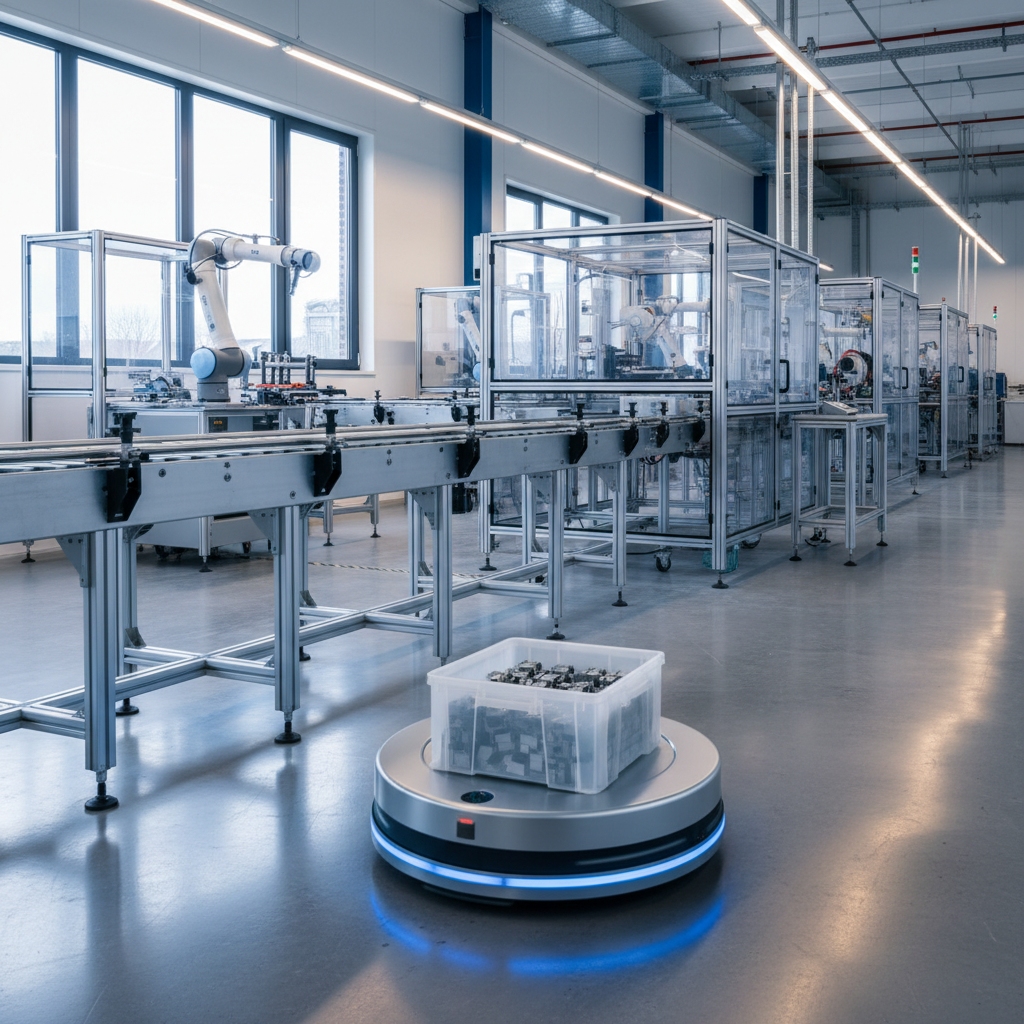
An Automated Guided Cart (AGC) is a simple, cost-effective type of mobile robot designed to transport materials along predefined paths, often guided by magnetic tape or simple sensors. In a production environment, they act as a flexible link between fixed conveyor lines, workstations, and storage areas, bridging the gap between high-speed linear transport and the need for variable routing.
The Unwavering Role of Conveyors in Production
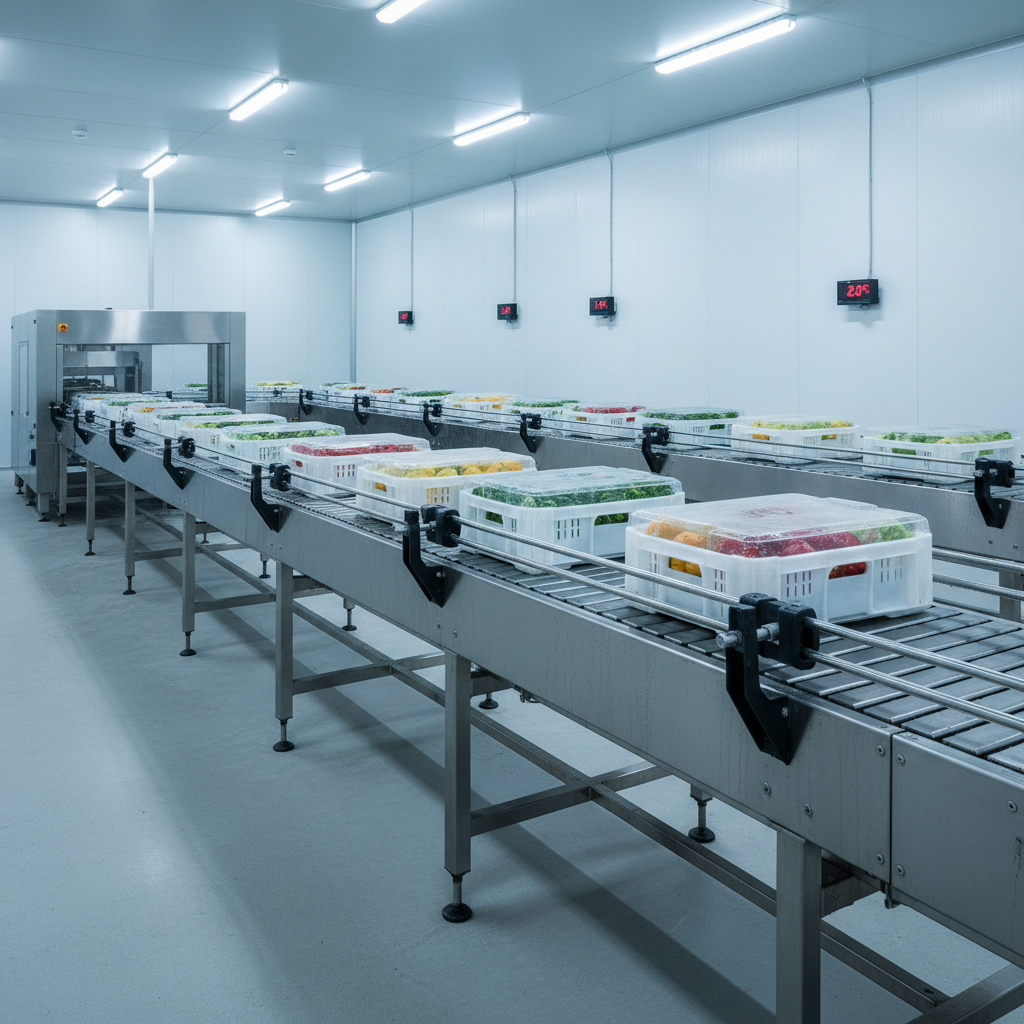
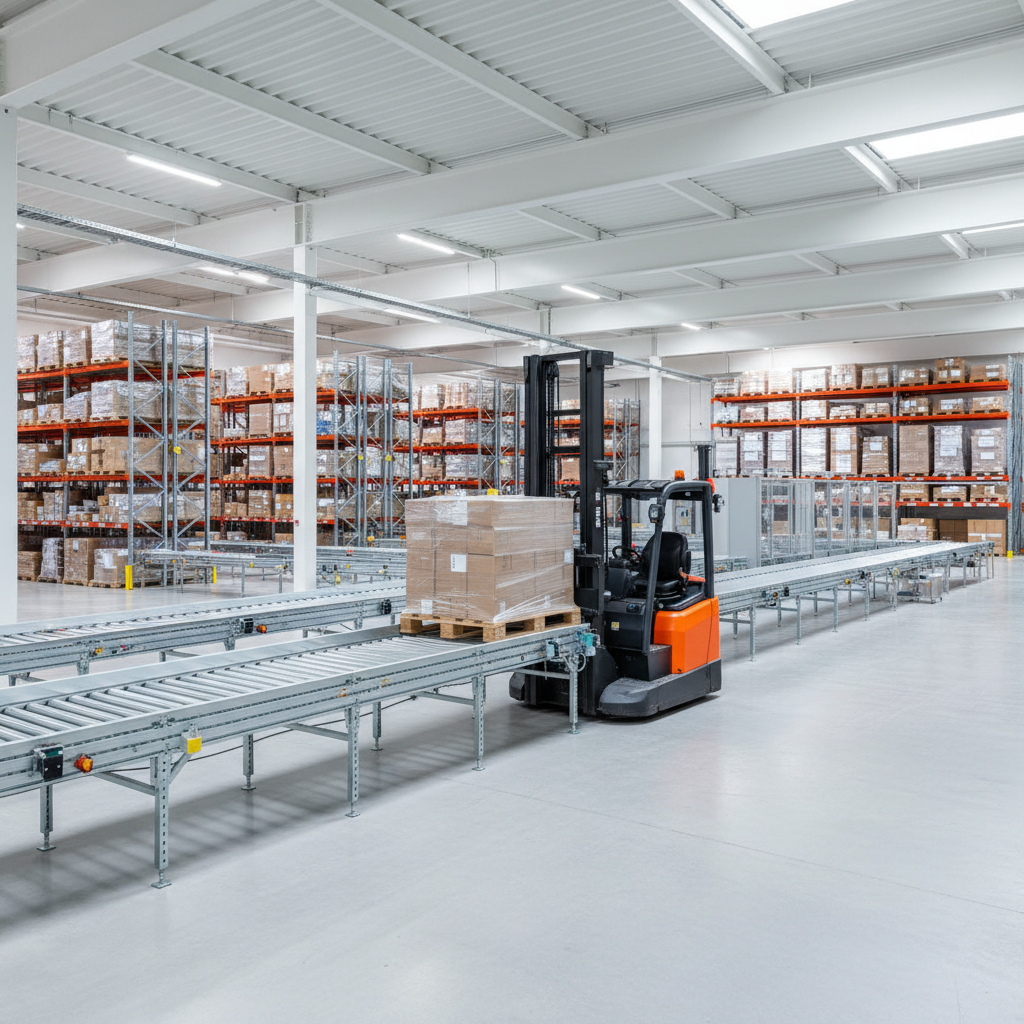
For decades, conveyor systems have been the undisputed workhorses of manufacturing. Their strength lies in their simplicity and efficiency for continuous, point-to-point material flow. Systems like the roller conveyor or belt conveyor move high volumes of products, parts, or totes at consistent speeds, forming the arteries of the production floor. For any process that involves moving large quantities of items along a fixed path—from raw material intake to final assembly—conveyors provide a solution with unparalleled throughput and reliability. A well-designed system can move items at speeds of over 1 m/s, handling thousands of units per hour with minimal operational cost. Explore our in-depth guide to learn more about modern roller conveyor systems and their applications.
The Rise of Flexible Automation: Automated Guided Carts (AGCs)
Modern manufacturing demands agility. Product life cycles are shorter, and batch sizes are smaller. This is where fixed conveyors can show their limitations. Reconfiguring a large conveyor installation is a significant undertaking in terms of cost and downtime. AGCs offer an answer. Unlike their more complex counterparts, Automated Guided Vehicles (AGVs) which often use laser or vision-based navigation, AGCs provide a more straightforward and budget-friendly form of automation. They typically follow a simple magnetic strip on the floor, which can be rerouted in a matter of hours, not weeks. This allows manufacturers to easily change production layouts in response to new product introductions or process optimizations.
Synergy in Motion: How AGCs and Conveyors Complement Each Other
The true breakthrough lies not in choosing one technology over the other, but in integrating them into a single, cohesive system. In this hybrid model, conveyors act as the high-speed 'highways' for long-distance, high-volume transport, while AGCs serve as the 'local roads,' providing flexible delivery to and from these main arteries.
Common Integration Scenarios:
- End-of-Line Handling: A conveyor brings finished goods from the assembly area. At the end of the line, an AGC picks up the full tote or box and transports it to quality control, a palletizing station, or a temporary storage buffer. This decouples the main line's speed from subsequent processes.
- Workstation Supply (Line-Side Replenishment): In a complex assembly operation, conveyors can transport main sub-assemblies down a central line. AGCs work in parallel, delivering smaller components, fasteners, or specialized parts from a nearby kitting area directly to individual workstations as needed. This 'just-in-time' delivery minimizes line-side clutter and reduces worker walk-time.
- Bridging Disconnected Processes: When two separate production halls or conveyor systems need to be linked, AGCs provide a cost-effective and non-disruptive bridge. They can navigate corridors and shared spaces without the need for fixed, overhead, or in-floor conveyor construction.
Comparative Analysis: AGCs vs. Conveyors
Understanding the strengths and weaknesses of each technology is key to designing an effective hybrid system. This is especially critical in the Benelux, where optimizing both capital investment and floor space is paramount.
| Feature | Automated Guided Carts (AGCs) | Conveyor Systems |
|---|---|---|
| Flexibility | High. Paths are easily reconfigured by moving magnetic tape. Excellent for variable routing. | Low. A fixed infrastructure designed for a specific path. Reconfiguration is costly and time-consuming. |
| Throughput | Moderate. Best for intermittent or batch-based flow. Handles dozens to hundreds of transfers per hour. | Very High. Ideal for continuous, high-volume flow, often handling thousands of units per hour. |
| Scalability | High. Capacity can be increased simply by adding more carts to the fleet. | Moderate. Increasing length or speed may require significant engineering and downtime. |
| Initial Cost | Lower entry cost. A simple loop with a few carts can start from €25,000 - €50,000. | Higher initial investment, often starting at €50,000 and scaling into hundreds of thousands for complex systems. |
| Ideal Use Case | Flexible transport between workstations, end-of-line transfers, linking disconnected processes. | High-speed, point-to-point transport, main assembly lines, accumulation zones. |
Integration and Control: The Digital Backbone
A hybrid system is only as smart as its control software. To ensure seamless operation, a central system must manage the traffic and handoffs. For simpler integrations, a Programmable Logic Controller (PLC) can be sufficient. The PLC might instruct a conveyor to stop when an AGC is approaching its pickup point and signal the AGC to depart once a tote is successfully transferred. In more complex environments with multiple AGCs and decision points, a Warehouse Control System (WCS) or Warehouse Execution System (WES) provides a higher level of orchestration, managing traffic flow to prevent deadlocks and optimizing routes for maximum efficiency.
Cost-Benefit Analysis for Benelux SMEs
For a small to medium-sized enterprise (SME) in Belgium, the Netherlands, or Luxembourg, the investment must show a clear return. The business case for a hybrid AGC-conveyor system is compelling:
- Reduced Labor Dependency: Automating the repetitive task of moving totes from a conveyor to a palletizer can free up one full-time employee per shift. In the Benelux, this can translate to a saving of €40,000 - €60,000 per year in direct labor costs.
- Increased Throughput: By eliminating manual transport delays and waiting times, the system can increase overall production output. An AGC can ensure a workstation is never starved for parts, potentially boosting its utilization by 10-15%.
- Improved Safety and Ergonomics: Automating the transport of goods, which can often weigh between 20 kg and 500 kg, drastically reduces the risk of musculoskeletal injuries associated with manual pushing and pulling of carts.
Given a typical starting investment of around €70,000 for a basic hybrid loop, the return on investment (ROI) is often achieved within 18 to 24 months, making it a financially viable choice for ambitious Benelux SMEs.
Your Trusted Partner for Hybrid Automation
Successfully blending conveyors and AGCs requires deep expertise in both material flow and system integration. It’s about more than just buying a cart and installing a conveyor; it’s about designing a holistic solution that understands your specific production needs, from transfer speeds and payload sizes to the logic that governs the entire operation. This is where a partnership with an experienced integrator becomes invaluable. The right partner can analyze your current workflow, identify bottlenecks, and design a system that delivers measurable improvements in efficiency and flexibility. At Easy Systems, we specialize in creating these intelligent, modular conveyor solutions that form the foundation of efficient hybrid automation for manufacturers across Europe.
Frequently asked questions
What is the main difference between an AGC and an AGV?+
AGCs (Automated Guided Carts) are a simpler type of Automated Guided Vehicle (<a href='/glossary#agv'>AGV</a>). They typically follow fixed paths like magnetic tape, making them cost-effective for straightforward tasks, while AGVs often use more advanced navigation like laser or vision for greater flexibility.
Can AGCs be integrated with our existing conveyor system?+
Absolutely. Integration is a key advantage. AGCs can be programmed to pick up from or deliver to specific points on a conveyor line, often using simple transfer mechanisms or a short section of powered conveyor on the cart itself, creating a seamless hybrid system.
What is a typical payload for an AGC in a manufacturing setting?+
Payloads vary by model, but a common range for AGCs in production lines is between 100 kg and 1,000 kg. They are ideal for transporting totes, parts bins, or small pallets between workstations or from the end of a production line.