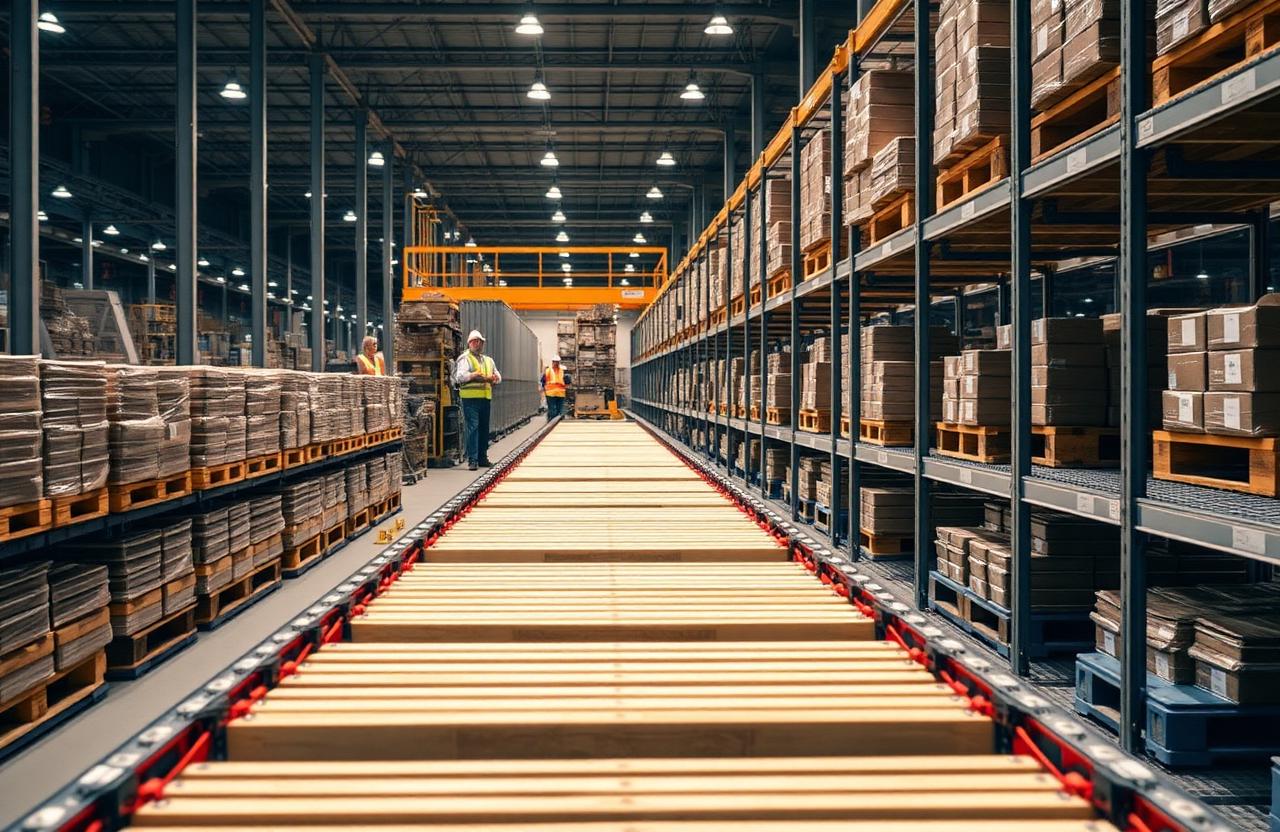
What Is a Roller Conveyor? A Complete 2026 Guide for Warehouses
Roller conveyors are the backbone of modern internal transport. Learn how gravity and powered rollers compare, where they fit, and how to size them for your facility.
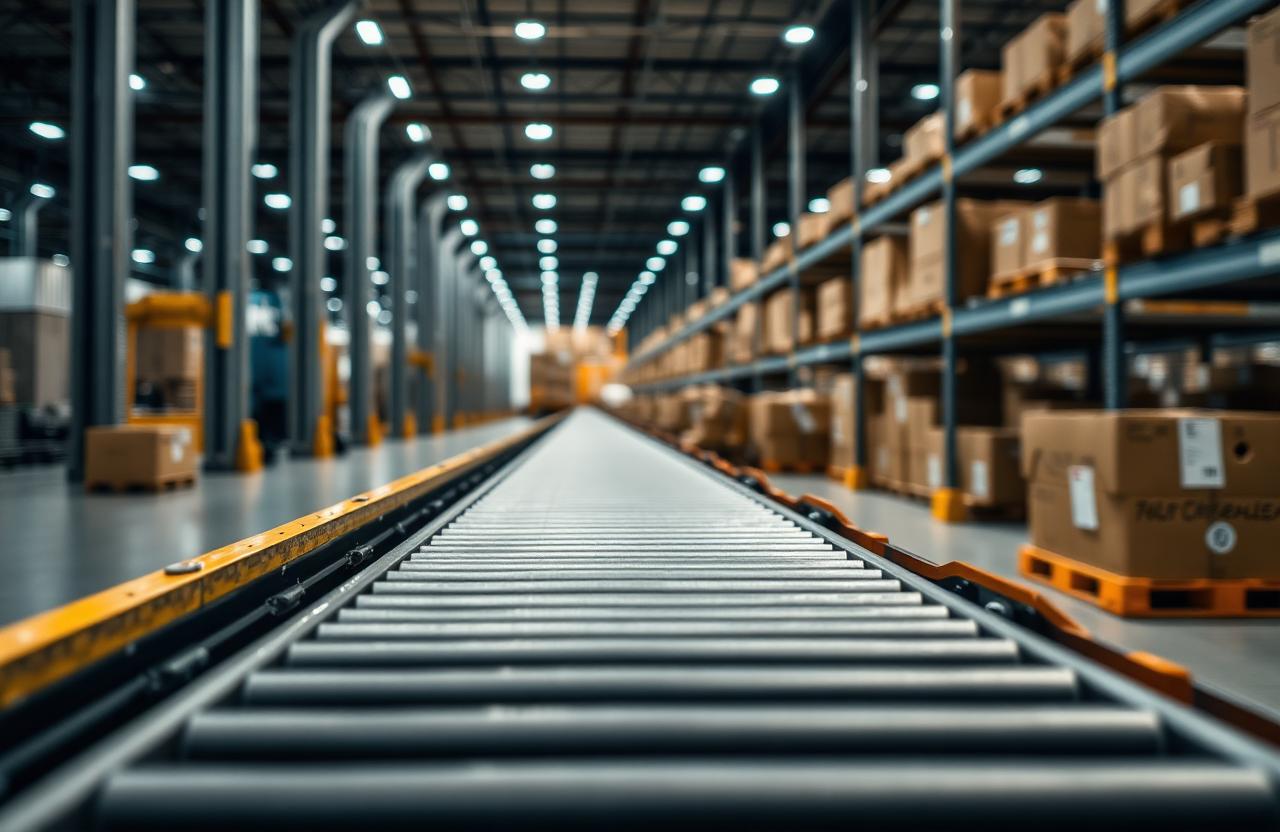
If you run a warehouse, distribution center or production line, chances are a roller conveyor is doing the quiet, critical work of moving product from A to B. This guide explains exactly what roller conveyors are, when to use each type, and how leading European operators specify them in 2026.
What is a roller conveyor?
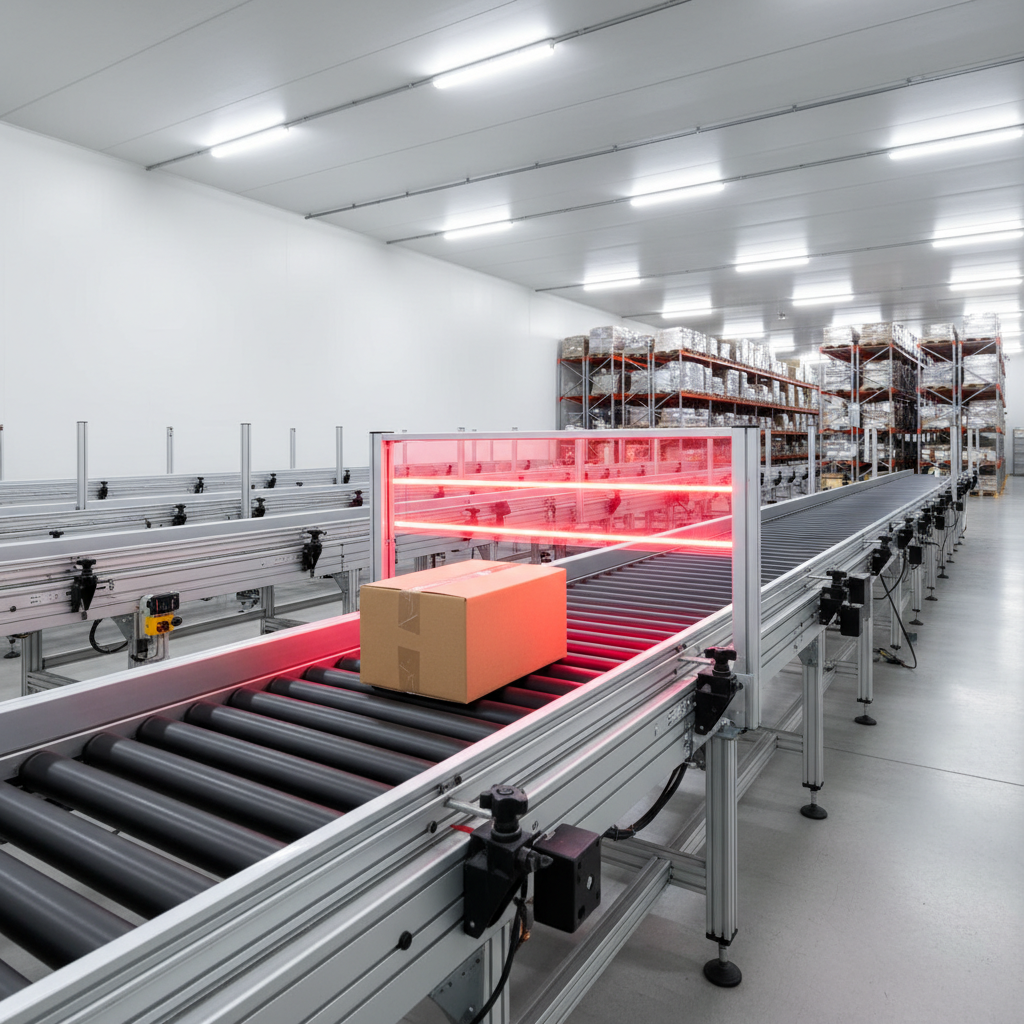
A roller conveyor is a type of material handling equipment that uses a series of parallel rotating rollers mounted in a frame to transport unit loads such as cartons, totes, trays or pallets. The rollers can be powered (motorized) or unpowered (gravity), and the conveyor can run straight, curve, incline or merge with other lines.
Core components
- Rollers — typically steel, stainless or PVC, sized by load weight
- Frame — galvanized or painted steel side channels
- Bearings — sealed precision bearings for low-noise rotation
- Drive system (powered only) — belts, chains or 24V motorized rollers (MDR)
- Controls — sensors, PLCs and integration with WMS/WCS
Gravity vs. powered roller conveyors
The single biggest choice is whether to use gravity or power. Both move goods on rollers, but their economics and capabilities differ sharply.
| Criterion | Gravity roller | Powered roller |
|---|---|---|
| Investment | Low | Medium–high |
| Throughput | Manual / variable | Predictable, high |
| Accumulation | Uncontrolled | Zero-pressure zones |
| Energy use | None | Low with 24V MDR |
| Integration with WMS | No | Yes |
| Best for | Loading docks, manual pick | Automated DCs, e-com |
Where roller conveyors fit in the warehouse
Modern facilities rarely use a single conveyor type. Roller systems are typically deployed in:
- Goods-in and unloading zones
- Pick-to-cart and pick-to-tote lines
- Accumulation buffers before sortation
- Pallet transport between AS/RS and dispatch
- Packing and shipping consolidation
How to size and specify a roller conveyor
Whether you're designing a new distribution center or retrofitting a packaging line, the same five questions apply:
- What is the smallest and largest load? (Three rollers under the item is the rule.)
- What weight per load and per linear meter must the rollers support?
- What throughput in units per hour, and what accumulation length do you need?
- What is your floor plan — straight runs, curves, merges, elevation changes?
- Does the system need to talk to your WMS, WCS or ERP?
Trends shaping roller conveyors in 2026
Three trends dominate roadmaps at European operators:
- 24V motorized driven rollers (MDR) for energy efficiency and modular control
- Plug-and-play modules that shrink commissioning from weeks to days
- Digital twins that simulate throughput before a single bolt is tightened
Building or modernizing? Start with a partner who understands flow.
Specifying a roller conveyor sounds simple until your throughput doubles, your SKUs change shape or a bottleneck appears at the merge. The teams that get it right work with an engineering partner from day one — modeling flow, balancing investment and uptime, and integrating the conveyor with the rest of the operation.
Easy Systems, part of the BOA Concept group, designs and installs internal transport and conveyor solutions across Belgium, the Netherlands and Luxembourg. Their engineers can walk your facility, model the flow and propose a system that scales with your business.
This article is part of the Conveyor-Design knowledge hub, edited by Easy Systems engineers who design conveyor and warehouse automation systems across the Benelux every week.
Frequently asked questions
What is a roller conveyor used for?+
Roller conveyors move boxes, totes and pallets horizontally or on a slight incline using rotating rollers. They are used in warehouses, distribution centers and production lines for picking, sorting, accumulation and transfer between workstations.
What is the difference between gravity and powered roller conveyors?+
Gravity roller conveyors rely on a slight downward slope so loads roll on their own. Powered (driven) roller conveyors use motors and belts or chains to drive each roller, giving precise speed, accumulation and zone control suited to automated operations.
How do I choose the right roller conveyor?+
Match roller pitch to your smallest load (3 rollers should always be under the item), select roller diameter for the load weight, pick frame width 50–100 mm wider than the load, and choose drive type based on throughput, accumulation needs and integration with WMS/WCS.