Energy-Efficient Conveyor Systems: A Benelux Guide to Cost Savings
Upgrading to energy-efficient conveyor systems can cut electricity consumption by up to 60%. This guide explores key technologies like PMAC motors and ZPA controls, crucial for reducing operational costs in modern Benelux warehouses.
In the competitive logistics landscape of the Benelux—a pivotal European trade hub—operational efficiency is paramount. With industrial electricity prices in the Netherlands and Belgium among the highest in the EU, facility managers are increasingly scrutinizing every kilowatt. A primary, yet often overlooked, consumer of this energy is the vast network of industrial conveyor systems that form the backbone of any modern warehouse or distribution center. This article explores the technologies driving energy efficiency in conveyors and quantifies the substantial cost savings achievable for Benelux-based operations.
Definition
An energy-efficient conveyor system is a material handling solution designed to transport goods with minimal electrical power consumption. It achieves this by integrating advanced components like permanent magnet motors, 24V DC motorized rollers, and intelligent "run-on-demand" control software, replacing the continuous energy draw of traditional, centrally-driven AC motor systems.
The High Cost of Inefficiency in the Benelux
Traditional conveyor systems, many of which are still in operation, were designed for reliability, not efficiency. They typically use a single, large AC induction motor to power an entire line, often running continuously for a full 8- or 16-hour shift, regardless of whether a product is present. In a high-cost energy market, this is a significant financial drain. As of early 2024, average electricity prices for industrial consumers in the Benelux hover around €0.20 - €0.28 per kWh. A continuously running 5.5 kW motor on an older system can single-handedly cost over €2,500 per year in electricity. For a facility with hundreds of meters of conveyors, these costs multiply into a major operational expenditure.
Core Technologies Driving Efficiency
The shift towards energy efficiency is powered by a combination of hardware and software innovations. The motor, the heart of the system, has undergone a revolution.
Drive Technology: From AC to DC
The biggest leap in conveyor efficiency comes from moving away from traditional three-phase AC induction motors to modern DC motor technologies. While robust, AC motors are notoriously inefficient at partial loads and convert a significant portion of energy into heat and noise. The contemporary solution lies in decentralized, more intelligent drive systems.
24V Motor Rollers (MDR): Decentralized Power
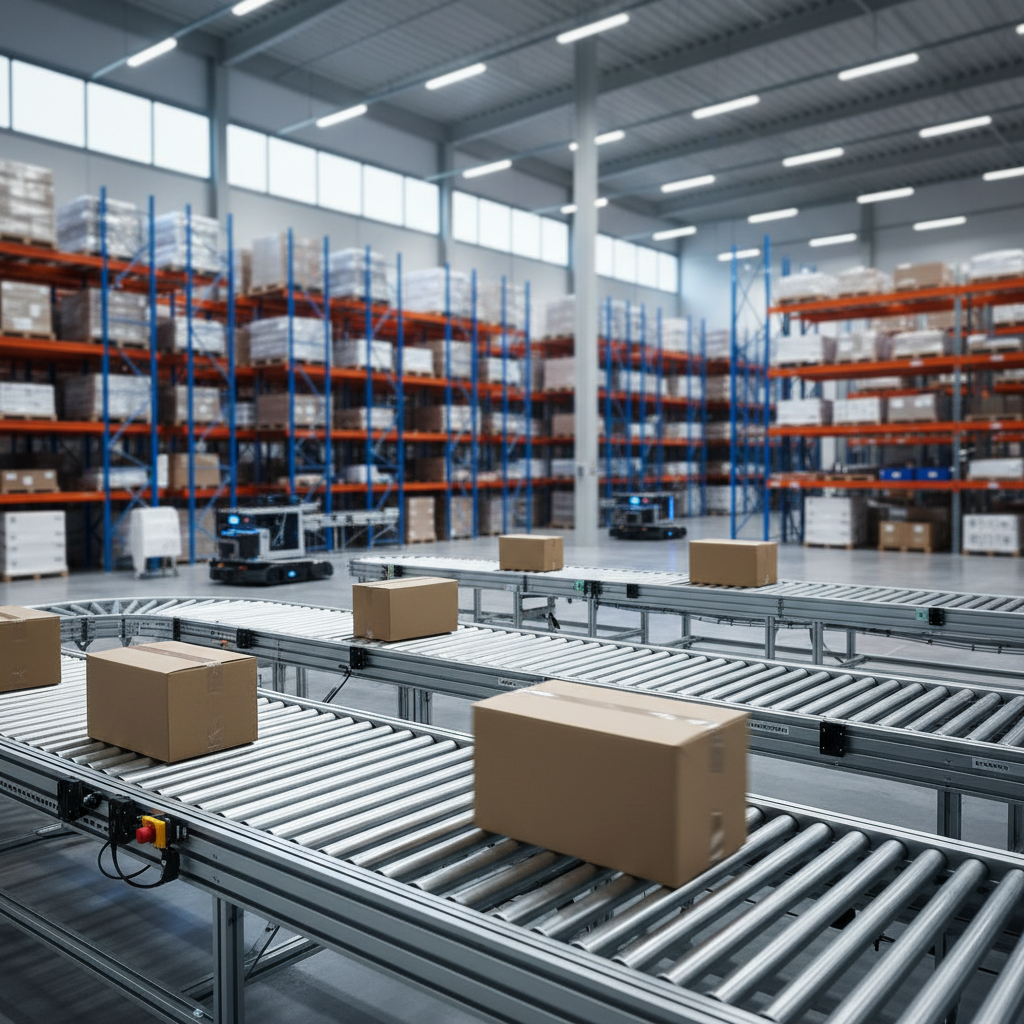
The most significant innovation in efficient conveying is the Motorized Drive Roller (MDR), also known as a motor roller. Instead of one large motor driving a long stretch of belt, MDR systems use a series of rollers, each with its own integrated 24V DC motor. This provides numerous advantages:
- Decentralization: Power is distributed precisely where and when it is needed.
- Safety: Low 24V voltage is inherently safer for operators and maintenance staff.
- Modularity: Zones can be easily added, removed, or reconfigured.
- Efficiency: DC motors are inherently more efficient than their AC counterparts, especially when paired with smart controls.
Permanent Magnet Motors (PMSM): The New Standard
Within the realm of modern drives, Permanent Magnet Synchronous Motors (PMSM), also called Permanent Magnet AC (PMAC) motors, are a game-changer. Unlike induction motors that use electricity to generate a magnetic field in the rotor, PMSM motors use high-strength permanent magnets. This simple change eliminates a source of significant energy loss, resulting in efficiency ratings of 90% or higher, a 10-15% improvement over standard induction motors. They also run cooler, extending the life of all motor components.
| Feature | Traditional AC Induction Motor | Permanent Magnet Motor (PMSM) | 24V DC Motor Roller (MDR) |
|---|---|---|---|
| Typical Efficiency | 75-85% | ~92% | ~90% (but enables zonal control) |
| Control Principle | Centralized, continuous run | Centralized or decentralized, variable speed | Decentralized, run-on-demand (zonal) |
| Typical Speed (m/s) | 0.5 - 1.5 m/s (fixed) | 0.2 - 3.0 m/s (variable) | 0.2 - 2.0 m/s (variable per zone) |
| Idle Energy Use | High (always on) | Low (can be controlled) | Zero (with ZPA) |
| Initial Cost (€/meter) | ~€400 - €600 | ~€550 - €800 | ~€700 - €1,100 |
| Typical ROI (vs. Traditional) | N/A | 4-6 years | 2-4 years |
Smart Controls: The Brains Behind the Savings
Hardware is only half the story. The true potential for savings is unlocked when efficient motors are paired with intelligent control systems.
Zero Pressure Accumulation (ZPA): Run-on-Demand
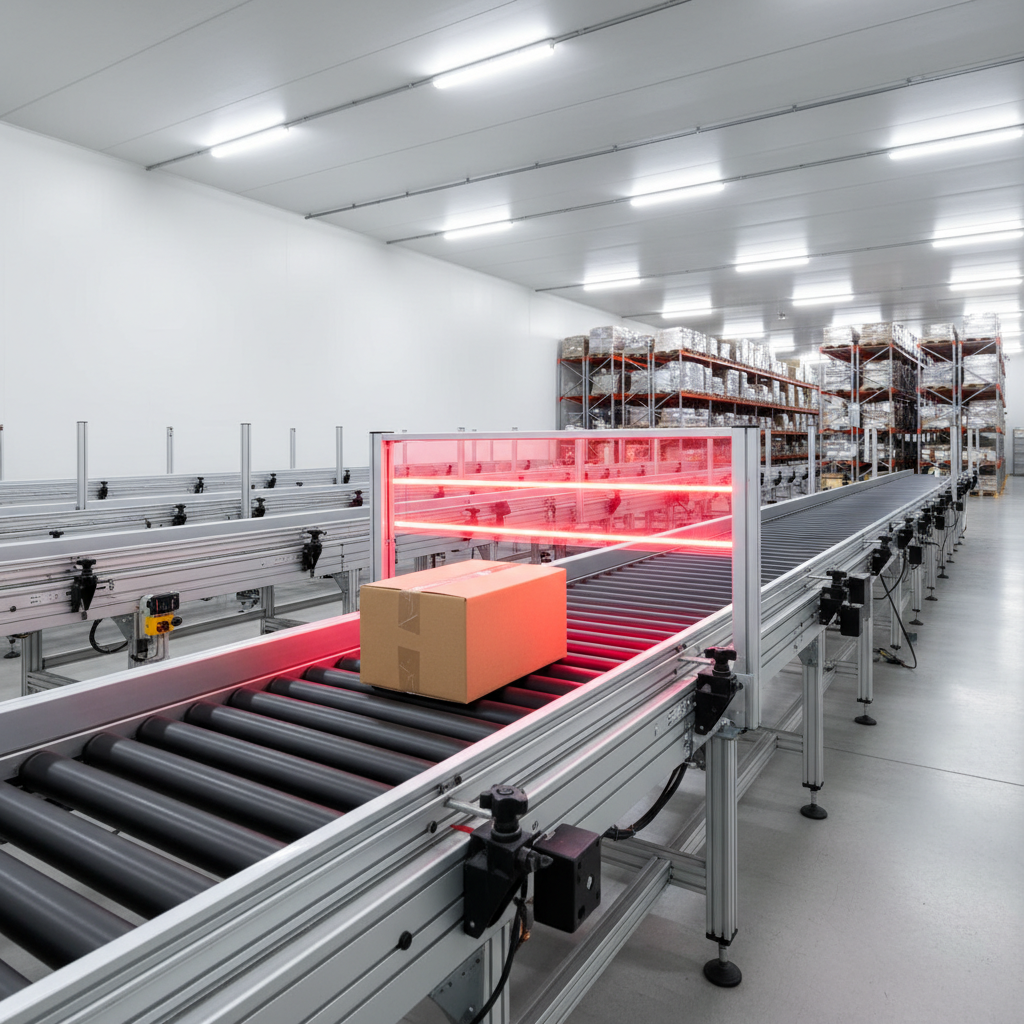
Zero Pressure Accumulation is the most critical logic for energy saving. A conveyor line is divided into small zones (e.g., 750 mm long). Each zone has a sensor that detects the presence of a package. The motor roller for that zone activates only when a package arrives and the zone ahead is clear. Once the package moves to the next zone, the motor immediately turns off. This "run-on-demand" principle ensures that energy is only consumed to actively move a product, eliminating the massive waste of a continuously running system. For many applications, this can reduce energy use by over 60% alone.
A Practical Cost-Benefit Analysis for Benelux Operations
Let's consider a hypothetical distribution center in the strategic logistics hotspot between Antwerp and Venlo. The facility has 150 meters of accumulation conveyor operating two shifts (16 hours/day, 250 days/year).
- Scenario A: Traditional System. A single 7.5 kW AC motor runs continuously.
Calculation: 7.5 kW * 16 h/day * 250 days = 30,000 kWh/year.
At €0.25/kWh, the annual cost is €7,500. - Scenario B: Modern MDR System with ZPA. The system has a utilization rate of 40% (i.e., a box is present and moving 40% of the time). The total installed power is higher, but only a fraction is used at any time. The effective power consumption is roughly 60% lower.
Calculation: 30,000 kWh * 40% (1 - 0.60 efficiency gain) = 12,000 kWh/year.
At €0.25/kWh, the annual cost is €3,000.
The annual saving is €4,500 for this single line. While the initial investment for the MDR system is higher, the payback period, based on energy savings alone, is clearly within 2-4 years. This doesn't even account for reduced maintenance costs and greater operational flexibility.
EU Directives and Green Investments
The push for efficiency is not just economical; it's regulatory. The European Union's Ecodesign Directive (specifically Regulation (EU) 2019/1781) sets minimum efficiency standards (IE classes) for electric motors. This effectively phases out the least efficient motor types, pushing manufacturers and end-users towards technologies like PMSM. Furthermore, governments in Belgium, the Netherlands, and Luxembourg often provide tax incentives or subsidies for investments in "green" or energy-saving technologies, potentially shortening the ROI period even further.
Beyond Technology: Maintenance and System Design
Finally, achieving peak efficiency involves holistic system design and maintenance. A poorly designed system, even with efficient motors, will waste energy. Factors like correct belt tension, clean bearings, and the right choice of belt material or roller type are crucial for minimizing friction. A well-planned layout that minimizes transport distances and elevations will inherently be more efficient. This is where partnering with an experienced system integrator becomes invaluable. For a comprehensive review of your current system or to explore new, efficient designs, consider the expertise offered by specialists. At Easy Systems, we pride ourselves on designing modular, future-proof conveyor solutions that deliver maximum efficiency from day one. You can learn more about our philosophy and products on our website at https://easy-systems.eu/nl/?utm_source=conveyor-design&utm_medium=referral&utm_campaign=article_body.
Easy Systems: Your Benelux Partner for Energy-Efficient Conveyor Solutions
In the fast-paced logistics market of the Benelux, investing in energy-efficient conveyor technology is no longer a luxury—it's a competitive necessity. The combination of advanced 24V motor rollers, intelligent ZPA controls, and smart system design provides a clear path to lower operational costs, a reduced carbon footprint, and a more resilient, future-proof operation.
At Easy Systems, headquartered in the heart of the Benelux, we specialize in the design and implementation of these modern conveyor solutions. We understand the unique economic and regulatory pressures of the European market. Our team of engineers works with you to analyze your specific needs, from throughput and product types to your energy-saving goals, delivering a turnkey system that not only meets but exceeds expectations. We transform your material handling from a cost center into a competitive advantage.
This article is part of the Conveyor-Design knowledge hub, edited by Easy Systems engineers who design conveyor and warehouse automation systems across the Benelux every week.
Frequently asked questions
What is the main advantage of a 24V motor roller system?+
The main advantage is "run-on-demand" capability, especially with Zero Pressure Accumulation (ZPA). Sections of the conveyor only activate when a product is present, drastically reducing energy use compared to continuously running systems.
How much can I realistically save on energy in the Benelux?+
Depending on your system's age, usage, and local electricity rates, Benelux businesses can save between 30% and 60% on conveyor-related energy costs. For a medium-sized operation, this can translate to €15,000 - €30,000 annually.
Are energy-efficient conveyors more expensive upfront?+
While the initial investment for advanced systems like 24V MDR with ZPA can be higher than traditional conveyors, the payback period is often short (2-4 years) due to significant energy and maintenance cost savings.
Do these systems comply with EU regulations?+
Yes, modern energy-efficient motors and components are designed to meet or exceed the requirements of the EU's Ecodesign Directive (e.g., Regulation EU 2019/1781), ensuring your investment is compliant with current and upcoming standards.