Safety First: Advanced Sensor Technology in Benelux Conveyors
Implementing advanced sensor technology is crucial for modern Benelux conveyor systems. This guide covers key sensors, their benefits for safety and efficiency, and how to comply with European regulations.
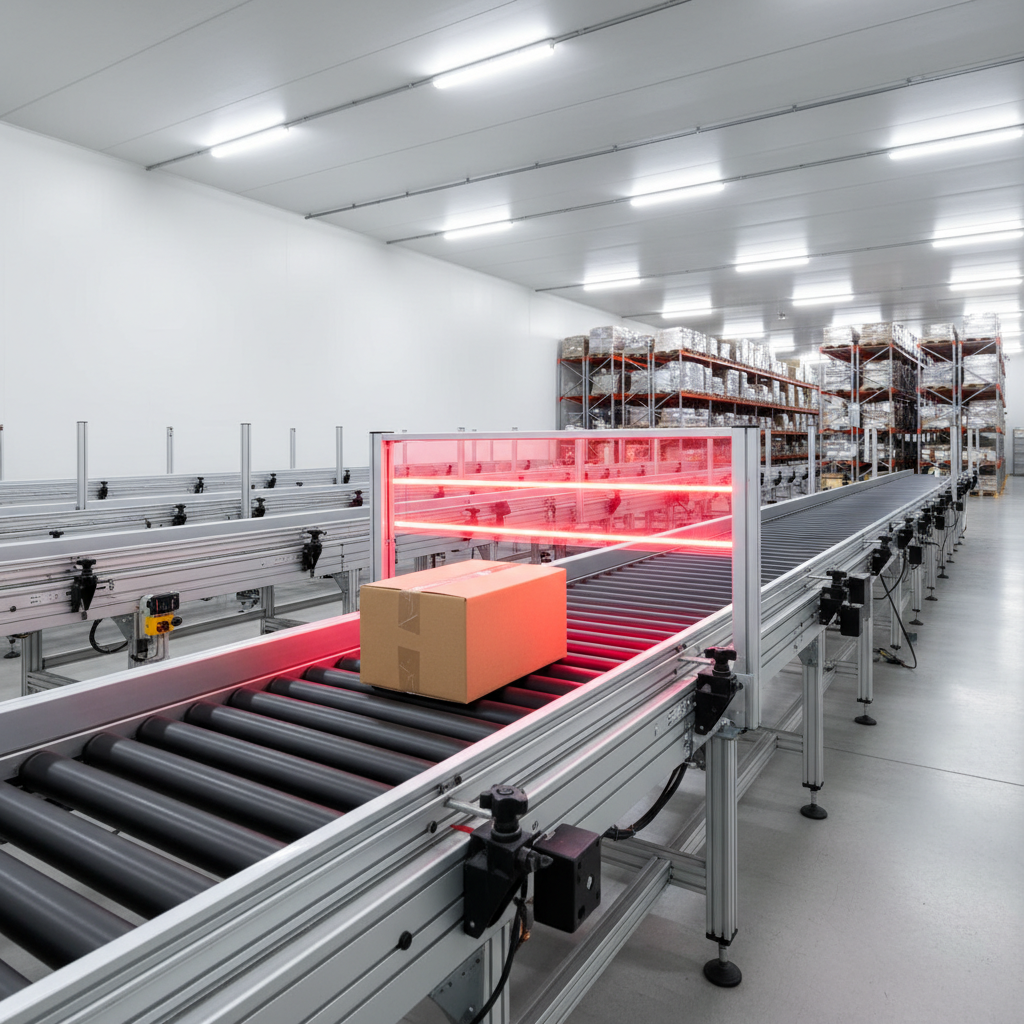
In the high-speed logistics hubs of the Benelux, where every second counts, the safety and efficiency of conveyor systems are paramount. For warehouse and operations managers, ensuring operator safety while maximizing throughput is a constant challenge. The solution lies in leveraging advanced sensor technology—a non-negotiable component of modern, compliant, and competitive material handling operations.
Definition
Advanced sensor technology for conveyors refers to the use of intelligent electronic devices that detect the presence, position, or characteristics of objects, personnel, or environmental conditions. These sensors autonomously communicate with the conveyor's control system (PLC) to trigger responses, such as an immediate stop or warning, to ensure operational safety and process efficiency.
The Regulatory Landscape in the Benelux & EU
Operating within the European Union, businesses in Belgium, the Netherlands, and Luxembourg must adhere to a strict regulatory framework. The Machinery Directive 2006/42/EC is the cornerstone, requiring all machinery to bear a CE mark, signifying conformity with EU safety standards. For conveyor systems, the most critical harmonised standard is EN ISO 13849-1, which deals with the safety-related parts of control systems. This standard dictates the required Performance Level (PL) for safety functions, directly influencing the choice of sensors, relays, and PLCs. Non-compliance not only risks heavy fines but also jeopardises the well-being of employees.
Core Types of Advanced Safety Sensors for Conveyors
Choosing the right sensor depends on the specific risk identified in your mandatory risk assessment (known as RI&E in the Netherlands). Different technologies address different hazards, from operator access to package jams.
Photoelectric Sensors
These are the workhorses of conveyor sensing. They use a light beam to detect the presence or absence of an object. The three main types are:
- Thru-beam: Emitter and receiver are in separate housings. Highly reliable for long distances (up to 60 m) but requires dual installation.
- Retro-reflective: Emitter and receiver are in one housing, using a reflector to bounce the beam back. Easier to install, with ranges up to 15 m.
- Diffuse: Emitter and receiver are in one housing, and the beam reflects directly off the object. Ideal for short-range detection (under 2 m) where the object itself is the target.
Safety Light Curtains
A safety light curtain creates a virtual barrier of infrared beams over an access point. If any beam is broken, the curtain sends an immediate stop signal to the conveyor's motor drive. They are essential for protecting operators at palletising stations, robot cells, or any open area where personnel might interact with a moving conveyor. A typical system can protect an opening up to 2,000 mm high and several meters wide.
LiDAR Scanners
Light Detection and Ranging (LiDAR) scanners offer a significant step up in area protection. A single scanner can monitor a 2D area (often up to 270°) and can be configured with complex warning and safety zones. For example, a yellow "warning" zone can trigger an audible alarm if a person gets too close, while a red "stop" zone, closer to the hazard, triggers an emergency stop. This is ideal for safeguarding irregularly shaped areas around conveyor systems or for AGV (Automated Guided Vehicle) interaction zones.
Comparative Analysis: Choosing the Right Sensor
The selection process involves balancing cost, reliability, and the specific application needs. A simple box detection might only need a €100 sensor, whereas protecting a robotic palletiser requires a more substantial investment.
| Sensor Type | Typical Detection Range | Relative Cost (per unit) | Best For... |
|---|---|---|---|
| Photoelectric (Diffuse) | 100 mm - 2,000 mm | €50 - €150 | Detecting packages on a belt for counting or jam detection. |
| Photoelectric (Retro-reflective) | 1 m - 15 m | €80 - €250 | End-of-line accumulation stop, presence detection across wider conveyors. |
| Safety Light Curtain | 0.5 m - 20 m | €800 - €2,500 | Protecting open access points where operators interact with the line. |
| Safety LiDAR Scanner | 5 m - 50 m radius | €2,000 - €5,000+ | Safeguarding large, complex, or irregularly shaped areas around machinery. |
Implementation Strategy for Benelux Warehouses
A structured approach is vital for a successful safety upgrade. This ensures compliance, minimises disruption, and maximises the return on investment.
Step 1: Professional Risk Assessment
Engage a certified safety engineer to conduct a thorough risk assessment of your conveyor lines. This assessment identifies all potential hazards and determines the required Performance Level (PLr) according to ISO 13849-1 for each safety function.
Step 2: Sensor Selection and Placement
Based on the risk assessment, select the appropriate sensor technology. Placement is critical: a light curtain must be installed at a calculated safety distance from the hazard, ensuring the machine stops before an operator can reach it. This distance is a function of the overall system stopping time and the approach speed of a person.
Step 3: Integration with a Safety PLC
Modern sensors should not be wired directly to a standard motor contactor. They must be integrated into a safety-rated PLC (Programmable Logic Controller) or safety relay. This controller reliably processes the sensor inputs and executes the stop command, providing redundancy and fault monitoring as required by European standards.
The Business Case: ROI of Advanced Safety Sensors
While the primary driver is compliance and ethics, the financial benefits are compelling. A single severe accident can lead to crippling lawsuits, regulatory fines, and reputational damage. The cost of a major downtime event in an automated warehouse can easily exceed €10,000 per hour. A well-designed sensor system prevents both. Furthermore, many Benelux insurance providers look favourably upon businesses that can demonstrate robust, certified safety systems, sometimes offering premium reductions of 5-10%. The initial investment, from a few thousand euros for a simple line to €20,000+ for a complex system, typically delivers a clear ROI in under 24 months through uptime protection and accident prevention alone. By integrating modular, intelligent conveyor systems, you can ensure that safety features are built-in from the design phase. For expert advice on designing such systems, consider consulting with a specialised provider. You can learn more about state-of-the-art modular conveyor solutions at Easy Systems Benelux, who specialise in creating safe and efficient logistics flows.
Conclusion: Your Trusted Partner for a Safer Future
In the competitive Benelux market, falling behind on safety technology is not an option. Implementing advanced sensors is a proactive step towards a safer, more efficient, and more profitable operation. It protects your most valuable asset—your people—while ensuring compliance and maximising the productivity of your automated systems.
At Easy Systems, we have been designing and implementing modular conveyor solutions across the Benelux for decades. We understand the nuances of EU safety regulations and integrate the latest sensor technology from world-class partners directly into our designs. We don't just sell conveyors; we deliver peace of mind through compliant, efficient, and robust material handling systems tailored to your specific needs. Trust us to be your partner in building a safer and more productive warehouse.

This article is part of the Conveyor-Design knowledge hub, edited by Easy Systems engineers who design conveyor and warehouse automation systems across the Benelux every week.
Frequently asked questions
What is the most important safety standard for conveyor systems in Europe?+
The EN ISO 13849-1 standard is critical. It provides requirements for the design and integration of safety-related parts of control systems, including the sensors and logic units used in conveyor safety to achieve a specific Performance Level (PL).
How much does a safety sensor system for a conveyor cost?+
Costs vary widely. A simple photoelectric sensor can cost €50-€150, while a comprehensive safety light curtain can be €800-€2,500. A full system upgrade for a 20-meter line can range from €3,000 to €15,000, depending on complexity.
Can new sensors be retrofitted onto older conveyor systems?+
Yes, retrofitting is a common and cost-effective way to upgrade safety. It involves integrating modern sensors and safety PLCs with the existing motor controls of an older conveyor, bringing it up to current Benelux and EU safety standards.