Smart Sensors: Key to Proactive Conveyor Maintenance
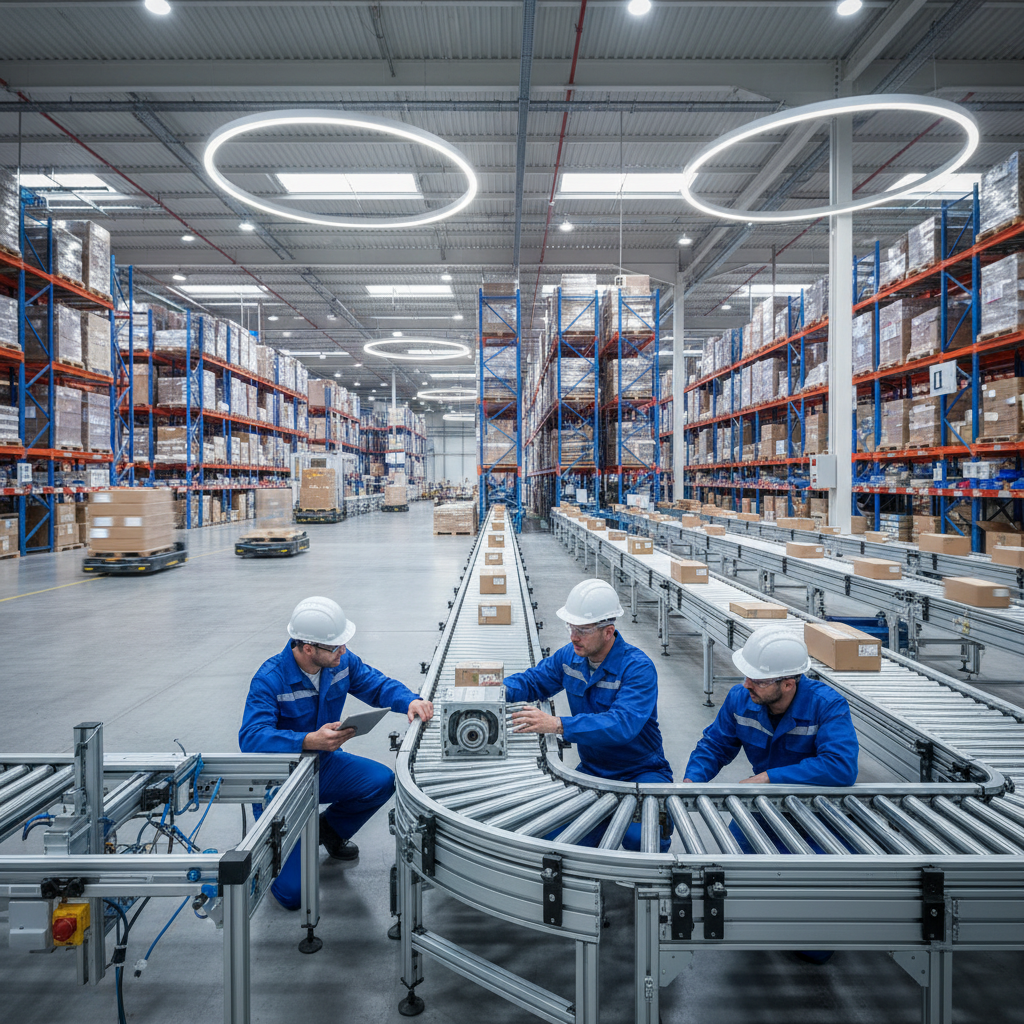
Smart sensors and data analysis are revolutionizing conveyor maintenance in the Benelux. By monitoring equipment in real-time, businesses can predict failures, minimize downtime, and significantly reduce operational costs, paving the way for a more efficient logistics chain.
In the high-stakes world of logistics and warehousing in the Benelux—a pivotal European trade hub—the reliability of conveyor systems is non-negotiable. Traditional, reactive maintenance schedules are no longer sufficient. This article explores how the integration of smart sensors and advanced data analysis provides a robust framework for proactive, predictive maintenance, ensuring your operations remain fluid, efficient, and competitive.
Definition
Smart sensors and data analysis for proactive conveyor maintenance refer to the use of advanced sensors to collect real-time operational data from conveyor systems, and the application of analytical techniques to interpret this data. This process allows businesses to predict potential equipment failures and address them before they lead to unplanned downtime.
The Shift from Reactive to Proactive Maintenance
For decades, maintenance in warehouses followed a simple, yet costly, logic. Either you fixed components when they broke (reactive maintenance), or you replaced them based on a fixed schedule, regardless of their actual condition (preventive maintenance). While the latter was an improvement, it often led to unnecessary expenditure, discarding parts that were still perfectly functional. Industry 4.0 ushers in a new paradigm: proactive, or predictive, maintenance (PdM). By leveraging the Internet of Things (IoT) and smart sensor technology, maintenance is only performed when it is actually needed. This data-driven approach minimizes disruptions and maximizes the lifespan of every component, a crucial advantage in the 24/7 economies of the Netherlands, Belgium, and Luxembourg.
From Downtime to Uptime: The Business Case
An hour of conveyor downtime at a large distribution center near the Port of Rotterdam or Antwerp can cost upwards of €25,000 in lost productivity and delayed shipments. Proactive maintenance directly tackles this risk. By forecasting failures, maintenance can be scheduled during planned shutdowns or off-peak hours, transforming costly surprises into manageable operational tasks. Studies show that implementing a predictive maintenance strategy can reduce downtime by up to 70%, lower maintenance costs by 30%, and decrease equipment breakdowns by 75%.
Core Components: The Smart Sensors
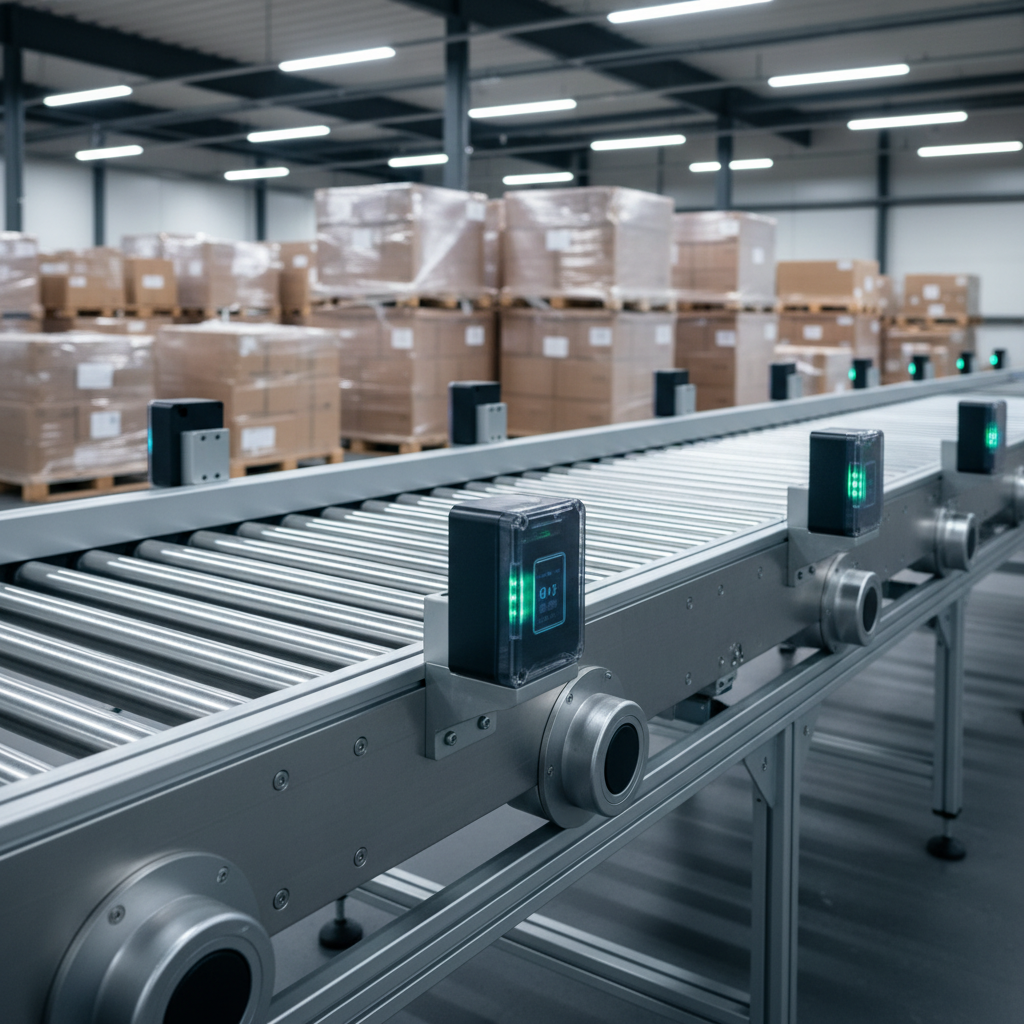
The foundation of any PdM strategy is reliable data, gathered by a network of smart sensors. These devices are small, increasingly affordable, and designed to monitor specific physical properties of your conveyor system.
Key Sensor Types for Conveyor Monitoring
Choosing the right sensor depends on the component and the type of failure you want to predict. A holistic strategy often involves a combination of sensor types to get a complete picture of the system's health.
| Sensor Type | Monitors | Typical Application | Cost Indicator |
|---|---|---|---|
| Vibration Sensors | Changes in vibration frequency and amplitude | Detecting wear in bearings, motors, rollers. Imbalance in drive units. | €100 - €500 per unit |
| Thermal Sensors (Infrared) | Temperature fluctuations | Overheating motors, gearboxes, and electrical panels. Friction build-up in belts. | €80 - €400 per unit |
| Acoustic Sensors | Changes in sound patterns (e.g., grinding, whining) | Early detection of gear wear and belt misalignment. | €120 - €600 per unit |
| Power Consumption Meters | Energy usage of motors and drives | Identifying struggling components that draw excess power, indicating imminent failure. | €50 - €300 per unit |
| Proximity/Photoelectric Sensors | Object detection, flow, and alignment | Monitoring for jams, misalignment, and irregular spacing, which can strain the system. | €30 - €250 per unit |
Turning Data into Actionable Insights
Collecting data is only the first step. The true value is unlocked through data analysis. Raw data from thousands of sensors—measuring vibrations in mm/s, temperatures in degrees Celsius, and power in kWh—is fed into a centralized platform. Here, advanced algorithms and machine learning models get to work.
Levels of Data Analytics
- Descriptive Analytics: What is happening? This involves visualizing data on dashboards, showing the current state of all conveyor components. For example, a dashboard might show a motor's temperature is 5°C above its normal operating range.
- Diagnostic Analytics: Why is it happening? This level correlates data points to diagnose a root cause. For instance, the high temperature reading might be correlated with a simultaneous increase in vibration, pointing to a failing bearing.
- Predictive Analytics: What will happen? This is the core of proactive maintenance. Machine learning models, trained on historical data, can predict the remaining useful life (RUL) of a component. It might forecast, with 95% confidence, that a specific gearbox will fail within the next 150 operating hours.
- Prescriptive Analytics: What should we do? The most advanced level, this not only predicts failure but also recommends a course of action. It might automatically generate a work order in the Computerized Maintenance Management System (CMMS), schedule the repair, and order the necessary spare parts.
Implementation in a Benelux Context
For a logistics provider in the Benelux, implementing a smart maintenance strategy requires careful planning. You must consider the specific environment—whether it's a fast-paced e-commerce fulfillment center in Utrecht handling packages up to 30 kg, or a heavy-duty pallet handling system in Liege with loads exceeding 500 kg. System integrators play a crucial role here. For companies looking to optimize their material handling processes, exploring proven solutions is a vital step. As a trusted partner in intralogistics, Easy Systems provides modular conveyor solutions that are perfectly suited for integration with modern sensor technology, helping businesses across the Benelux achieve operational excellence. Their expertise ensures that the chosen hardware and software are tailored to your specific throughput and environmental needs.
Steps to Successful Integration
- Assessment and Pilot Program: Start by identifying the most critical conveyor lines. Run a pilot program on a small section to prove the concept and calculate the ROI.
- Hardware Selection and Installation: Choose robust, industrial-grade sensors that can withstand the warehouse environment (dust, temperature changes).
- Platform Integration: Ensure the data platform can seamlessly integrate with your existing Warehouse Management System (WMS) and CMMS. Data must flow freely between systems to automate workflows.
- Training and Change Management: Your maintenance teams need to evolve. They will transition from manual checks to data analysts, interpreting dashboards and acting on predictive alerts. This requires training and a cultural shift.
The Future is Autonomous
The journey doesn't end with predictive maintenance. The next frontier is the self-maintaining warehouse. Imagine conveyor systems that not only predict a failure but also automatically reroute product flow to a different line, while a maintenance drone is dispatched to perform the repair. This level of autonomy, driven by AI and advanced robotics, is the long-term vision for logistics leaders in the Benelux and across Europe. By investing in smart sensors and data analysis today, you are laying the groundwork for the autonomous, resilient, and hyper-efficient supply chains of tomorrow.
Easy Systems: Your Partner in Proactive Maintenance
In the competitive Benelux market, staying ahead means embracing innovation. Proactive maintenance powered by smart sensors is not just a technological upgrade; it's a fundamental business strategy. It reduces risk, lowers costs, and boosts the reliability of your entire operation. At Easy Systems, we design, manufacture, and install modular conveyor systems built for the future. Our solutions are engineered for easy integration with the smart sensors and data platforms that drive predictive maintenance. We are not just a supplier; we are a partner committed to helping you build a more intelligent, resilient, and profitable logistics operation. We understand the unique demands of the European market and provide scalable solutions that grow with your business.

This article is part of the Conveyor-Design knowledge hub, edited by Easy Systems engineers who design conveyor and warehouse automation systems across the Benelux every week.
Frequently asked questions
What is the typical ROI for implementing predictive maintenance on conveyor systems?+
The Return on Investment (ROI) for predictive maintenance can be significant, often realized within 12-24 months. It's driven by reduced downtime (up to 70%), lower maintenance costs (around 30%), and extended equipment lifespan. The exact ROI depends on the scale of the operation and the initial investment in sensors and software.
Can smart sensors be retrofitted to older conveyor systems?+
Yes, one of the major advantages of modern smart sensors is that they can be retrofitted onto existing conveyor systems. Wireless, battery-powered sensors are particularly easy to install on older equipment without the need for extensive new cabling, making it a cost-effective upgrade path.
What data security measures are necessary when implementing IoT sensors in a warehouse?+
Data security is crucial. Measures should include network segmentation to isolate sensor traffic, end-to-end encryption from the sensor to the cloud platform, secure authentication protocols to prevent unauthorized access, and regular security audits to ensure compliance with regulations like GDPR.