Remote Condition Monitoring for Conveyors: Beyond Predictive Maintenance
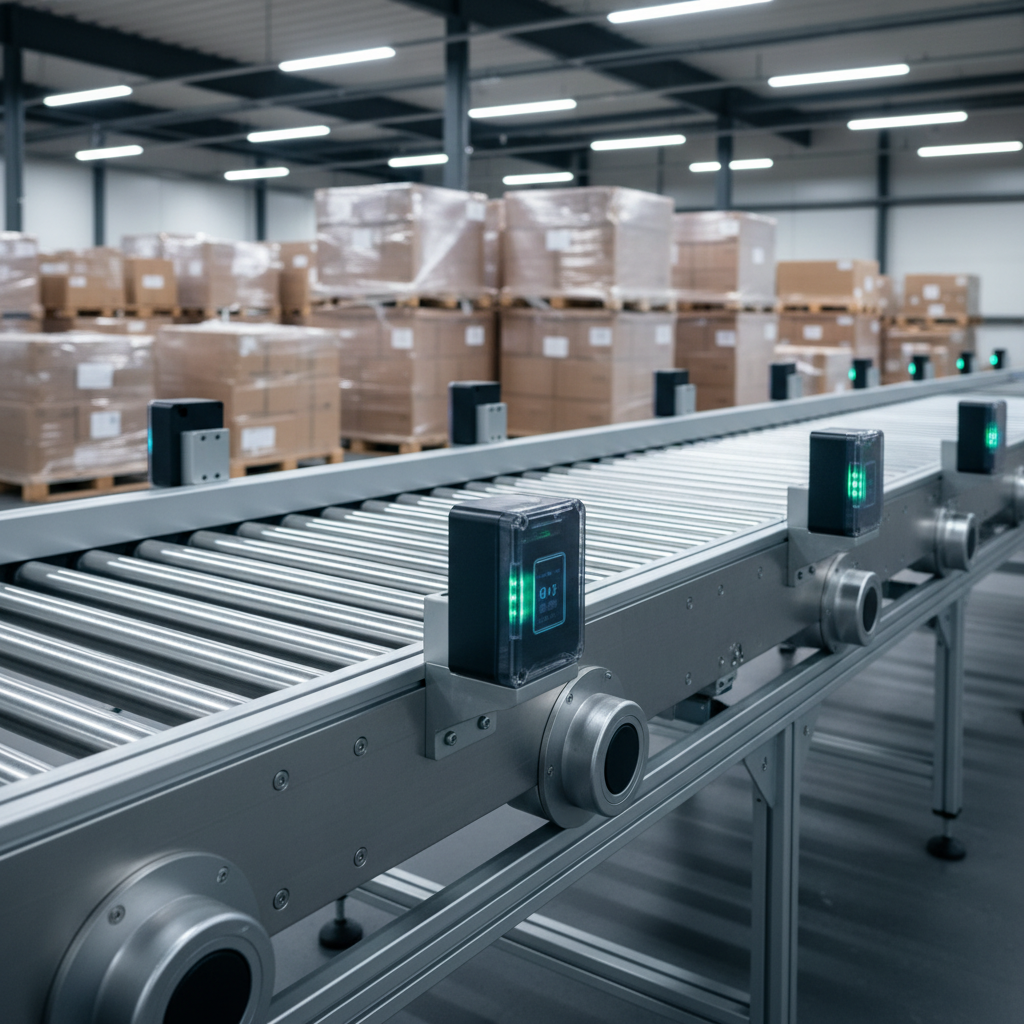
Remote condition monitoring uses IIoT sensors to track conveyor health in real-time, going beyond predictive maintenance to enhance overall equipment effectiveness (OEE), improve safety, and ensure operational resilience.

In the high-stakes world of European logistics and e-commerce fulfillment, a halted conveyor line is more than an inconvenience—it's a critical failure that directly impacts profitability and customer satisfaction. The traditional approach of reactive or even scheduled preventive maintenance is no longer sufficient. The modern distribution center demands a smarter, more proactive strategy: remote condition monitoring (RCM). This approach, however, offers far more value than simply predicting the next breakdown.
Definition
Remote Condition Monitoring (RCM) is an Industrial Internet of Things (IIoT)-enabled strategy that uses sensors to continuously collect data on the operational state of conveyor system components from a distance, enabling real-time analysis, performance optimization, and informed, proactive decision-making.
The Core Technologies Driving RCM
At the heart of any RCM system is a suite of sophisticated sensors designed to act as the eyes and ears of your maintenance team, 24/7. Each technology provides a different piece of the puzzle, and a comprehensive strategy often combines several types. The choice depends on asset criticality, potential failure modes, and budget.
Vibration Analysis
This is the cornerstone of rotating equipment monitoring. Tiny, precise sensors attached to motor housings or bearing blocks measure vibrational frequencies. Healthy equipment has a known vibrational signature. Deviations can indicate developing issues like shaft misalignment, bearing wear, or imbalance with stunning accuracy, often months before a-human could detect them. For example, a gradual increase in amplitude at the 1x running speed frequency on a drive motor often points to imbalance, while high-frequency spikes can signal the early stages of bearing race fatigue.
Thermal Imaging
Heat is a primary indicator of inefficiency and impending failure. Continuously monitored thermal sensors or periodic checks with thermal cameras can spot overheating in drive motors, gearboxes, and electrical cabinets. An electrical connection that is 15°C hotter than similar adjacent connections under the same load is a critical fire and failure risk. For a conveyor motor, running 10°C hotter than its optimal temperature can cut its lifespan in half.
Acoustic Analysis
Specialized acoustic sensors can listen for high-frequency sounds that are inaudible to the human ear but are early indicators of problems. These can include the subtle 'whine' of a worn gearbox, the specific frequencies of a poorly tensioned belt slipping on a pulley, or the lack of proper lubrication in a roller bearing.
Comparative Table of RCM Technologies
Choosing the right technology involves a trade-off between cost, precision, and the specific failure modes you aim to detect. Below is a typical comparison for a European warehouse context.
| Technology | Primary Use Case | Typical Cost (per monitored point) | Precision | Implementation Complexity |
|---|---|---|---|---|
| Vibration Analysis | Detecting motor/bearing imbalance, misalignment, wear | €200 - €800 | Very High | Moderate to High |
| Thermal Imaging (Continuous) | Spotting overheating in motors, electrical panels | €150 - €600 | High | Moderate |
| Acoustic Analysis | Identifying belt slippage, lubrication issues, gear wear | €100 - €400 | Medium | Low to Moderate |
| Power Consumption Monitoring | Gauging overall system strain, energy waste, load changes | €50 - €250 | Medium | Low |
Beyond Predictive Maintenance: The True ROI of RCM
Predicting failures is the most cited benefit of RCM, but its true value extends into nearly every corner of your operation. It's not just a maintenance tool; it's a business intelligence engine.
Boosting Overall Equipment Effectiveness (OEE)
OEE is the gold standard for measuring manufacturing productivity, calculated as Availability x Performance x Quality. RCM directly improves all three:
- Availability: Unplanned downtime is drastically reduced. Instead of a 4-hour emergency repair, you plan a 1-hour component swap during a non-peak period, directly boosting availability.
- Performance: RCM helps maintain the conveyor at its designed speed. Data can reveal if a belt is slipping or a motor is straining, causing it to run slower than its optimal 1.5 m/s, for example. Correcting these issues ensures maximum throughput.
- Quality: In sorting applications, system jerks or speed inconsistencies caused by underlying mechanical issues can lead to mis-sorts and damaged packages. RCM ensures smooth operation, protecting the quality of handling.
Enhancing Worker Safety & EU Compliance
A catastrophic equipment failure—like a seized motor or a snapped belt—is a major safety hazard. By identifying risks before they become critical events, RCM helps create a safer work environment. This is a key consideration under the EU's Machinery Directive 2006/42/EC, which mandates the prevention of mechanical hazards. Documenting a proactive RCM strategy demonstrates due diligence in risk assessment and mitigation.
Enabling Data-Driven Capital Expenditure (CAPEX)
Instead of replacing assets on a fixed schedule, RCM allows you to move to a "condition-based" replacement strategy. The data may show that a specific brand of 2.2 kW motors consistently fails 20% earlier than a slightly more expensive alternative, providing a clear business case for investing in the higher-quality option. This data transforms CAPEX planning from guesswork into a data-backed science.
A Practical Implementation Roadmap
Deploying an RCM system can seem daunting, but a phased approach ensures success.
- Asset Criticality Assessment: You don't need to monitor everything. Start by identifying the most critical components. Which failure would cause the most significant bottleneck? Focus your initial investment on these high-impact assets, such as the main sorter drives or incline motors.
- Sensor Selection & Pilot Program: Based on the likely failure modes of your critical assets, select the appropriate sensor technology. Run a 90-day pilot on a single conveyor line to establish baseline data, validate the technology, and demonstrate ROI to stakeholders.
- Data Integration & Platform Setup: The power of RCM is not just in the alerts, but in the long-term trends. Ensure the data flows into a user-friendly dashboard. The platform should be capable of integrating with your existing Computerized Maintenance Management System (CMMS) or Warehouse Management System (WMS) to automate work orders.
- Training and Scaling: Train your maintenance team not just to react to alerts, but to interpret the data and transition their mindset from "firefighting" to "proactive optimizing". Once the pilot is proven, develop a plan to scale the solution across your facility.
Integrating RCM with Your CMMS/WMS
The true power of an RCM solution is unlocked when it talks to your other management systems. A modern RCM platform can be integrated via APIs to your CMMS. For example, when a vibration sensor detects a bearing is approaching its alarm threshold, the RCM system can automatically trigger a work order in the CMMS, complete with the asset ID, the specific fault detected, and even a list of required spare parts. This seamless workflow eliminates human error and ensures developing issues are never missed.
Easy Systems: Your Partner for Intelligent Conveyor Automation
At Easy Systems, we believe that intelligent automation is the future of logistics. While many focus only on the initial design and installation, we understand that long-term operational excellence is what truly drives value for our clients. Our modular conveyor systems are designed with maintenance and monitoring in mind, providing easy access to critical components and simplifying the retrofitting of RCM technologies. We don’t just sell conveyors; we provide the backbone for resilient, efficient, and intelligent warehouse operations. Our expertise in system design ensures that from day one, your material handling solution is optimized for performance and ready for the integration of next-generation monitoring. By partnering with us, you are investing in a system built for the future of data-driven logistics.
To learn more about our forward-thinking and robust conveyor solutions, visit us at Easy Systems and discover how we can help you build a more resilient and efficient operation.

This article is part of the Conveyor-Design knowledge hub, edited by Easy Systems engineers who design conveyor and warehouse automation systems across the Benelux every week.
Frequently asked questions
What is the typical ROI for a remote condition monitoring system?+
ROI varies, but many European warehouses see a return within 12-24 months through reduced downtime, lower spare parts inventory, and optimized maintenance labour. A 5-15% reduction in maintenance costs is a conservative estimate.
Can RCM be retrofitted to older conveyor systems?+
Yes, most RCM solutions are designed to be retrofitted. Wireless, battery-powered sensors for vibration and temperature can be easily installed on motors, gearboxes, and bearings of existing equipment with minimal operational disruption.
Is my data secure in an RCM cloud platform?+
Reputable providers use end-to-end encryption, secure cloud infrastructure (often GDPR-compliant for European clients), and access control protocols to ensure your operational data remains confidential and protected from cyber threats.