Human-Robot Collaboration on Conveyors: Benelux Synergy
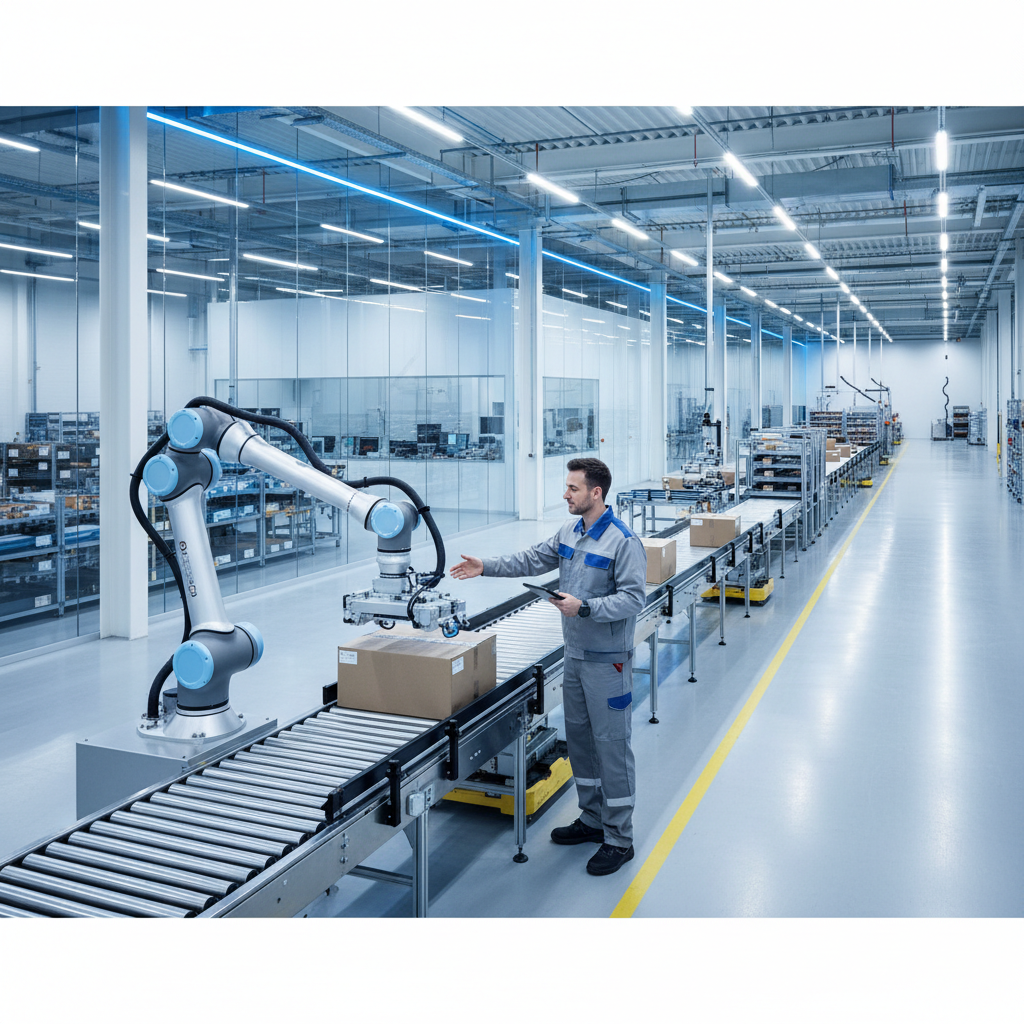
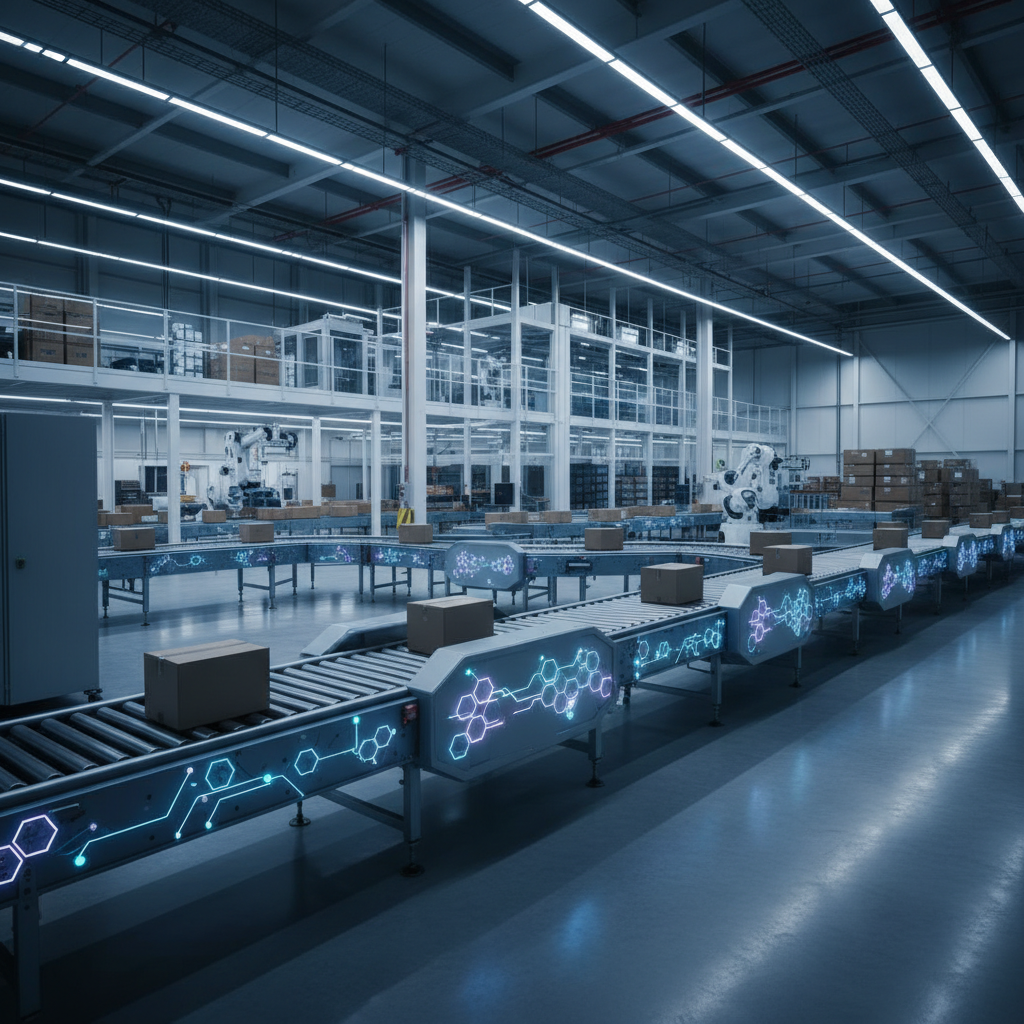
Human-Robot Collaboration (HRC) integrates human flexibility with robotic precision on conveyor lines, creating a powerful synergy for modern warehouses. This approach is revolutionizing material handling in the Benelux by increasing throughput and improving ergonomics.
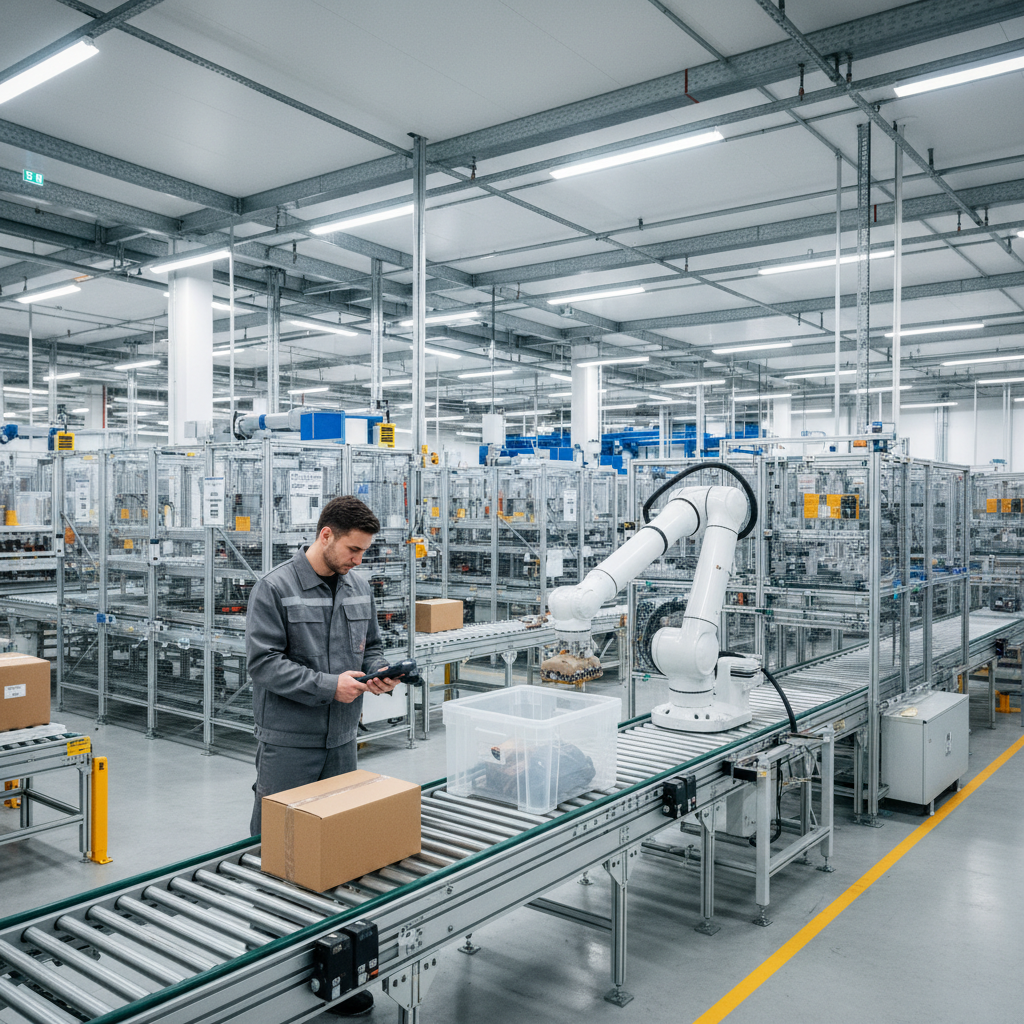
In the bustling logistics landscape of the Benelux—a pivotal European trade hub—the pressure for faster and more accurate order fulfillment is relentless. As e-commerce demand surges and labor becomes scarcer, companies are turning to automation not just to replace, but to augment their human workforce. Human-Robot Collaboration (HRC) at the conveyor line represents the pinnacle of this new industrial paradigm, a synergy that promises to redefine productivity, safety, and operational flexibility.
Definition
Human-Robot Collaboration (HRC) in a material handling context refers to a shared workspace where human operators and collaborative robots (cobots) work in close proximity to perform tasks on a conveyor system. Unlike traditional automation, which isolates robots in cages, HRC leverages advanced sensors to allow for safe, direct interaction, combining human intuition with robotic consistency.
The Strategic Imperative for HRC in the Benelux
The adoption of HRC in Belgium, the Netherlands, and Luxembourg is not a trend but a strategic response to pressing economic and demographic shifts. Labor costs in this region are among the highest in Europe, while an aging workforce and a competitive market for skilled logistics personnel create significant operational challenges. E-commerce penetration in the Benelux is forecasted to grow consistently, putting immense strain on distribution centers to handle a higher volume and variety of orders. HRC provides a direct solution by automating the most repetitive and physically demanding aspects of conveyor handling, freeing human workers to focus on value-added tasks like quality control, exception handling, and complex packing.
Key Drivers in the European Context
- High Labor Costs: With average hourly labor costs exceeding €40 in parts of the Benelux, automating repetitive tasks offers a rapid return on investment.
- Labor Scarcity: A structural shortage of warehouse operatives makes it difficult to scale operations during peak seasons like Sinterklaas or Black Friday.
- Ergonomic Regulations: European directives on workplace health and safety (e.g., Directive 90/269/EEC) push employers to minimize manual handling of loads and repetitive strain. HRC directly addresses this by letting cobots handle movements that lead to musculoskeletal disorders.
How HRC Functions on a Conveyor Line
Imagine a typical packing station in a Dutch e-fulfillment center. A modular belt conveyor delivers a steady stream of open shipping boxes. Previously, a human worker would pick items from a tote, place them in the box, add dunnage, seal the box, and push it onto an outbound conveyor. With HRC, the process is streamlined:
- A cobot, equipped with a vacuum gripper, picks an item from a tote and places it precisely into the box on the conveyor.
- Simultaneously, the human operator inspects the item, adds a personalized note or marketing material, and initiates the next step.
- The cobot might then fold the box flaps before it moves to an automated sealer.
The Technology Enabling Safe Collaboration
The core of HRC is safety. Cobots are designed to operate without the need for large, space-consuming safety cages. This is achieved through:
- Power and Force Limiting: Internal sensors monitor forces. If the cobot arm encounters an unexpected object (like a human hand), it stops instantly with a force typically less than 150 Newtons, preventing injury.
- Advanced Vision Systems: 2D and 3D cameras serve as the eyes of the cobot, enabling it to identify products, read barcodes, and detect human presence in its immediate workspace.
- Compliance with ISO/TS 15066: This technical specification provides safety guidelines for collaborative robot systems, defining the conditions under which humans and robots can safely interact.
Cobots vs. Traditional Industrial Robots
The choice between a cobot and a traditional robot depends entirely on the application. For high-speed, heavy-payload tasks in a fixed location, traditional robots excel. For variable, semi-structured tasks alongside humans, cobots are the superior choice. The distinction is crucial for logistics managers in the Benelux planning their automation strategy.
| Feature | Collaborative Robot (Cobot) | Traditional Industrial Robot |
|---|---|---|
| Safety Concept | Cage-free operation; power & force limiting (ISO/TS 15066) | Requires physical safety cages and light curtains |
| Typical Footprint | Compact; often mounted directly on a workbench or mobile unit | Large, fixed installation requiring significant floor space |
| Programming & Setup | Simple, intuitive interfaces; hand-guiding for path teaching (setup in hours) | Complex, requires specialized programming skills (setup in days/weeks) |
| Typical Investment (Benelux) | €15,000 - €40,000 per unit | €50,000 - €150,000+ (excluding integration costs) |
| Payload & Speed | Low-to-medium payload (typically 3-20 kg) at moderate speed (e.g., 1 m/s) | High payload (up to 1,000+ kg) at very high speed (e.g., >5 m/s) |
| Ideal Conveyor Task | Picking, packing, sorting, quality inspection, palletizing light cases | End-of-line palletizing of heavy goods, high-speed case handling |
Calculating the ROI for HRC in a Benelux Warehouse
For a finance director in Antwerp or Rotterdam, the business case for HRC must be clear. A simplified ROI calculation looks like this:
Investment:
- Cobot Arm: €25,000
- Gripper & Vision System: €5,000
- Integration with Conveyor: €10,000
- Total Initial Cost: €40,000
- Manual Labor Reduction: 1 FTE (Full-Time Equivalent) at an all-in cost of €45,000/year.
- Productivity Gain: 30% increased throughput, leading to higher revenue or deferred need for a second shift.
- Reduction in Ergonomic Injury Costs: Estimated at €2,000/year per employee.
- Total Estimated Annual Savings: ~€50,000
In this scenario, the payback period is less than 10 months, an extremely attractive proposition for any capital investment.
Easy Systems: Your Foundation for HRC Success
A successful Human-Robot Collaboration strategy is not just about the robot; it depends fundamentally on the system that feeds it. The conveyor system must be reliable, modular, and intelligent enough to integrate seamlessly with the cobot. It needs to present products and packages at the right speed (e.g., 0.3-0.5 m/s), in the correct orientation, and with consistent precision. This is where a trusted partner is invaluable. As a leading European manufacturer of modular conveyor systems, Easy Systems provides the robust and adaptable foundation needed for your HRC applications. Our systems are engineered in-house to guarantee perfect synchronization with cobots, ensuring your investment in automation yields maximum returns. To explore tailored conveyor solutions for your automation project, visit our experts at Easy Systems.
This article is part of the Conveyor-Design knowledge hub, edited by Easy Systems engineers who design conveyor and warehouse automation systems across the Benelux every week.
Frequently asked questions
What is the primary advantage of Human-Robot Collaboration over full automation?+
The primary advantage is flexibility. HRC combines human problem-solving skills and dexterity with a robot's strength and stamina for repetitive tasks. This is ideal for complex processes like packing variable items, which are difficult and costly to fully automate.
Are cobots completely safe to work alongside?+
Yes, when properly integrated according to safety standards like ISO/TS 15066. Cobots are designed with sensors that limit their force and power, causing them to stop upon contact with a person, preventing injury. A mandatory risk assessment is always part of the installation.
What is the typical cost of a cobot for conveyor handling in the Benelux?+
The cobot arm itself typically costs between €15,000 and €40,000. The total investment, including grippers, sensors, and integration with your existing conveyor system, usually ranges from €30,000 to €60,000.
How long does it take to install and program a cobot on a conveyor line?+
Physical installation can often be done in a single day. Basic programming for a simple pick-and-place task can be taught in a few hours using intuitive hand-guiding methods. More complex integrations with vision systems may take a few days.