Blockchain in the Supply Chain: Securing Conveyor Data
Blockchain technology offers unprecedented transparency and security for conveyor operational data. By creating an immutable and decentralized ledger, it enhances traceability and trust among supply chain partners.
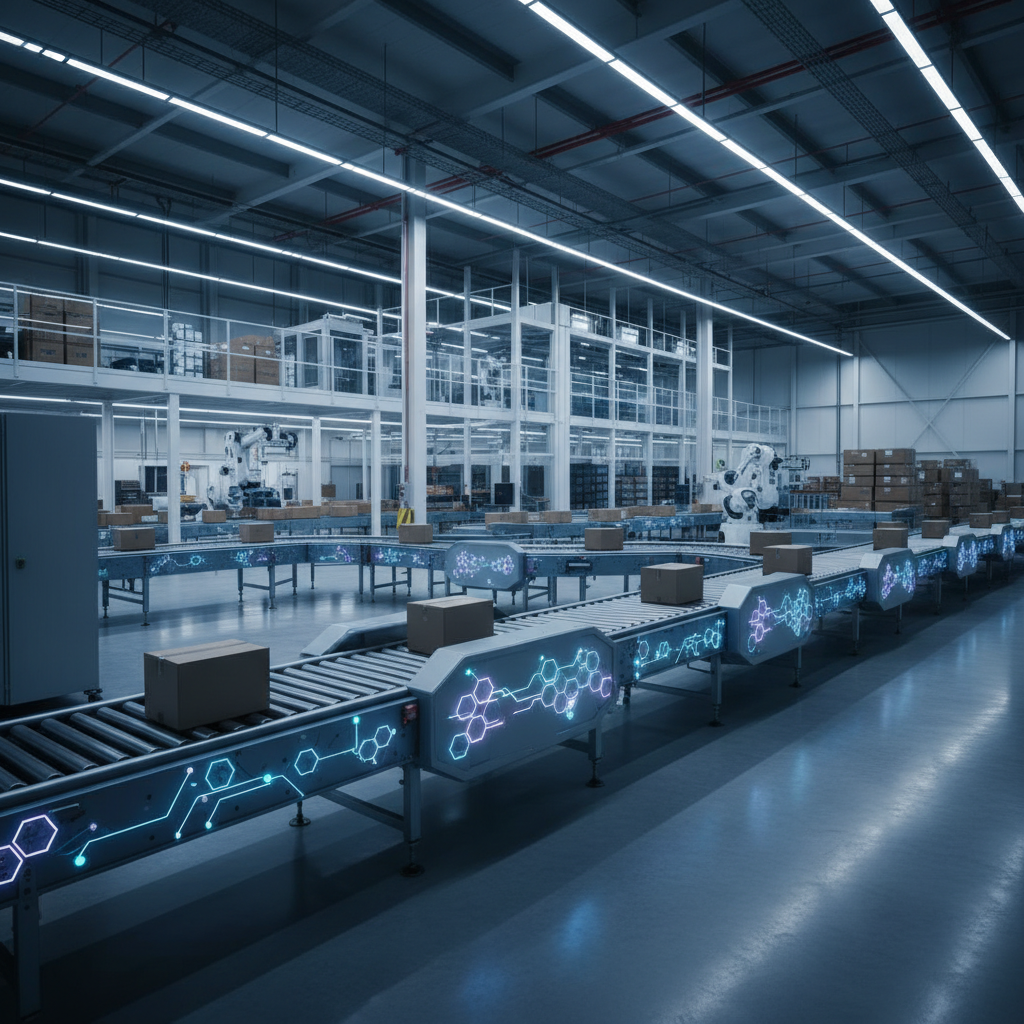
In the intricate dance of modern logistics, where every second and every kilogram counts, the integrity of operational data is paramount. The rise of Industry 4.0 has connected our warehouses and conveyor systems to the digital world, but with this connectivity comes vulnerability. This article explores how blockchain technology is emerging as a critical solution to secure conveyor operational data, ensuring unprecedented transparency and security across the entire supply chain.
Definition
Blockchain for the supply chain is a distributed, immutable ledger technology used to record transactions and track assets—both tangible (products, parcels) and intangible (data, patents). Each "block" in the "chain" is cryptographically linked to the previous one, creating a tamper-proof record of events accessible to permissioned stakeholders.
The Problem with Centralized Data in Conveyor Operations
Traditionally, data from conveyor systems—such as throughput rates, package dimensions, weight, and sorting destinations—is stored in centralized databases managed by a single entity (e.g., the warehouse operator or a logistics provider). This model presents several challenges:
- Data Silos: Information is often fragmented across different systems and partners, making it difficult to get a holistic view.
- Lack of Trust: Disputes can arise between partners (e.g., manufacturer and 3PL) over performance metrics, as data can be altered or is not equally visible.
- Security Risks: A single point of failure makes centralized databases a prime target for cyber-attacks, which can halt operations and compromise sensitive data.
- Inefficiency: Reconciliation of data between different ledgers is time-consuming and prone to human error, costing European businesses millions in administrative overhead.
How Blockchain Creates a Secure Data Ecosystem
Blockchain fundamentally changes this paradigm by creating a decentralized and synchronized data ecosystem. When a package is scanned on a conveyor, a transaction can be recorded on the blockchain. This record includes a timestamp, a unique identifier, and other relevant data (e.g., weight, destination). Every stakeholder in the chain—from the manufacturer to the retailer—can see this data in real-time, but no one can alter it retroactively.
Core Benefits for Conveyor Data Integrity
The application of blockchain to data generated by conveyor systems, from basic belt conveyors to advanced automated sorting solutions, offers tangible benefits.
Enhanced Transparency and Traceability
With blockchain, every scan, diversion, and movement of a product on a conveyor is a transaction logged on the shared ledger. This creates an end-to-end, real-time audit trail. A luxury goods brand, for instance, can verify that its products were handled under specific conditions (e.g., temperature, handling speed) throughout their journey in the distribution center, directly from the conveyor system's data feed.
Immutable and Verifiable Records
Once data is written to a block, it cannot be changed. This immutability is crucial for resolving disputes. If a customer claims a package was damaged or delayed, the blockchain provides a verifiable record of its entire journey through the facility, including its weight (detecting tampering) and the exact time it passed through each checkpoint on the conveyor network (verifying SLAs).
Automated Processes with Smart Contracts
Smart contracts are self-executing contracts with the terms of the agreement directly written into code. They can be programmed to trigger actions automatically when certain conditions are met. For example, a smart contract could automatically schedule and pay for conveyor maintenance once the system has processed a certain number of parcels (e.g., every 1,000,000 units) or if a sensor reports a performance drop below 1.5 m/s. This reduces administrative overhead and ensures proactive maintenance.
Traditional vs. Blockchain-Based Data Management
The difference in performance and reliability is stark when we compare traditional systems with a blockchain-integrated approach.
| Feature | Traditional Centralized Database | Blockchain Ledger |
|---|---|---|
| Data Structure | Client-server, editable records | Decentralized, append-only blocks |
| Data Security | Vulnerable to single-point attacks | Cryptographically secured and distributed |
| Transparency | Opaque, controlled by one entity | Shared and transparent to all permissioned parties |
| Dispute Resolution Time | Hours or days, requires manual audit | Near real-time, automated verification |
| Typical Data Latency | Can be minutes to hours between partners | Seconds |
| Annual Audit Cost (example) | €15,000 - €50,000 | Reduced by up to 50% due to automation |
Implementation Challenges in a European Context
Despite the promise, implementing blockchain in European supply chains is not without its hurdles. Diverse regulatory landscapes (like GDPR), the need for interoperability between different blockchain platforms, and the initial investment cost are significant considerations. Furthermore, integrating blockchain with a myriad of legacy warehouse management systems (WMS) and conveyor control systems requires specialised expertise. The key to success lies in starting with a specific, high-value use case, such as tracking high-value goods or verifying compliance for pharmaceutical products. Modular and scalable solutions are essential for a smooth transition. For companies looking to navigate this complexity, partnering with an experienced automation expert is crucial. For example, firms like Easy Systems specialize in integrating advanced material handling solutions with cutting-edge data management technologies, providing the foundational hardware and control systems necessary for a successful blockchain implementation.
The Future: A Fully Autonomous Supply Chain
Looking ahead, blockchain is a cornerstone of the future autonomous supply chain. When combined with AI and IoT sensors on conveyors, it can create a self-governing logistics network. Imagine a scenario where a conveyor system not only routes a package but also verifies its authenticity via the blockchain, confirms its customs clearance, and triggers payment upon successful delivery—all without human intervention. This level of automation will slash operational costs, enhance efficiency, and create a truly resilient and trustworthy supply chain for the European market.
Easy Systems: Your Partner in Building a Transparent Future
While blockchain provides the software-level trust, the integrity of the data ultimately starts with the hardware. The reliability of your conveyor and sorting systems is the foundation upon which any advanced data strategy is built. At Easy Systems, we design, manufacture, and install state-of-the-art modular conveyor systems for the European market. Our solutions are engineered for precision and reliability, providing the clean, accurate, and real-time data needed for technologies like blockchain to succeed. We understand the connection between high-performance hardware and next-generation logistics. Partner with us to build a robust material handling foundation for your transparent and secure supply chain of tomorrow.
This article is part of the Conveyor-Design knowledge hub, edited by Easy Systems engineers who design conveyor and warehouse automation systems across the Benelux every week.
Frequently asked questions
What is the main benefit of blockchain for conveyor systems?+
The main benefit is creating a single, immutable source of truth for all operational data. This enhances transparency and trust between supply chain partners, drastically reducing disputes and eliminating the need for manual data reconciliation.
Is blockchain expensive to implement?+
Initial implementation can require significant investment in software development, integration, and training. However, the long-term ROI is realized through reduced administrative costs, fewer disputes, enhanced security, and improved operational efficiency. Pilot projects can be started on a smaller scale to manage costs.
Can blockchain be integrated with my existing Warehouse Management System (WMS)?+
Yes, blockchain can be integrated with existing WMS and ERP systems through APIs (Application Programming Interfaces). This allows the blockchain to act as a secure data layer that communicates with your current software, preserving your initial investment while enhancing capabilities.
How does blockchain improve security for conveyor data?+
By distributing the data across many nodes and cryptographically linking the records, blockchain makes it virtually impossible for an unauthorized party to alter data. Unlike a central database, there is no single point of failure for a hacker to target.