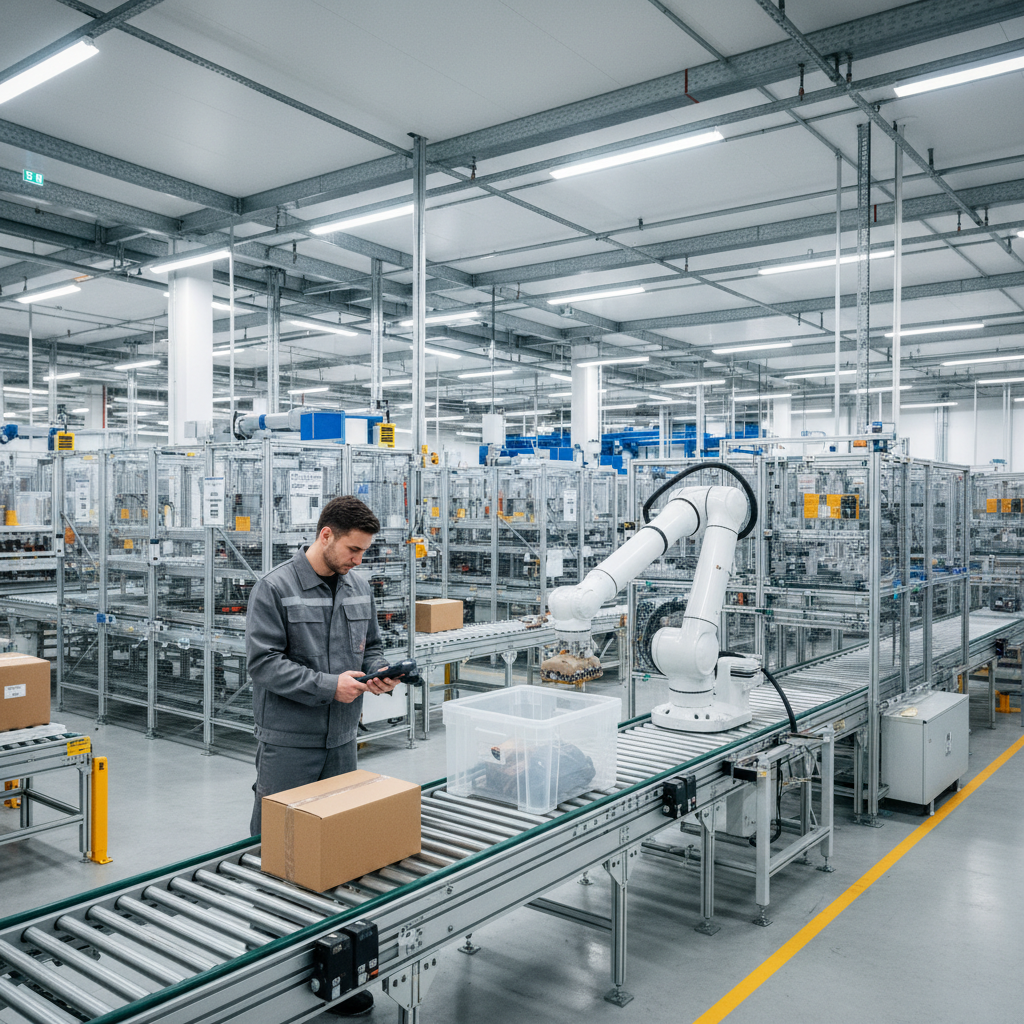
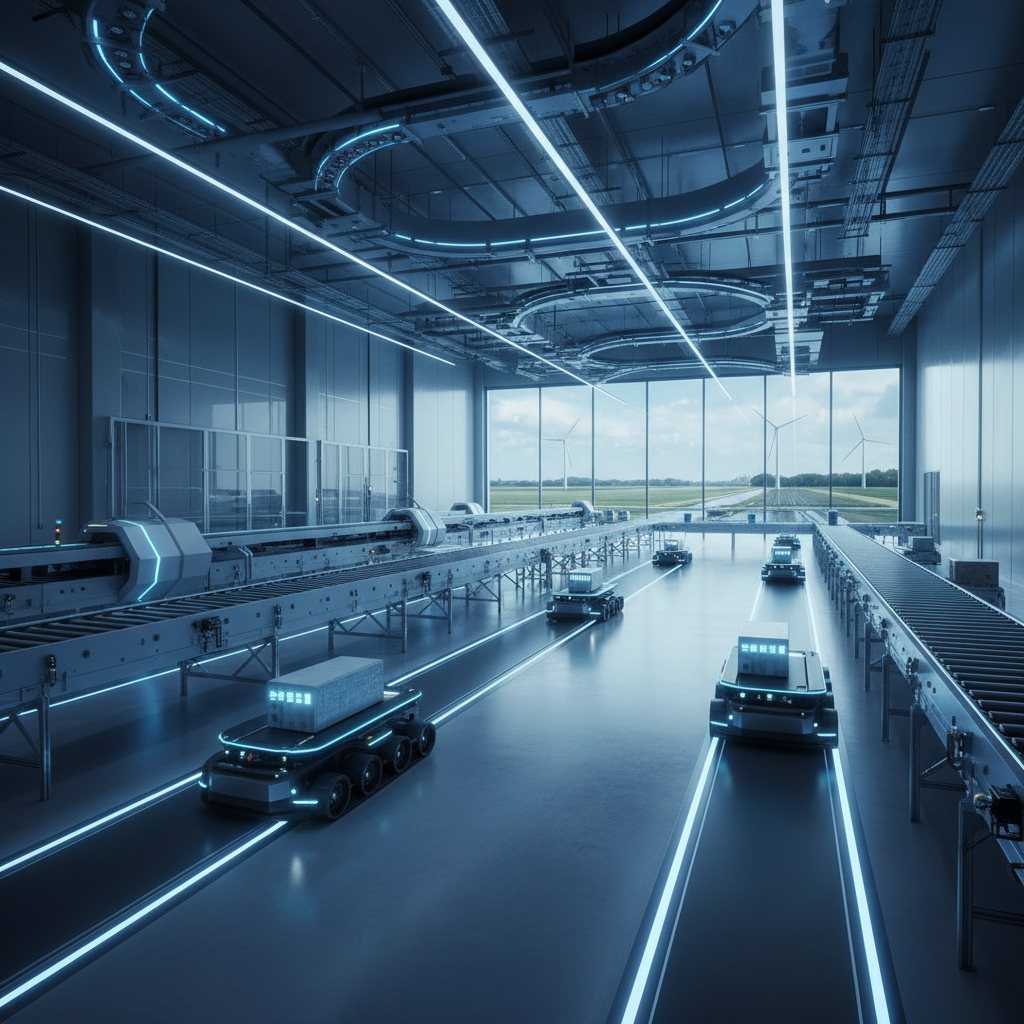
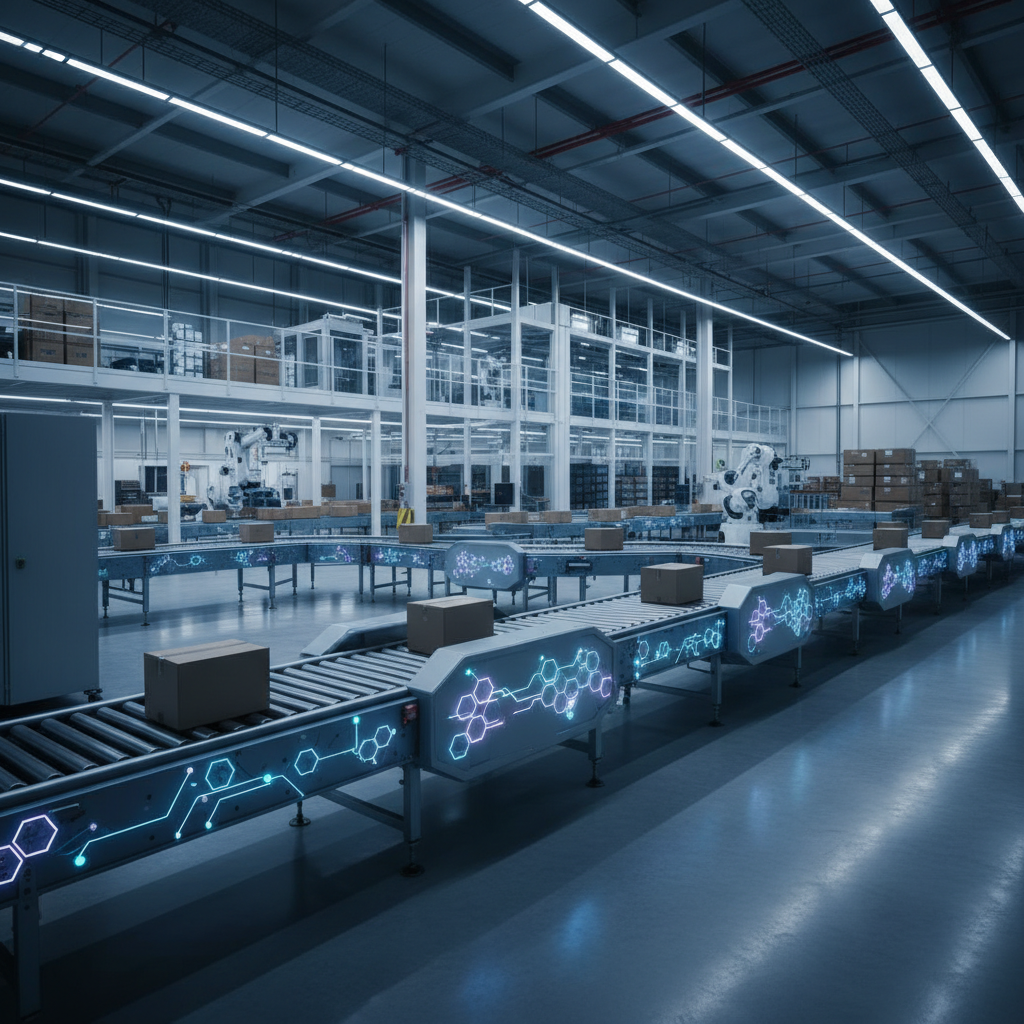
Cobots on the Production Line: A New Wave of Efficiency
Collaborative robots (cobots) are transforming Benelux production lines by working directly with human operators. This guide explores their applications, benefits, and the strong ROI for warehouse automation.
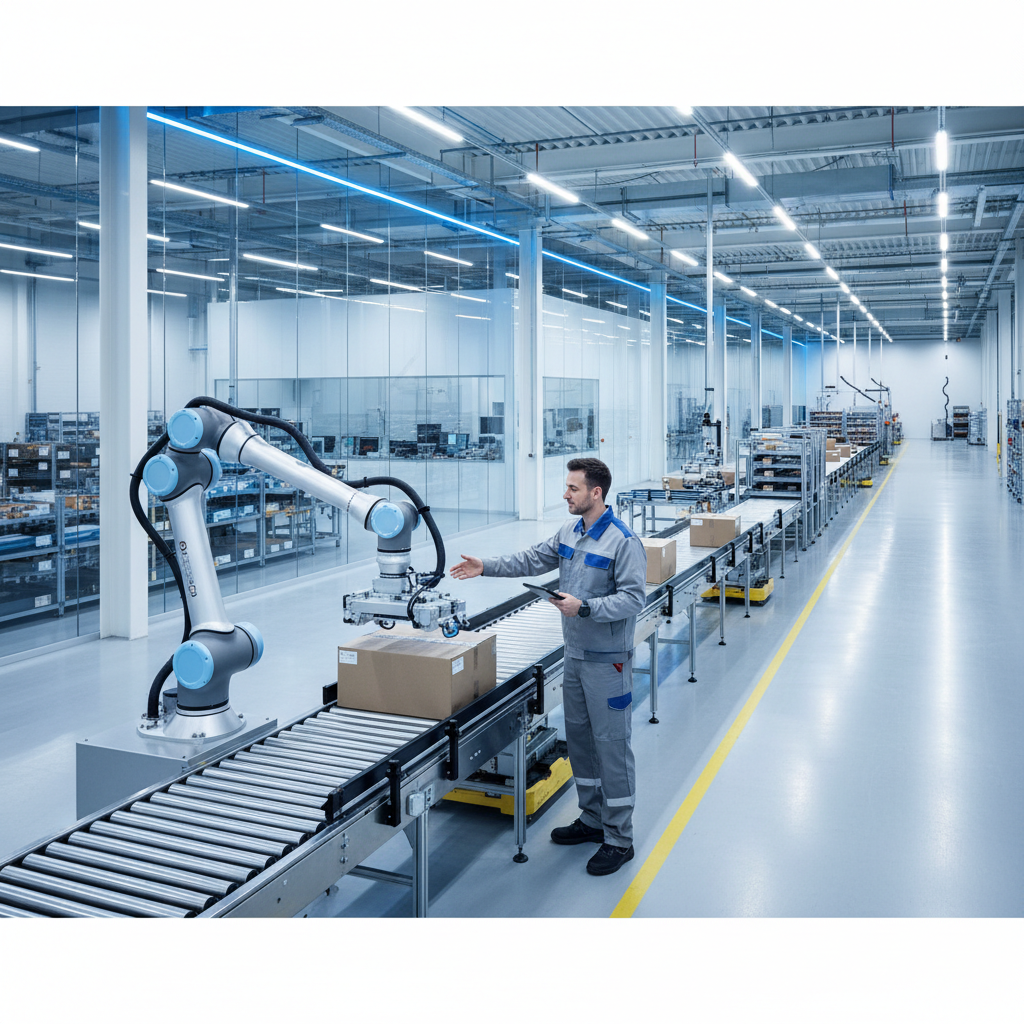
The logistics backbone of Europe, the Benelux region, is facing a perfect storm of surging e-commerce demand, rising labor costs, and a persistent shortage of skilled workers. In response, warehouses and distribution centers are not just automating, but revolutionizing the very interaction between their workforce and machinery. Enter the collaborative robot, or "cobot" – a cornerstone of Industry 4.0 that is redefining efficiency on the modern production line.
Definition
Human-robot collaboration involves industrial robots (cobots) specifically designed to work safely and effectively in a shared workspace with human operators. Unlike traditional industrial robots that operate in isolated cages, cobots are intended to augment human capabilities, handling repetitive, strenuous, or precise tasks directly alongside their human colleagues.
The Rise of Cobots in the Benelux: A Market in Motion
The Benelux, with its high density of distribution centers serving key European markets, has become a hotbed for cobot adoption. The strategic locations of logistics hubs like the ports of Rotterdam and Antwerp, combined with high labor costs (exceeding €40 per hour in manufacturing in Belgium and the Netherlands), create a compelling business case. Market growth for cobots in Europe is projected to exceed 25% annually, as businesses move from pilot projects to full-scale integration.
Drivers for this adoption include:
- Labor Shortage: Difficulty in finding and retaining staff for physically demanding, repetitive warehouse jobs.
- E-commerce Boom: The need for faster, more accurate order fulfillment and handling of a wider variety of SKUs.
- Focus on Ergonomics: A growing awareness of workplace health and safety, driving companies to automate tasks that cause strain and injury.
Key Applications: Where Cobots Meet the Conveyor Line
Cobots are most effective when integrated seamlessly with other automated systems, like conveyor belts. Their flexibility allows them to be deployed at various points along a production or packaging line.
H3: Common Tasks on the Line
- Pick & Place: Moving items from a conveyor to a box, or from a bin to a conveyor. A typical cobot can perform this action with a cycle time of 3-5 seconds.
- Packaging & Palletizing: End-of-line tasks like erecting boxes, placing finished goods inside, and stacking them onto pallets. This frees up human workers for more complex quality checks.
- Quality Inspection: Equipped with vision systems, cobots can inspect products on a moving conveyor for defects at speeds of up to 1.5 m/s, far exceeding human consistency over a long shift.
- Assembly: Performing precise tasks like screw-driving or applying adhesives, often in tandem with a human worker who handles more dextrous parts of the assembly.
Cobot vs. Industrial Robot: A Comparative Analysis
The choice between a cobot and a traditional industrial robot depends entirely on the application. For high-speed, heavy-payload tasks in a fixed, isolated environment, traditional robots excel. For variable, collaborative tasks in a shared space, cobots are the superior choice. The table below outlines the key differences:
| Feature | Collaborative Robot (Cobot) | Traditional Industrial Robot |
|---|---|---|
| Safety | Designed for caged-free operation (after risk assessment); features force/torque sensors. | Requires physical safety cages, light curtains, or laser scanners. |
| Speed | Slower, typically operates at safe speeds around 1-1.5 m/s. | Very fast, can exceed 5 m/s. |
| Payload | Lower, commonly in the 3 kg to 25 kg range. | High, from 20 kg to over 1,000 kg. |
| Footprint & Mobility | Small footprint, lightweight, often mounted on mobile platforms. | Large, heavy, and permanently fixed to the floor. |
| Programming | Simple graphical interface, hand-guiding (teaching by moving the arm). | Requires specialized programming expertise (e.g., RAPID, KRL). |
| Investment Cost | Lower initial investment (approx. €25,000 - €50,000 per unit). | Higher initial investment (approx. €50,000 - €200,000+). |
Implementing Cobots: A Roadmap for Benelux Warehouses
Successful implementation goes beyond purchasing a robot arm. It requires a holistic approach:
- Task Identification: Analyze a production line to find bottlenecks and identify tasks that are repetitive, unergonomic, or require high precision (the "Dull, Dirty, and Dangerous" tasks).
- Safety & Risk Assessment: A crucial step in the EU. This involves complying with standards like ISO/TS 15066 and ensuring the entire application (robot, gripper, workspace) is safe for human interaction. It dictates the maximum safe operating speed and force.
- Integration with Existing Systems: This is where a partnership with an integrator is key. The cobot must communicate with your existing conveyor systems, ERP, and WMS. This ensures that a part is only picked when the conveyor confirms it's in position.
- Employee Training & Buy-in: Frame the cobot as a tool that helps employees, not replaces them. Provide training on how to operate and work alongside the new technology.
Measuring the ROI: The Financial Case
While the initial investment for a cobot system might seem significant, the return on investment is often surprisingly fast. A typical calculation for a Benelux warehouse might look like this: A single cobot doing a pick-and-place task can often do the work of 1.5 human FTEs over a two-shift operation. Given the high labor costs, this can result in savings of over €60,000 per year, leading to an ROI in under 18 months, not including gains from increased accuracy and reduced injury-related costs.
Easy Systems: Your Partner for Integrated Cobot & Conveyor Solutions
The true power of human-robot collaboration is unlocked when cobots are seamlessly integrated into a broader automation ecosystem. A cobot is only as effective as the system that presents parts to it. At Easy Systems, we specialize in designing and implementing intelligent conveyor systems that form the foundation of modern warehouse automation. We understand how to create a production line where materials flow smoothly and are perfectly positioned for both human and robotic processes. By ensuring your material handling is robust and efficient, we pave the way for a successful cobot implementation. Learn more about our modular and intelligent conveyor solutions by visiting our homepage at Easy Systems and discover how we can architect the physical flow for your next wave of efficiency.
This article is part of the Conveyor-Design knowledge hub, edited by Easy Systems engineers who design conveyor and warehouse automation systems across the Benelux every week.
Frequently asked questions
What is the main difference between a cobot and a traditional robot?+
The main difference is safety and collaboration. Cobots are designed with sensors to work safely alongside humans without safety cages, while traditional robots are powerful, high-speed machines that must be isolated from human workers.
Will cobots take over jobs in Benelux warehouses?+
Cobots are more likely to change jobs than eliminate them. They typically handle repetitive and physically strenuous tasks, allowing human workers to move into higher-value roles like quality control, machine supervision, and complex problem-solving.
What is the typical payload of a warehouse cobot?+
Most cobots used in logistics and on production lines have a payload capacity between 3 kg and 25 kg, which is ideal for handling the majority of individual products and packages in e-commerce and manufacturing.