Automated Pallet Transport Systems: A Practical Buyer's Guide
Pallet conveyors, transfer cars, AGVs and shuttles all move pallets — but each shines in a different layout. Here's how to decide.
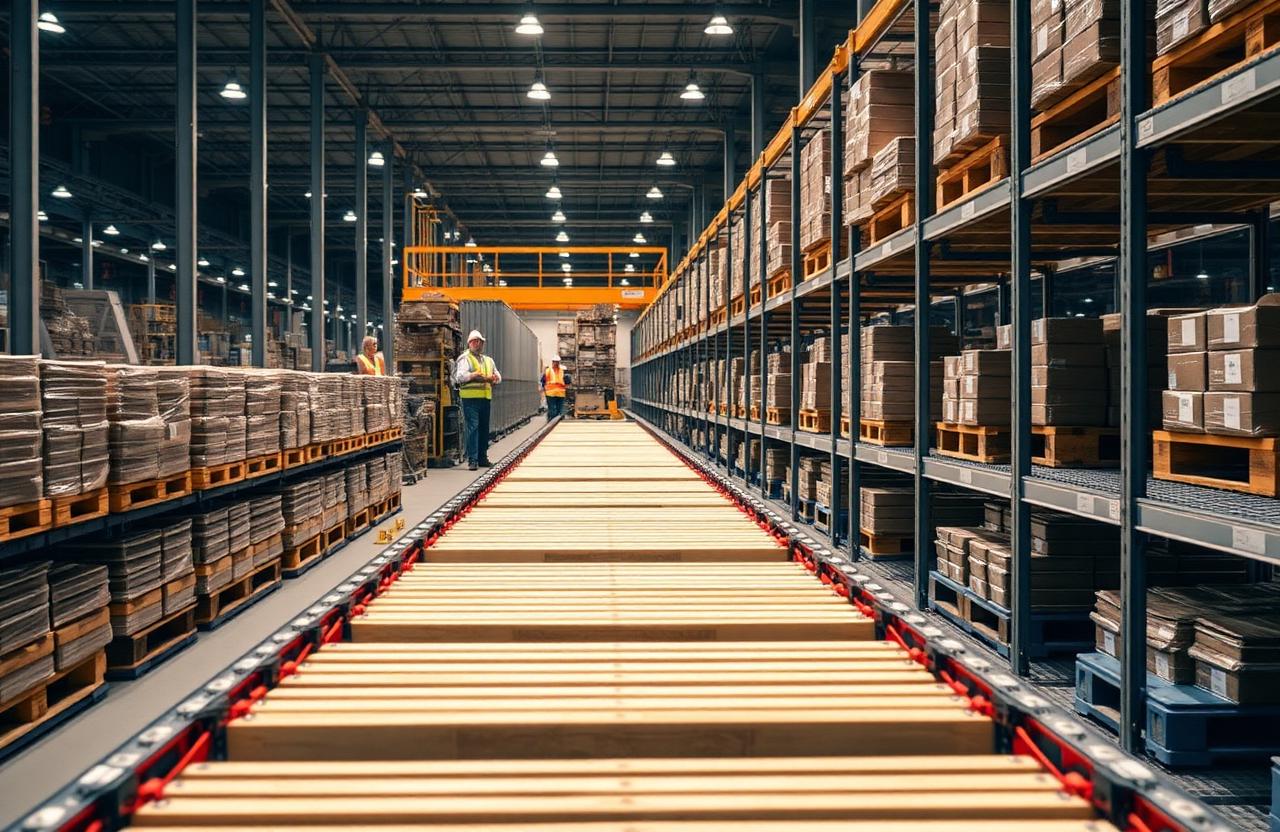
Moving pallets sounds simple — until you scale. Choosing the right transport system between goods-in, storage and dispatch can swing both capex and operating cost by 30% or more.
The four main options
- Powered pallet conveyors — chain, roller or modular belt for fixed, high-frequency flows
- Transfer cars — for cross-aisle and AS/RS interfaces
- AGVs and AMRs — for flexible, reconfigurable transport
- Manual forklifts — still optimal for low volumes and large distances
Decision matrix
| Scenario | Best fit |
|---|---|
| Short, fixed, high-frequency flow | Pallet conveyor |
| Cross-aisle / AS/RS interface | Transfer car |
| Variable routes, evolving layout | AGV / AMR |
| Low volume, long distance | Forklift |
Design tips from the field
- Always check pallet quality — broken pallets jam conveyors
- Plan for empty pallet return; it's the most ignored flow
- Design buffers in front of every bottleneck, especially shipping
Need help mapping your pallet flow? Easy Systems has engineered automated pallet transport for warehouses across Belgium, the Netherlands and Luxembourg.
This article is part of the Conveyor-Design knowledge hub, edited by Easy Systems engineers who design conveyor and warehouse automation systems across the Benelux every week.
Frequently asked questions
What is the most cost-effective way to move pallets in a warehouse?+
For fixed flows under 60 meters, a powered chain or roller pallet conveyor is usually most cost-effective. For longer, variable or low-frequency flows, AGVs and forklifts compete strongly on total cost.
Can pallet conveyors integrate with AS/RS?+
Yes. Pallet conveyors are the standard interface between AS/RS cranes or shuttles and dispatch lanes, with transfer cars handling cross-aisle movement.