AI in Conveyor Maintenance: The 2026 Predictive Revolution
By 2026, Artificial Intelligence will be central to predictive maintenance for conveyor systems, transforming warehouse efficiency and drastically reducing downtime. This article explores the AI-driven technologies leading this charge in Europe.
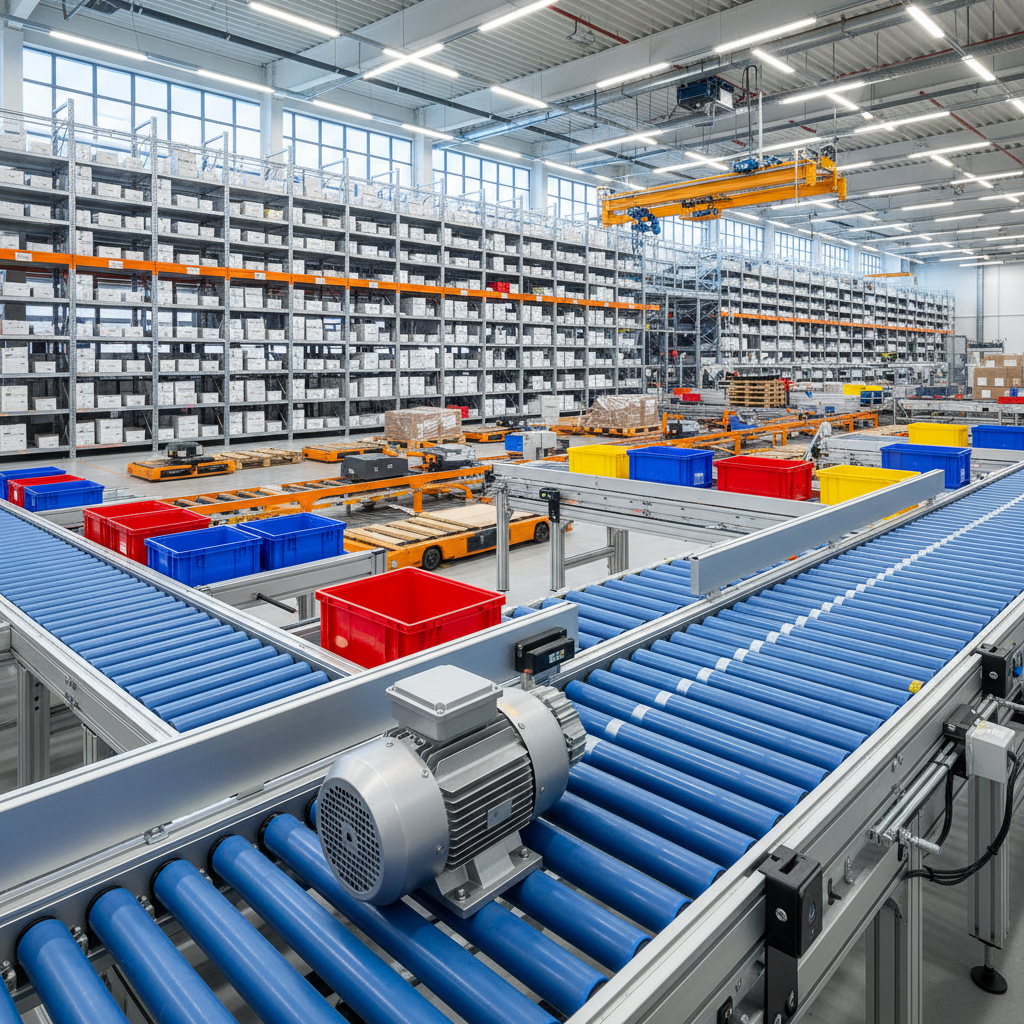
The year is 2026. In the sprawling logistics hubs of Rotterdam, Hamburg, and Antwerp, the constant hum of conveyor systems is more reliable, more efficient, and quieter than ever. The disruptive force behind this transformation isn'''t a new type of motor or belt, but an invisible intelligence: Artificial Intelligence. By 2026, AI has moved from a trendy buzzword to the operational backbone of predictive maintenance, fundamentally reshaping how European warehouses approach uptime and operational efficiency.
The Old Model: The High Cost of Reactive Maintenance
For decades, conveyor system maintenance has operated on a simple, yet costly, binary model: preventive and reactive. Preventive maintenance, based on fixed schedules and historical averages, involves replacing parts whether they are worn out or not. It'''s an insurance policy that often leads to unnecessary spending and component wastage. On the other, far more expensive end is reactive maintenance. A motor burns out, a belt snaps, or a bearing seizes. Operations grind to a halt. The cost isn'''t just in the replacement part and technician time; it'''s in the catastrophic, cascading effect of unplanned downtime, which can cost large distribution centers upwards of €20,000 per hour in lost revenue and productivity.
The AI Paradigm Shift: From Reactive to Predictive
Predictive Maintenance (PdM) powered by Artificial Intelligence represents a seismic shift. Instead of relying on schedules or waiting for failure, PdM uses a constant stream of real-time data to forecast asset failure with remarkable accuracy. An AI model, trained on historical and live data from the conveyor system, understands the unique operational fingerprint of each component. It detects minuscule deviations in vibration, temperature, acoustic signatures, and energy consumption that are imperceptible to humans. These anomalies are the early whispers of impending failure, allowing maintenance teams to act proactively, not reactively. This means scheduling repairs during planned downtimes, ordering parts just-in-time, and extending the operational life of components to their true maximum.
Core AI Technologies Driving Predictive Maintenance
The magic of AI-powered PdM isn'''t a single technology, but a synergy of several key innovations that have matured and become more accessible for the European logistics market.
Machine Learning, IoT, and Digital Twins
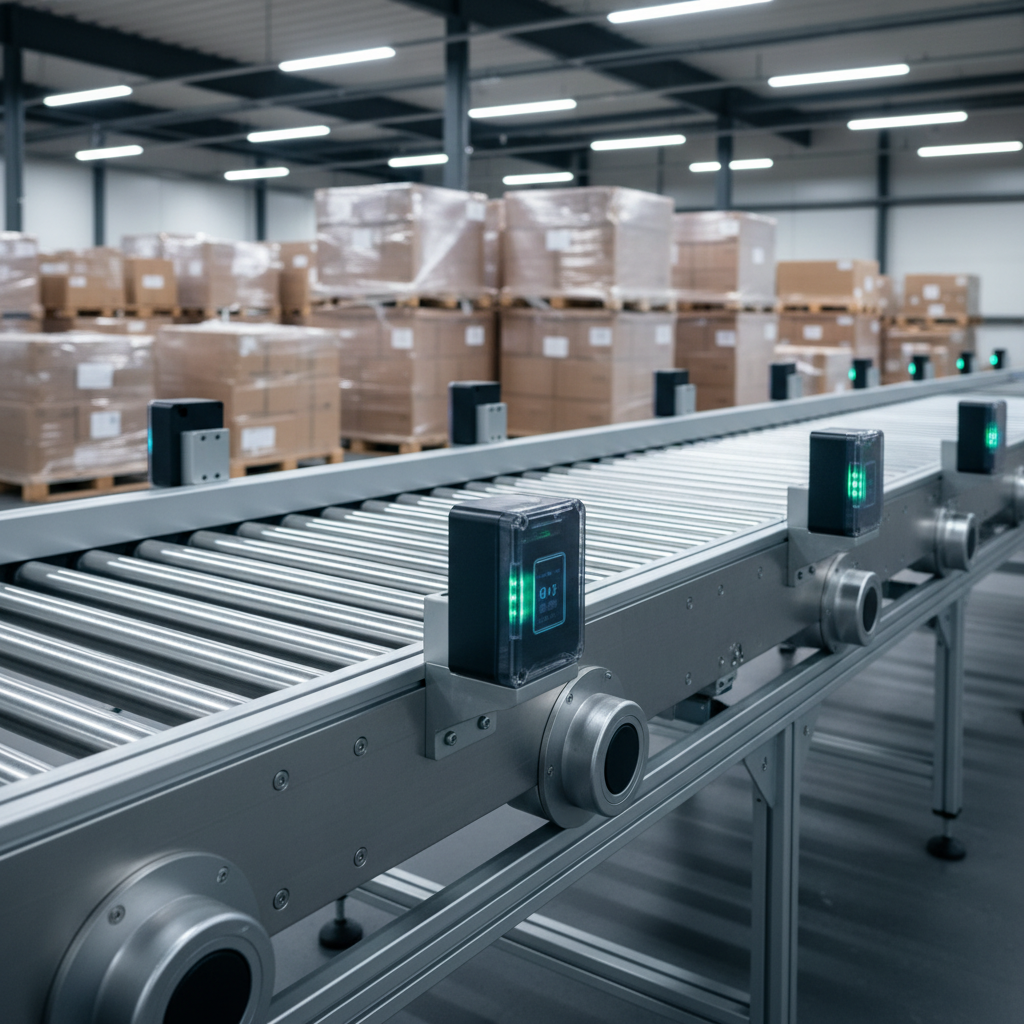
At the heart of PdM are **Machine Learning (ML)** algorithms. These models are trained on vast datasets from conveyor systems to recognize patterns that precede failures. They can distinguish between the normal "healthy" signature of a motor and the subtle acoustic changes indicating bearing wear. The data itself is collected by a network of affordable **Internet of Things (IoT)** sensors attached to critical components like motors, gearboxes, rollers, and belts. These sensors are the nervous system, constantly feeding data to the AI brain. This synergy is often visualized and managed through a **Digital Twin**—a dynamic, virtual replica of the physical conveyor system. The digital twin displays real-time data and AI-driven predictions, allowing managers to simulate the impact of different maintenance schedules and operational loads, creating a risk-free environment for decision-making.
The Concrete Benefits of AI in Conveyor Maintenance
Adopting AI-powered predictive maintenance is not just a technological upgrade; it'''s a strategic business decision with measurable returns, particularly within the competitive European market.
- Drastic Reduction in Downtime: Studies from leading German automotive logistics suppliers show that AI-driven PdM can reduce unplanned downtime by up to 40%. By anticipating failures, maintenance is performed during scheduled, low-impact periods.
- Significant Cost Savings: Maintenance costs are slashed by targeting only the components that require attention. A 2025 report on Benelux warehouses indicated an average reduction of 25% in annual maintenance budgets after implementing PdM. This stems from reduced labor for routine checks and eliminating the premature replacement of healthy parts.
- Increased Operational Efficiency: With higher uptime and reliability, the entire facility performs better. Throughput increases, order fulfillment times become more consistent, and the need for buffer stock—held to mitigate the effects of downtime—is reduced.
- Enhanced Safety: Predicting mechanical failures before they happen prevents catastrophic breakdowns that can pose a safety risk to on-site personnel.
Challenges and How to Overcome Them
While the benefits are clear, the path to AI integration is not without its hurdles. Many operators are concerned about the initial investment, data management, and the skills required. The key is a phased and strategic approach. Start by retrofitting a single, critical conveyor line with IoT sensors to prove the concept and calculate ROI. Partnering with a specialist can also bridge the skills gap. Modern AI platforms are increasingly user-friendly, offering intuitive dashboards that translate complex data into actionable alerts (e.g., "Motor on line 3 shows 95% probability of bearing failure within 72 hours"). Data security, a key concern in the GDPR-compliant European landscape, is addressed through on-premise or secure cloud solutions offered by trusted vendors.
Comparing Maintenance Strategies
The evolution from reactive to predictive maintenance is best illustrated with a direct comparison.
| Aspect | Reactive Maintenance (Traditional) | Preventive Maintenance (Scheduled) | Predictive Maintenance (AI-Driven) |
|---|---|---|---|
| Trigger | Equipment Failure | Fixed Schedule / Runtime | Real-time Condition Data & AI Forecast |
| Downtime | High, Unplanned | Medium, Planned | Minimal, Planned & Optimized |
| Maintenance Costs | Very High (incl. collateral damage) | High (unnecessary replacements) | Optimized (replace only when needed) |
| Component Lifespan | Often cut short by failure | Artificially shortened | Maximized to true end-of-life |
| ROI | Poor | Moderate | Excellent |
A Look at 2026: What European Warehouses Can Expect
By 2026, we predict that over half of new conveyor systems installed in major European logistics centers will be AI-ready. This means they will come equipped with integrated sensors and connectivity as a standard feature. For existing systems, the market for retrofitting solutions will be mature and highly competitive, offering affordable pathways to upgrade. We will see a shift in maintenance roles, from the "fix-it" technician to the "data-analyst" engineer who interprets AI recommendations. The technology will be deeply embedded in Warehouse Management Systems (WMS), providing a single pane of glass for both logistics and maintenance operations. This integration is crucial for holistic optimization, where the WMS can even re-route product flow automatically based on a PdM alert.
Easy Systems: Your Partner for Future-Proof Conveyor Maintenance
The transition to AI-powered predictive maintenance is an inevitability for any competitive logistics operation. The question is not if, but when and how to implement it. Choosing the right foundational hardware is paramount. A robust, modular, and reliable conveyor system is the canvas upon which AI can paint a picture of efficiency. Easy Systems specializes in providing exactly that. Our high-quality, modular conveyor systems are designed for the demands of the modern European warehouse and built to be the perfect platform for future AI and IoT integration. By starting with a reliable, well-engineered foundation, you ensure that the data your future AI system analyzes is accurate and meaningful. Partner with us to build a conveyor infrastructure that is not just efficient today, but ready for the predictive revolution of tomorrow.

This article is part of the Conveyor-Design knowledge hub, edited by Easy Systems engineers who design conveyor and warehouse automation systems across the Benelux every week.
Frequently asked questions
What is predictive maintenance for conveyor systems?+
It's a proactive strategy that uses data analysis and A.I. to predict potential equipment failures before they happen, allowing for scheduled maintenance and avoiding costly, unplanned downtime.
How does A.I. predict conveyor failures?+
A.I. algorithms analyze data from IoT sensors (monitoring vibration, temperature, speed, etc.) to identify patterns and anomalies that precede a component failure. It learns what 'normal' operation looks like and flags deviations.
Is retrofitting older conveyor systems with A.I. possible?+
Yes, many older systems can be retrofitted with modern IoT sensors. The data can then be fed into a cloud-based A.I. platform, making it a viable upgrade path without a full system replacement.