Voorspellend Onderhoud voor Transportbandsystemen: Minimaliseer Downtime & Kosten in de Benelux
In het veeleisende logistieke landschap van de Benelux is ongeplande stilstand van transportbanden een kostbare ramp. Voorspellend onderhoud maakt gebruik van IoT-sensoren en data-analyse om storingen te voorspellen, waardoor downtime tot 50% en onderhoudskosten tot 40% worden verminderd.
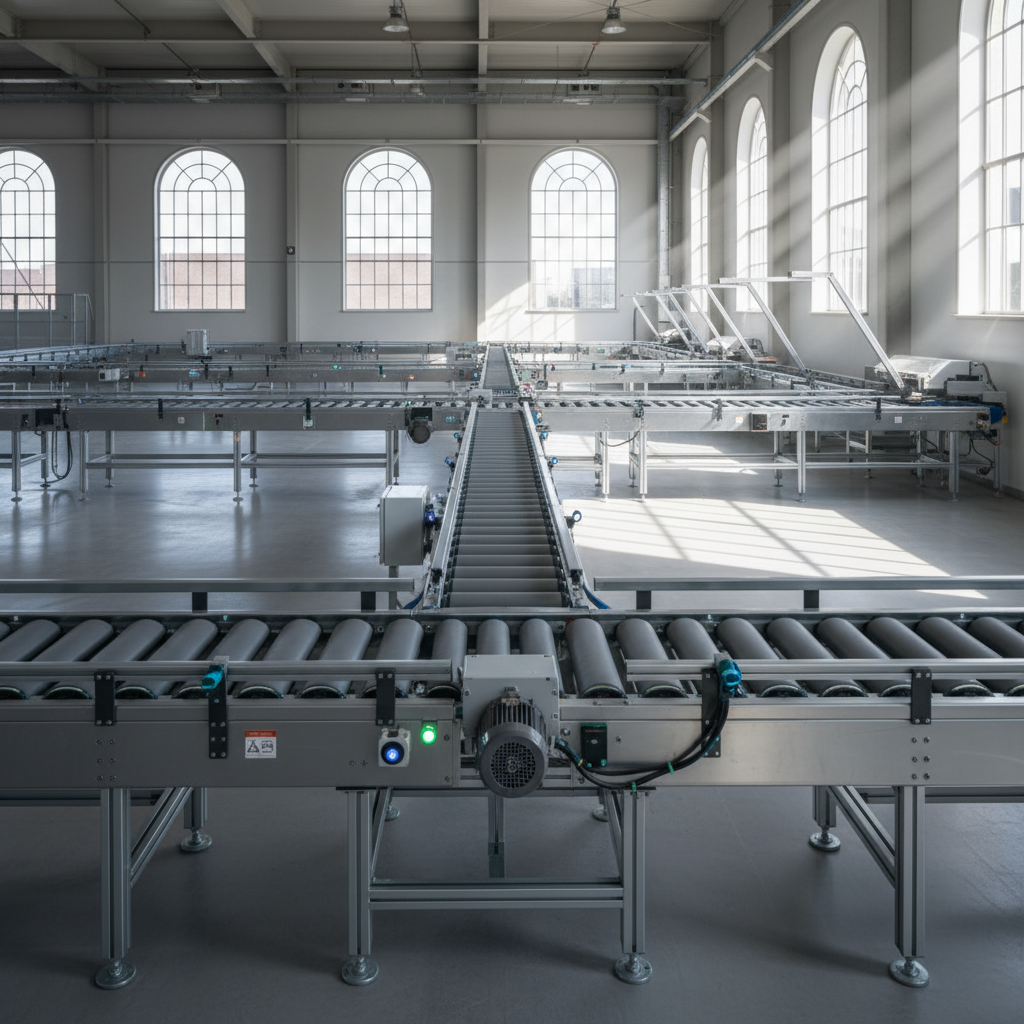
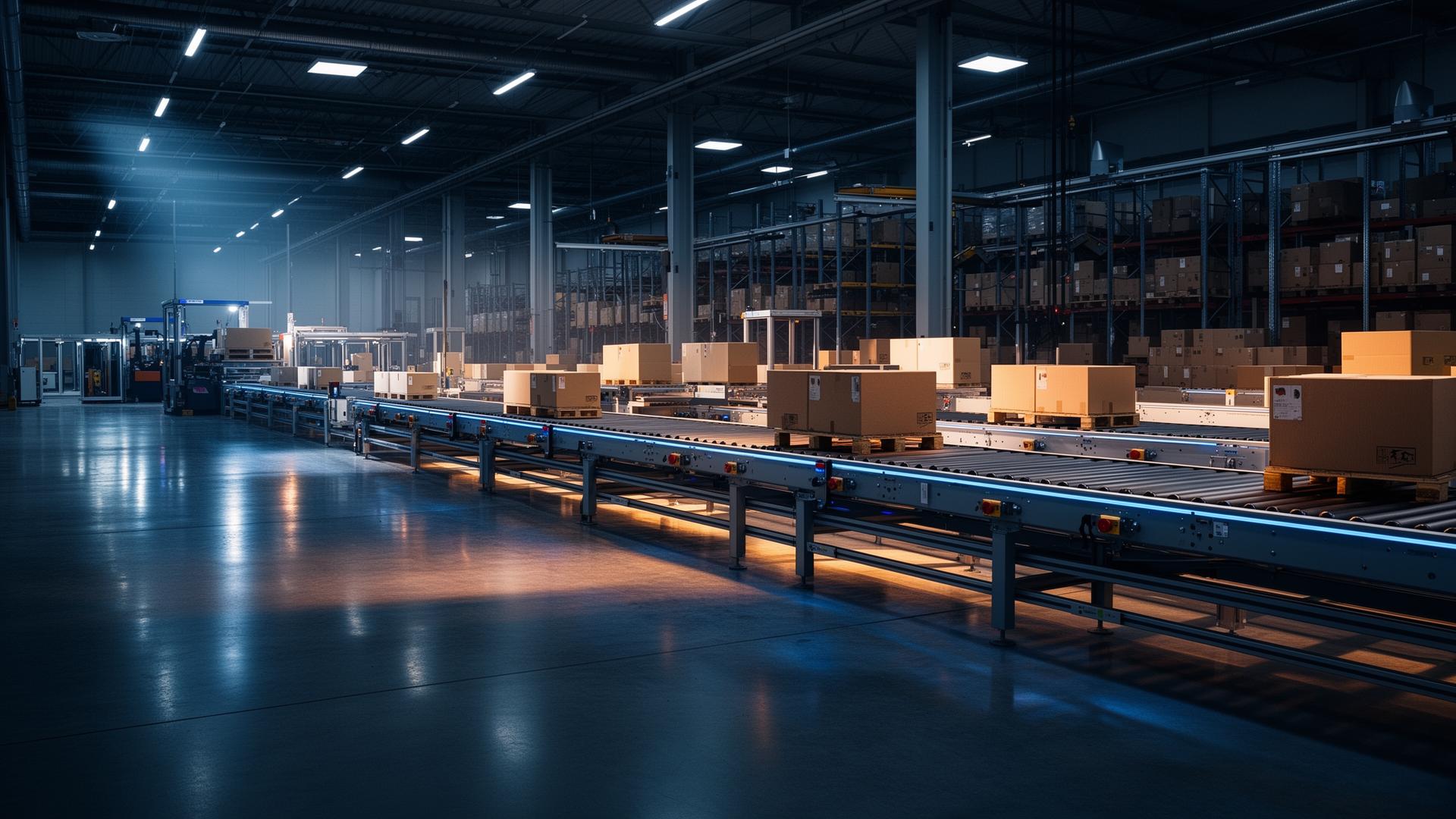
In the high-density, fast-paced logistics landscape of the Benelux, every second counts. Distribution centers in hubs like Antwerp, Rotterdam, and Venlo are the beating heart of European trade, and their arteries are conveyor systems. Unplanned downtime isn't just an inconvenience; it's a costly cascade failure that can halt operations, delay shipments, and damage a company's reputation. This article explores how predictive maintenance (PdM) is moving from a theoretical ideal to an essential, practical strategy for any modern Benelux warehouse looking to maximize uptime and protect its bottom line.
Definition
Predictive Maintenance (PdM) for conveyor systems is a proactive strategy that uses data-driven, condition-based monitoring to detect and diagnose potential equipment failures before they occur. Instead of relying on a fixed schedule (preventive maintenance) or waiting for a breakdown (reactive maintenance), PdM analyzes real-time data from sensors to determine the actual health of components and predict their remaining useful life.
Key Numbers
| Metric | Typical Range (EU 2026) | Notes |
|---|---|---|
| Downtime Reduction | 30-50% | Compared to reactive maintenance strategies. |
| Maintenance Cost Reduction | 20-40% | Includes savings on labor, spare parts, and emergency call-outs. |
| Initial Investment (per critical point) | €250 - €1,500 | Cost for sensors, data acquisition hardware, and initial setup. |
| Return on Investment (ROI) | 1.5 - 3 years | Highly dependent on facility throughput and cost of downtime. |
| Energy Savings | 2-5% | Achieved by ensuring components like motors run at optimal efficiency. |
| Increase in Equipment Lifespan | 15-30% | By addressing minor issues before they cause catastrophic failure. |
The High Cost of Conveyor Downtime in the Benelux
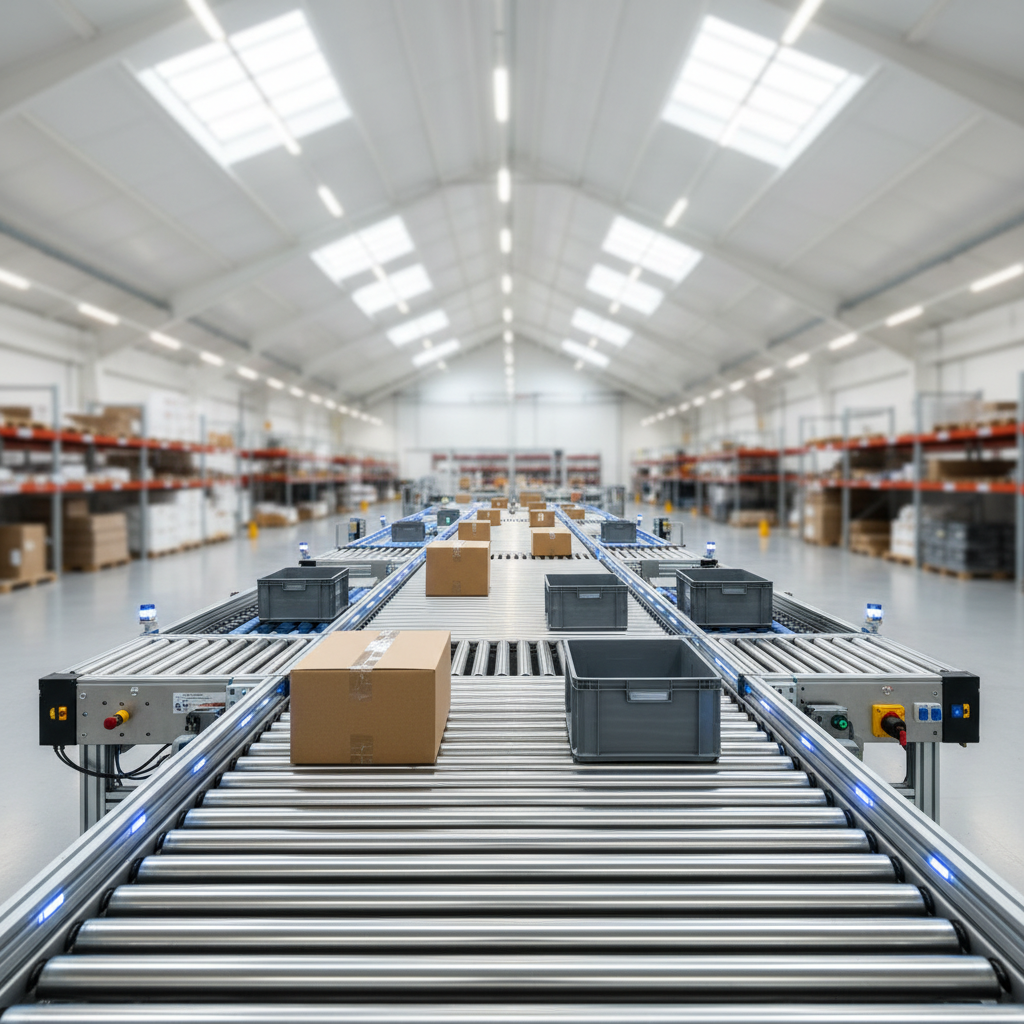
The Benelux region, with its world-class ports and dense road network, is a global logistics leader. However, this also means competition is fierce and margins are tight. The cost of labor is high, and customer expectations for speed and reliability (like On-Time In-Full, or OTIF) are non-negotiable. When a critical belt conveyor or sortation system grinds to a halt, the direct and indirect costs accumulate rapidly:
- Idle Labor: A team of 10 warehouse operators, at an average Benelux cost of €40 per hour, represents €400 in direct labor costs for every hour of downtime.
- Missed Shipping Windows: Failing to load trucks for their scheduled departure can result in penalty fees from carriers, delayed delivery to customers, and significant supply chain disruptions.
- Overtime Costs: Once the system is back online, catching up on the backlog often requires expensive overtime hours, further eroding profitability.
- Reputational Damage: For 3PL providers and e-commerce companies, consistent failure to meet service level agreements (SLAs) can lead to lost contracts and customers.
Preventive vs. Predictive Maintenance: A Critical Distinction
Many companies believe their scheduled, preventive maintenance plans are sufficient. While better than a purely reactive approach, preventive maintenance has significant drawbacks. The key difference lies in the "why" and "when" of maintenance activities.
| Feature | Preventive Maintenance | Predictive Maintenance (PdM) |
|---|---|---|
| Trigger | Fixed time interval or usage count (e.g., every 6 months). | Real-time asset condition and data-driven predictions. |
| Goal | Reduce likelihood of failure by performing regular checks. | Prevent failure by performing maintenance only when needed. |
| Cost | Medium. Can lead to "over-maintenance" and unnecessary parts replacement. | High initial investment, but lower long-term operational cost. |
| Technology | Calendars, checklists, maintenance logs. | IoT sensors, AI/ML platforms, cloud analytics, PLCs. |
| Labor | Scheduled, routine tasks for technicians. | Data analysis and targeted, just-in-time interventions. |
| Downtime | Planned downtime for maintenance, but still vulnerable to unplanned failures. | Minimized planned downtime, significantly reduced unplanned downtime. |
Key Technologies in Conveyor Predictive Maintenance
A successful PdM program a suite of technologies that work together to provide a complete picture of asset health. These are not futuristic concepts; they are readily available and being deployed in modern warehouses today.
Vibration Analysis
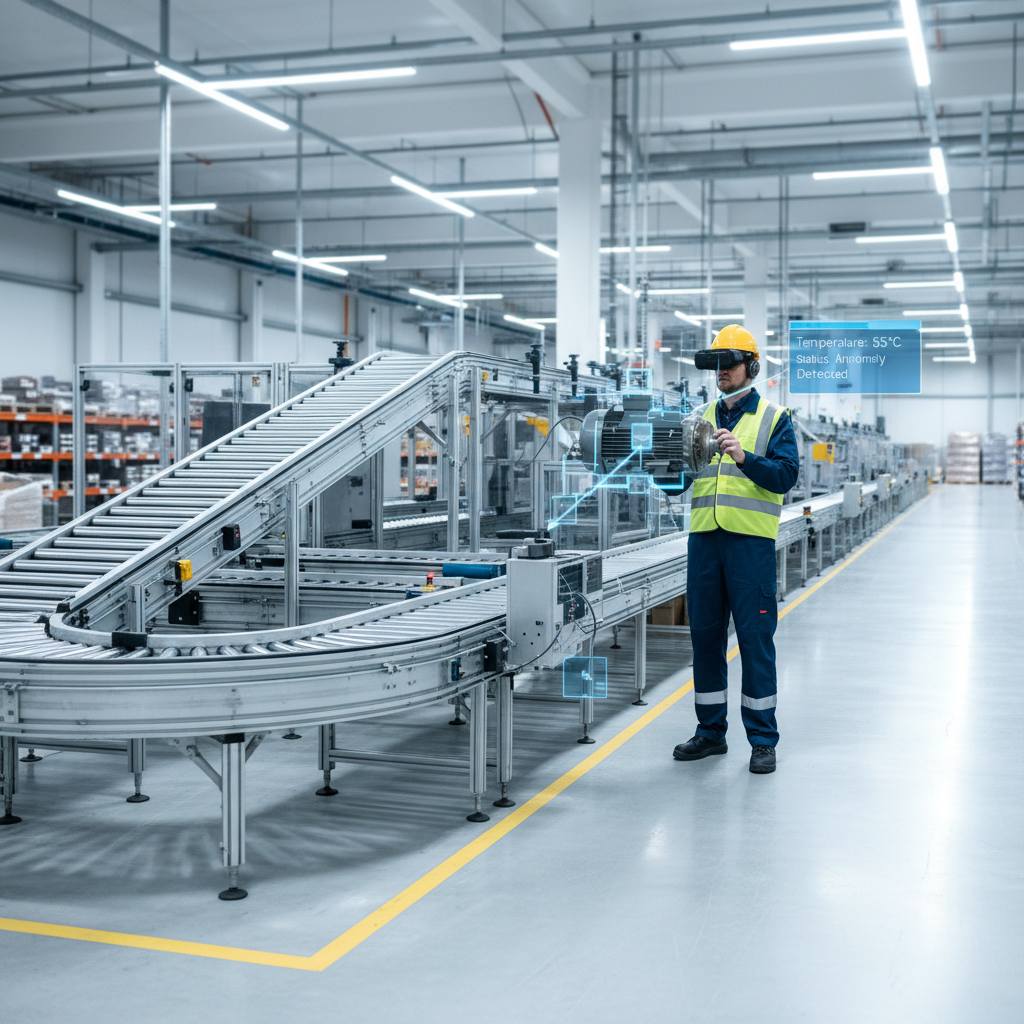
This is the cornerstone of PdM for rotating equipment. Sensors mounted on motors, gearboxes, and bearing housings detect subtle changes in vibration patterns. An increase in vibration can be an early indicator of bearing wear, misalignment, imbalance, or looseness—often months before the component fails audibly or catastrophically.
Thermal Imaging
Infrared cameras and fixed thermal sensors continuously monitor the temperature of critical components. Overheating is a clear sign of trouble, often caused by friction (poor lubrication), electrical resistance (loose connections), or motor strain. Detecting a hotspot early can prevent fires and major component failure.
Power Consumption Monitoring
By tracking the electrical current drawn by a conveyor motor, you can infer its operational health. A gradual increase in power consumption might indicate increased friction in the system, a failing motor, or a problem with a component like a Motor Driven Roller (MDR).
Implementing PdM: A Phased Benelux Approach
Jumping into a full-scale PdM implementation can be daunting. A phased approach, starting with the most critical assets, is the proven path to success for logistic operators in Belgium, the Netherlands, and Luxembourg.
- Phase 1: Criticality Analysis & Pilot Project: Identify the 10-20% of your conveyor system—often curves, inclines, or sortation junctions—whose failure would cause the most significant disruption. Start your PdM pilot here to prove the concept and demonstrate ROI.
- Phase 2: Sensor Deployment and Data Integration: Install the relevant sensors (vibration, thermal, etc.) on the pilot assets. Integrate the data stream with a central platform. This can be a standalone PdM system or, increasingly, integrated into a Warehouse Execution System (WES).
- Phase 3: Establish Baselines and Alert Thresholds: Let the system run for a few weeks to collect baseline data of normal operation. Work with your integration partner to set intelligent alert thresholds that trigger a notification without creating "alarm fatigue."
- Phase 4: Refine and Expand: Use the learnings from the pilot to refine your approach. As you demonstrate success and build confidence, systematically expand the PdM program to other parts of your roller conveyor systems and material handling equipment.
For many SMEs in the Benelux, internal processes struggle to keep pace with rapid growth. As one analysis notes, companies grow, but their processes don't always grow with them. Investing in scalable systems like PdM is crucial for sustainable expansion.
Your Partner for Future-Proof Conveyor Systems
Simply installing sensors is not a strategy. The true value of predictive maintenance comes from integrating this data into a holistic view of your warehouse operations and partnering with an expert who understands both the hardware and the software. At Easy Systems, we design and build modular, robust conveyor systems engineered for the demands of 21st-century logistics. We understand that our systems are the backbone of your operation, and their reliability is paramount.
Our philosophy is to build future-proof systems. That means designing conveyors that are not only efficient and scalable but also intelligent and maintenance-friendly. We work with our Benelux clients to identify critical points in their layout, advise on the best monitoring strategies, and ensure seamless integration with their control systems. By choosing Easy Systems, you are not just buying a conveyor; you are partnering with a team dedicated to ensuring your long-term operational success and minimizing your total cost of ownership.
Veelgestelde vragen
Hoeveel kost een PdM-systeem voor transportbanden?+
De initiële kosten voor een voorspellend onderhoudssysteem variëren doorgaans van €250 tot €1.500 per bewaakt punt. Hoewel dit een investering vooraf is, zien de meeste bedrijven in de Benelux een volledig rendement op de investering (ROI) binnen 1,5 tot 3 jaar, dankzij aanzienlijke besparingen op downtime en reparatiekosten.
Wat is het verschil tussen voorspellend en preventief onderhoud?+
Preventief onderhoud wordt uitgevoerd op een vaste planning (bv. elke 6 maanden), ongeacht de werkelijke staat van de apparatuur. Voorspellend onderhoud gebruikt daarentegen realtime gegevens van sensoren om onderhoud alleen uit te voeren wanneer dat nodig is, waardoor onnodige onderhoudsbeurten en kosten worden vermeden.
Kan ik voorspellend onderhoud achteraf inbouwen op mijn bestaande transportbandsysteem?+
Ja, absoluut. De meeste PdM-oplossingen zijn ontworpen om te worden uitgebreid. Sensoren voor trillingen, temperatuur en stroomverbruik kunnen op de behuizing van bestaande motoren, lagers en versnellingsbakken worden gemonteerd, waardoor u uw huidige activa kunt upgraden zonder ze te vervangen.
Hoe lang duurt het om ROI te zien op voorspellend onderhoud?+
Voor een typisch distributiecentrum in de Benelux ligt de ROI-periode voor een PdM-implementatie meestal tussen de 18 en 36 maanden. Faciliteiten met een zeer hoge doorvoer of extreem hoge kosten van downtime kunnen zelfs een nog snellere terugverdientijd zien.
Wat zijn de eerste tekenen dat een transportbandmotor onderhoud nodig heeft?+
De vroegste tekenen die door PdM worden gedetecteerd, zijn sub-microscopische trillingsveranderingen of een temperatuurstijging van 1-2 °C. De eerste tekenen die voor een mens merkbaar zijn, zijn meestal een hoorbaar zoemend of ratelend geluid, overmatige hitte die van de motor afstraalt of een lichte geur van verbrandend stof of olie.
Heb ik een datawetenschapper nodig voor voorspellend onderhoud?+
Niet noodzakelijkerwijs. Moderne PdM-platforms gebruiken AI en machine learning om de gegevens automatisch te analyseren en duidelijke, bruikbare waarschuwingen te geven. In plaats van ruwe data te interpreteren, kan uw onderhoudsteam zich richten op het reageren op specifieke, gekwalificeerde aanbevelingen van het systeem.

The Easy Systems editorial desk reviews and fact-checks every Conveyor-Design article against Benelux project experience. Editors translate engineering decisions — throughput, peak factors, layout, integration — into plain-language guides for operations managers, project leads and decision-makers.
- Warehouse layout & slotting
- Order-profile analysis
- Vendor-neutral comparison
- Benelux logistics market